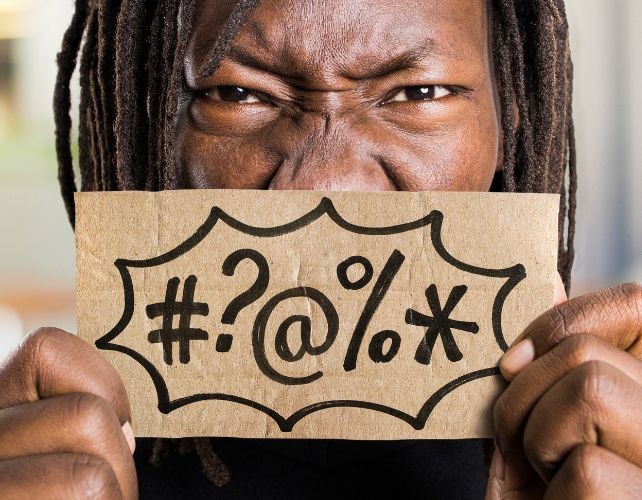


Swear Your Way to Power — Science Says Cursing Can Make You Physically Stronger


The gym is about to get a lot more swearing, thanks to science. A new study adds to the growing body of evidence that swearing can help unleash our inner strength and improve physical performance, it seems, by helping people break through certain psychological barriers. "In many situations, people hold themselves back – consciously or unconsciously – from using their full strength," says psychology researcher Richard Stephens of Keele University in the UK. "Swearing is an easily available way to help yourself feel focused, confident, and less distracted, and 'go for it' a little more." Stephens and his colleagues at Keele and the University of Alabama wanted to test whether swearing could not only improve physical performance, as they had done in previous research, but also see whether it does so by changing a person's psychology in the moment, especially when it comes to letting go of inhibitions.

Two Experiments Find Swearing Extends Hold Time and Elevates Positive Emotions
Experiment 1 recruited 88 participants, aged 18 to 65, all in good enough shape to exert themselves physically, from a university campus to participate in the first experiment. They each selected a pair of words based on the following prompts: a swear word you might utter after bumping your head, and a neutral word you might use to describe a table. Then, they undertook a chair push-up, which involves sitting in a chair and, holding each side of the seat, using your arms to lift your entire body weight (bottom off the chair, feet off the floor). "During the chair push-up task, participants were required to repeat their self-select word – either the swear word or neutral word, depending on randomization," the researchers explain. Participants held this pose as long as possible, up to 60 seconds, maintaining eye contact with the researcher, who was conducting the experiment over Microsoft Teams, the entire time. Afterwards, each participant answered a series of questions to gauge their level of state disinhibition (how free from consequences they felt). These measures, which the researchers predicted would be higher during swear-word sessions than neutral-word sessions, included humor, psychological flow, self-confidence, social desirability, and distraction. A second experiment repeated this whole exercise with a separate group of 94 participants, recruited in the same manner. The same measures were assessed, but this time the researchers added a few measures they thought may be decreased in swear-word sessions: bystander apathy, behavioral inhibition system, cognitive anxiety, and negative emotion. Both experiments suggested that swearing offers an advantage in physical performance, with participants achieving longer chair push-up hold times as they repeated their foul-mouthed mantras. Scores for positive emotion, humor, distraction, and novelty were also elevated in the swearing tests, which suggests invoking their favorite four-letter word might enable people to transition into more action-oriented states, and perhaps actually enjoy their workout more.
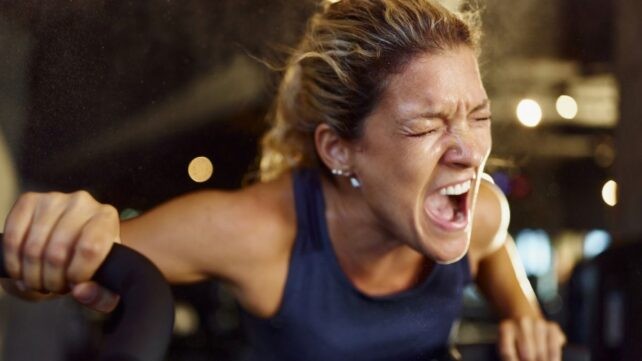
Conclusions, Limitations, and Implications
"These findings suggest that swearing promotes psychological states conducive to maximizing effort and overcoming internal constraints," Stephens and team conclude. "It's worth noting there wasn't quite enough evidence to suggest that swearing actually affects our inhibitions, specifically. More research – and many more profanities – will be required to confirm or rebuke that hypothesis." "These findings help explain why swearing is so commonplace," says Stephens. "Swearing is literally a calorie-neutral, drug-free, low-cost, readily available tool at our disposal for when we need a boost in performance." The research is published in American Psychologist.