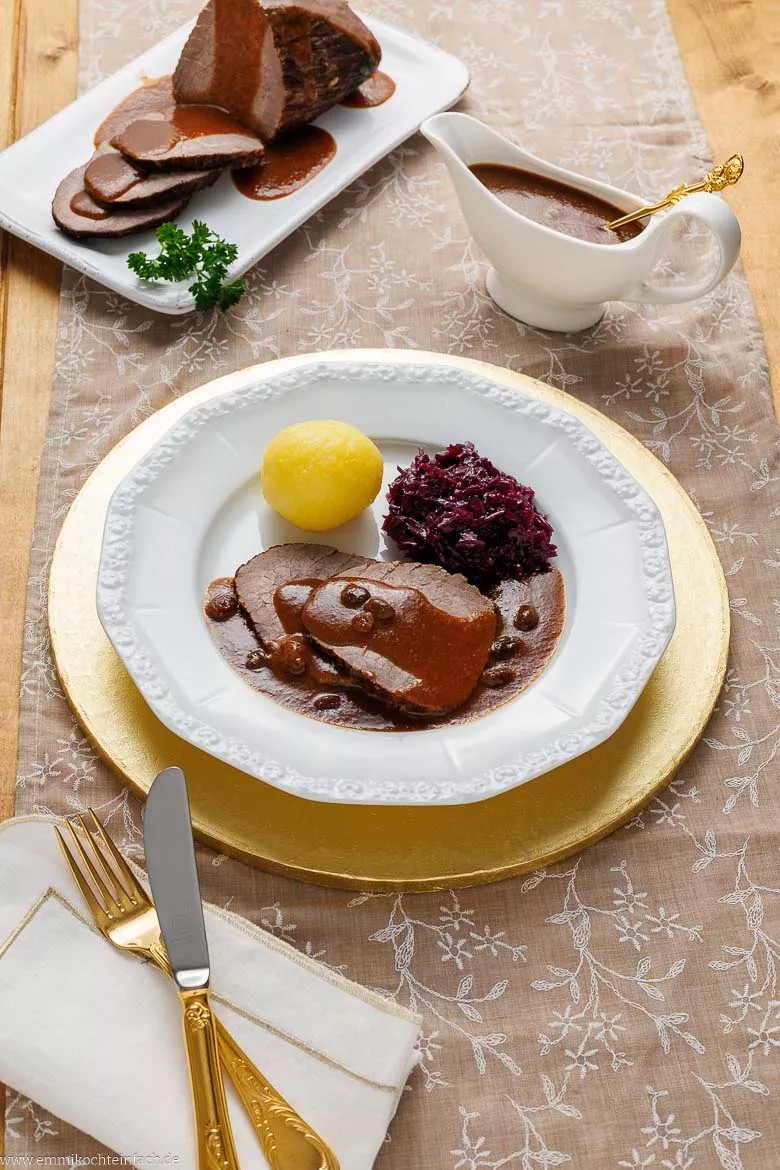


Sauerbraten The Rhine’s Deep Winter Feast That Transforms Cold Nights Into a Celebration


Sauerbraten from beef is a hearty winter dish and a popular holiday meal that captivates with its spicy aromas. In this guide, you’ll learn how to make this hearty braised dish at home with a balanced marinade, patient braising, and classic accompaniments. This traditional German centerpiece is beloved at festive meals and winter gatherings, a true test of patience, technique, and time. Our journey through this recipe invites you to discover a dish that warms the soul as it warms the kitchen.
In This Article:
Beef Sauerbraten A Hearty Winter Dish and Festive Favorite
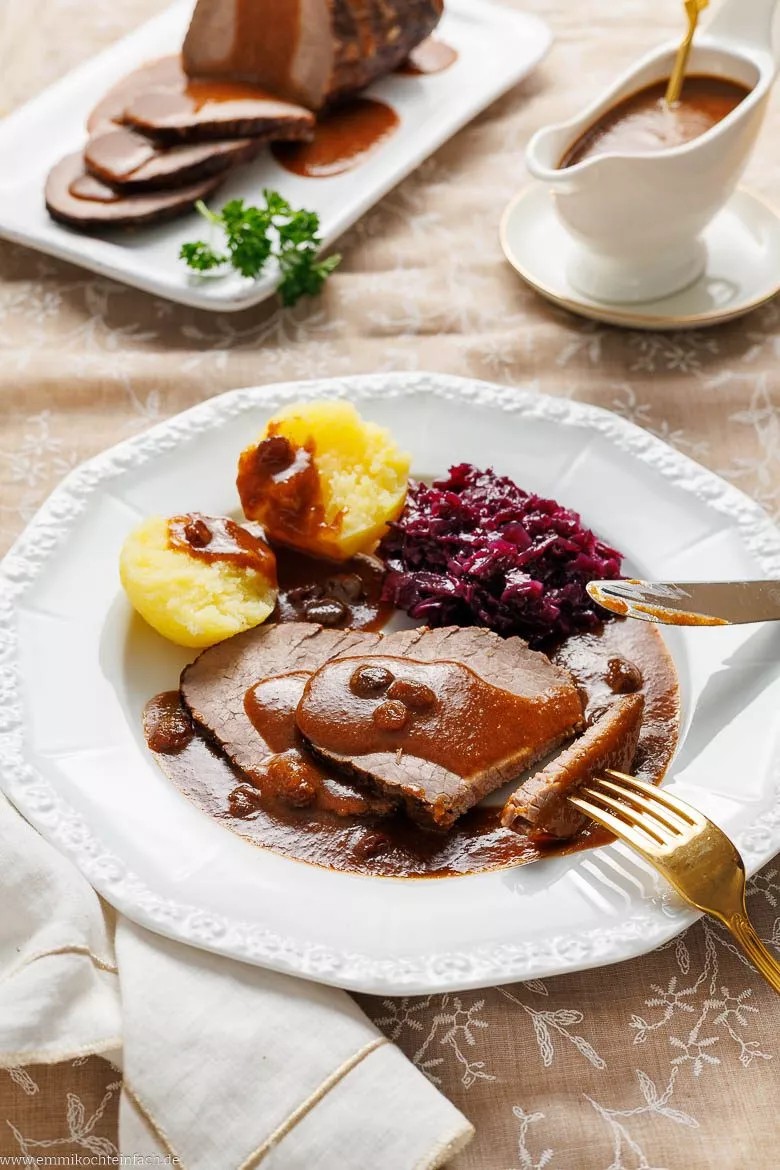
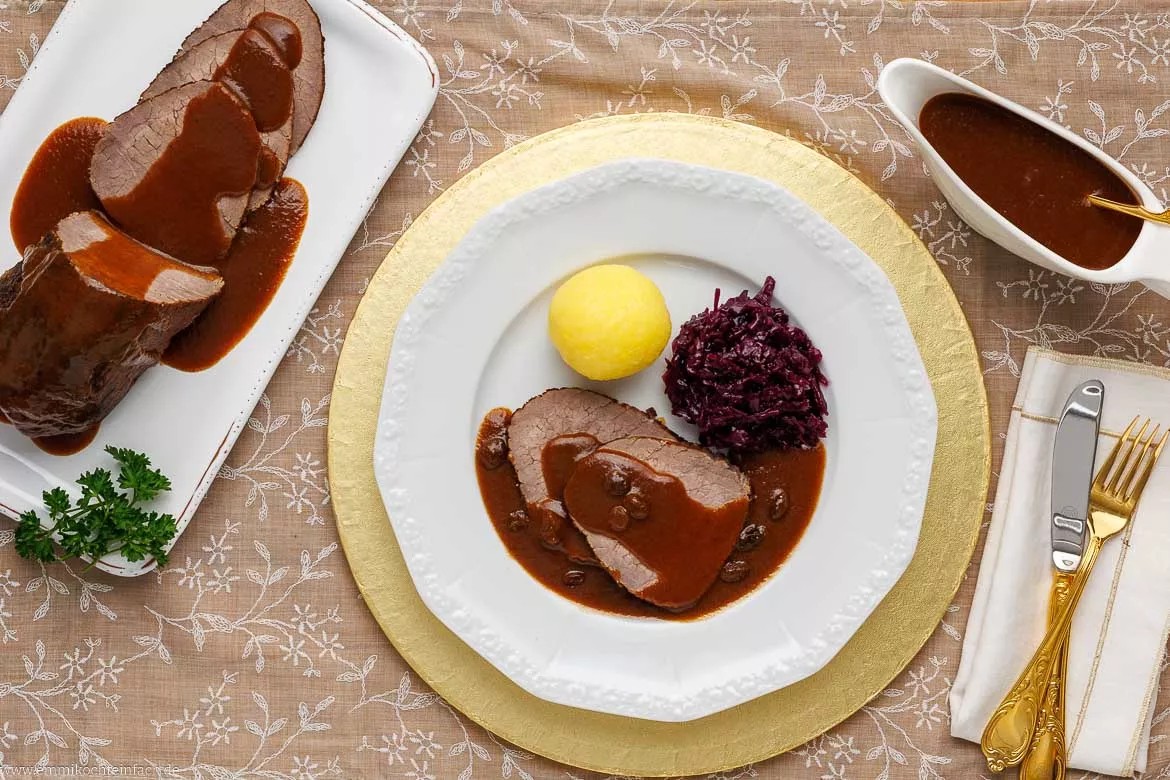
Sauerbraten made with beef: a hearty winter dish and a popular holiday meal that wins you over with its bold, tangy flavors. With my recipe for Sauerbraten you can prepare this robust braised roast very easily yourself. The marinated beef roast with an aromatic sauce and classic side dishes is a traditional dish of the German kitchen and is very popular as a festive main course.

A Well-Balanced Marinade and Days of Marinating Are Key
A well-balanced marinade and days of marinating are the key to authentic Sauerbraten flavor. The roast becomes tender and juicy when you braise it gently and patiently in a Dutch oven. The base of my marinade, as in the Rhineland original, is red wine and red wine vinegar. Even though the alcohol largely evaporates when the mixture is boiled, I prefer using slightly less red wine and adding a portion of water. Onions, peppercorns, juniper berries, cloves, and a bay leaf bring a spicy range of aromas to the braise. For my Sauerbraten recipe you also need:
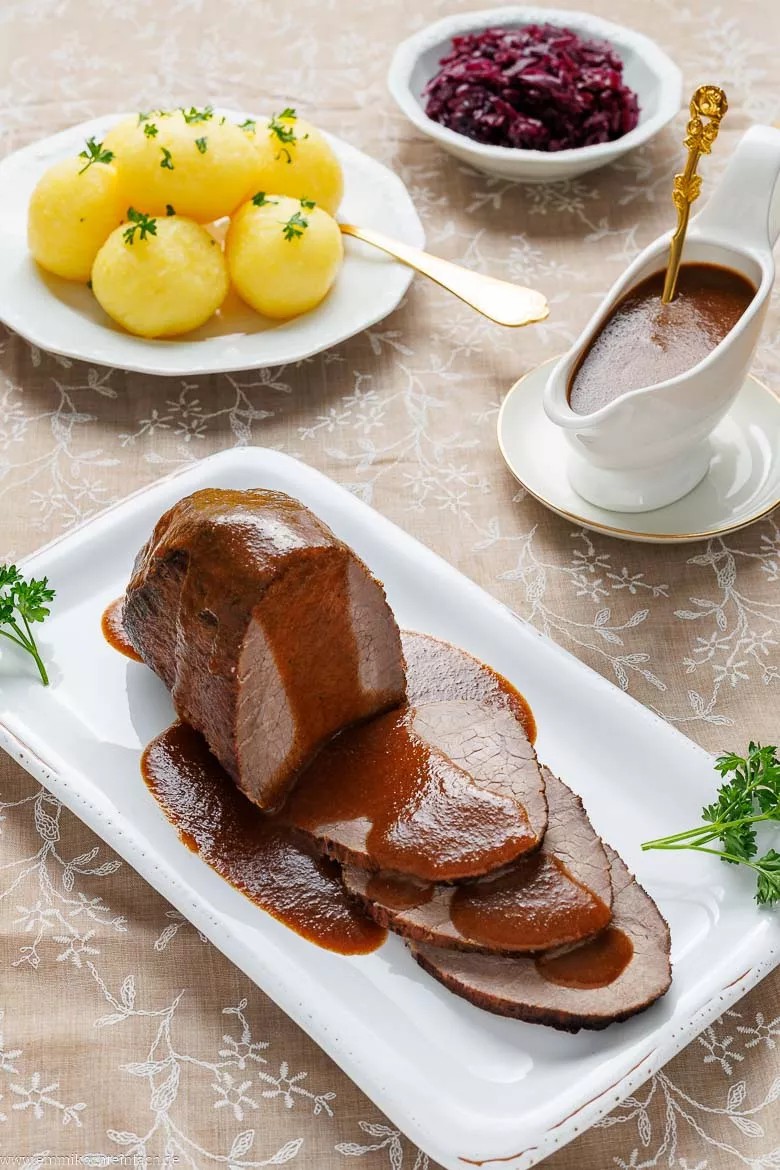
Sides and Other Beef Dishes That Pair with the Sauerbraten
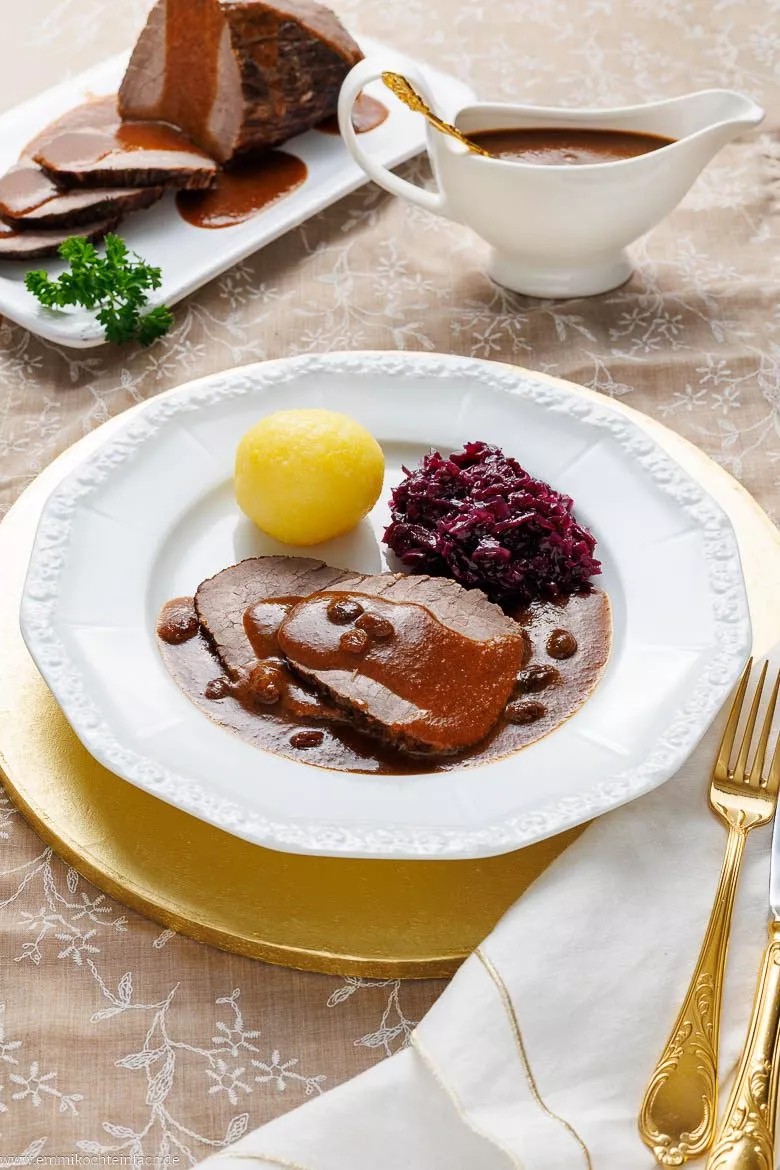
For sides, I prefer red cabbage and potato dumplings. The fruity notes of the red cabbage complement the spicy roast beautifully, and the dumplings taste simply delicious when drenched in the gravy. Other beef dishes that are as hearty, delicious and easy to prepare as my Sauerbraten include my simple beef roast from the oven, the Tafelspitz recipe, beef roulades, and my beef goulash. All of these classic meat dishes are very popular and suitable as main courses for special occasions. If you’d like to enjoy the tasty gravy with a dish but don’t have time for a braise, try my recipe for gravy!
Reader Comments and Reactions
Click stars to rate I love simple, unpretentious cooking and want to inspire you when you ask yourself: “What should I cook today for my loved ones and me?” I would also be very happy about a star rating for a recipe! "Merci Andrea, es freut mich wenn bei meinem Rezept alles gepasst hat 🙂 . Viele LG" -> translated: "Merci Andrea, I’m glad if everything matched with my recipe 🙂 Best regards." "Tausend Dank Sandra💕. Deine Rückmeldung freut mich sehr 🙂 Viele LG" -> translated: "A thousand thanks Sandra💕. Your feedback makes me very happy 🙂 Best regards." "Es freut mich wenn es dir geschmeckt hat, Heidi♥️. Lieben Dank & viele LG" -> translated: "I’m glad you enjoyed it, Heidi♥️. Thank you very much & best regards." "Liebe Manuela, der Sud wird unter anderem aus Hygiene und auch aus Gründen der Haltbarkeit eingekocht, immerhin liegt das Fleisch mehrere Tage darin. Außerdem entfalten sich die Aromen der Sud-Zutaten beim Kochen besser und die Säure vom Essig wird etwas abgemildert. LG, Emmi" -> translated: "Dear Manuela, the broth is boiled down for hygiene reasons and for shelf life; after all the meat sits in it for several days. Also the flavors of the broth ingredients develop better during cooking and the acidity of the vinegar is somewhat softened. Best regards, Emmi" "Es freut mich wenn mein Sauerbraten-Rezept überzeugen konnte, Pia.❤️-lichen Dank & viele LG" -> translated: "I’m glad my Sauerbraten recipe could convince you, Pia. ❤️-thank you & many best regards." "Tausend Dank Ute 🙂 Dein Lob freut mich riesig! Viele LG" -> translated: "A thousand thanks Ute 🙂 Your praise makes me incredibly happy! Best regards." "Liebe Karin, der Sauerbraten wird nicht im Backofen sondern auf der Herd (Kochplatte) in einem Bräter zubereitet 😉 Deshalb gibt es keine Backofen-Temperatur. Viele LG" -> translated: "Dear Karin, the Sauerbraten is not prepared in the oven but on the stove (cooktop) in a Dutch oven 😉 Therefore there is no oven temperature. Best regards." "Das freut mich sehr, Annica! ❤️-lichen Dank für dein Feedback. Viele LG" -> translated: "I’m very glad, Annica! ❤️-thank you for your feedback. Best regards." "Liebe Martina, der Sauerbraten kommt nicht in den Backofen, sondern wird auf dem Herdplatte geschmort. Deshalb gibt es keine Temperaturangabe 😉 LG" -> translated: "Dear Martina, the Sauerbraten does not go into the oven, but braises on the stove. Therefore there is no temperature stated 😉 Best regards." "🙂" -> translated: "🙂" "Liebe Cornelia, geschmacklich gibt es m.E. keinen Ersatz. Die Soße kann man natürlich glutenfrei andicken, da hast du sicherlich schon Erfahrung wie das gemacht wird. Viele LG" -> translated: "Dear Cornelia, flavor-wise there is no substitute in my opinion. The sauce can of course be thickened gluten-free; you surely have experience how that’s done. Best regards." "Merci Ingrid💖. Es freut mich wenn alles gepasst hat 😉 LG" -> translated: "Merci Ingrid💖. I’m glad if everything matched 😉 Best regards." "Liebe Adele, du kannst selbstverständlich Rinderfond verwenden, das mache ich auch oft. Selbstverständlich kannst du auch die Flüssigkeit mind. verdoppeln. Mehr würde ich aber ehrlicherweise nicht machen, sie soll ja auch noch geschmacklich gehaltvoll bleiben. LG, Emmi" -> translated: "Dear Adele, you can of course use beef stock; I do that often. Of course you can also at least double the liquid. More I would honestly not do, it should still remain flavorful. Best regards, Emmi" "Liebe Elli, ich habe keinen Slowcooker und deshalb kann ich dir keinen Rat geben. Viele LG" -> translated: "Dear Elli, I don’t have a slow cooker, so I can’t give you any advice. Best regards." "Liebe Silvia, du benötigst unbedingt Säure, wenn du den Wein weglassen willst, kein Problem, nimm dann aber die doppelte Menge Wasser und Essig. Beachte bitte, Rotwein hilft zusätzlich den Braten mürbe zu machen uns später zart, er bringt zudem Farbe, Tiefe und Aroma in den Braten. Ich hoffe ich konnte dir helfen. LG, Emmi" -> translated: "Dear Silvia, you absolutely need acidity if you want to omit the wine; no problem, then use double the amount of water and vinegar. Please note, red wine also helps to tenderize the roast and later it adds color, depth, and aroma to the roast. I hope I could help you. Best regards, Emmi" "Doch, bleibt es bis es im Punkt 14 entfernt wird, Petra. Viele LG" -> translated: "Yes, it stays until it is removed at point 14, Petra. Best regards." "Lass dir den Klassiker gut schmecken liebe Ulrike 🙂" -> translated: "Enjoy the classic well, dear Ulrike 🙂" "Das freut mich sehr, Annette 🙂 Viele LG" -> translated: "I’m very glad, Annette 🙂 Best regards"
Final Thoughts and a Taste of Tradition
Thank you for joining this culinary journey through Sauerbraten. The dish’s enduring appeal lies in its balance of tangy marinade, slow braising, and comforting accompaniments. If you try the recipe, share your experience and remember that great flavor often comes with patience and a little science of heat and time. Bon appétit.