

Winter Brings a Torrent of Trash to the Drina River Choking Bosnia's Landscape with Waste Year After Year


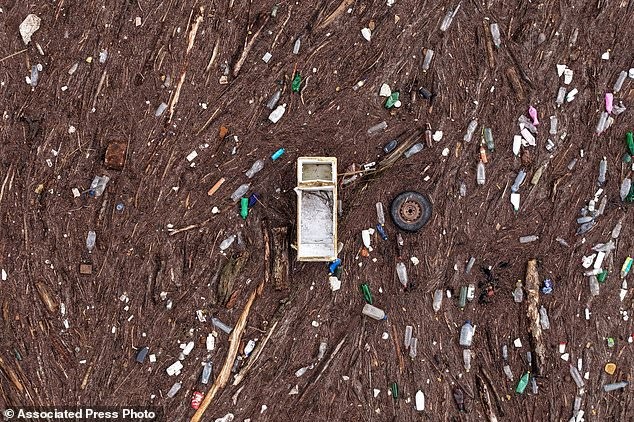
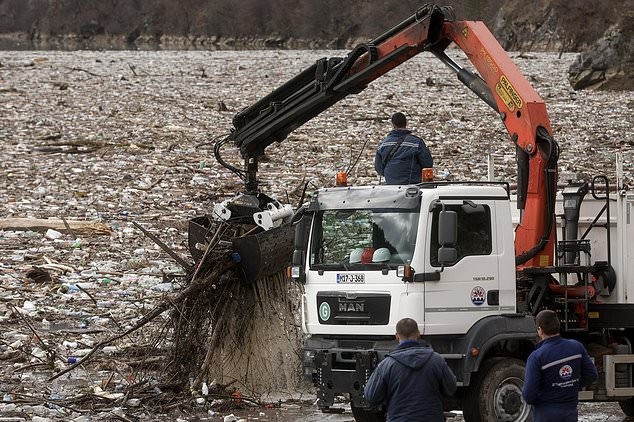
VISEGRAD, Bosnia-Herzegovina (AP) - Dejan Furtula sighed with despair while looking at construction machines working around the clock to remove tons of trash clogging the Drina River near his hometown of Visegrad, in eastern Bosnia. The environmental activist is frustrated because the problem is not new. Every winter, garbage carried by swollen rivers in the region accumulates downstream, eventually piling up by barriers installed by a hydro power plant in Visegrad. "This is a clear example of the lack of political will and inactivity of all relevant institutions," Furtula, who runs the Eko Centar environmental group, said. "They meet year after year and make promises, but as we can see these scenes repeat themselves." The sight recalls scenes from environmental disaster movies - an otherwise emerald green surface of river thickly covered with plastic bottles, pieces of wood or furniture, rusty barrels, home appliances or even dead animals. Furtula said medical waste is also there. "This is an ecological disaster," he said. "The Drina is rich with fish and you can imagine the toxins that are being released here, there is virtually everything, it is a big catastrophe." The waste comes from illegal dump sites upstream in Bosnia but also in neighboring Serbia and Montenegro. Several smaller tributaries across the region float into the Drina, all carrying their portion of the garbage. An aerial view shows a fridge and a car tire amongst other waste clogging the Drina river in Visegrad, Bosnia, Thursday, Feb. 5, 2026. (AP Photo/Armin Durgut) In summer, the rivers are popular with rafters and and nature lovers. The garbage problem culminates during winter months when swollen rivers sweep away illegal dump sites along their banks. Officials from the three countries have pledged to work together to solve the issue. One such meeting of the environment ministers of Bosnia, Serbia and Montenegro was held at the site back in 2019 but no solution appears to be in sight years later. The situation illustrates how decades after the devastating 1990s wars in the former Yugoslavia, the region lags behind the rest of Europe both economically and with regard to environmental protection.
In This Article:
The Drina Turns Emerald Green Beneath a Mountain of Trash
In summer the river is a popular playground for locals and visitors, but winter reveals a far darker reality: the Drina becomes a dumping ground, its surface hidden under plastic bottles, wooden scraps, rusty barrels, home appliances and even dead animals. Furtula said there is also medical waste present. The river, once vibrant with life, carries the toxins downstream toward communities that rely on it. "This is an ecological disaster," he said. "The Drina is rich with fish and you can imagine the toxins that are being released here, there is virtually everything, it is a big catastrophe." The waste comes from illegal dump sites upstream in Bosnia but also in neighboring Serbia and Montenegro. Several smaller tributaries across the region float into the Drina, all carrying their portion of the garbage. An aerial view shows a fridge and a car tire amongst other waste clogging the Drina river in Visegrad, Bosnia, Thursday, Feb. 5, 2026. (AP Photo/Armin Durgut) In addition to river pollution, many regions in the Western Balkans face air quality problems that add to the environmental burden on communities.
Where the Garbage Comes From and Where It Ends Up
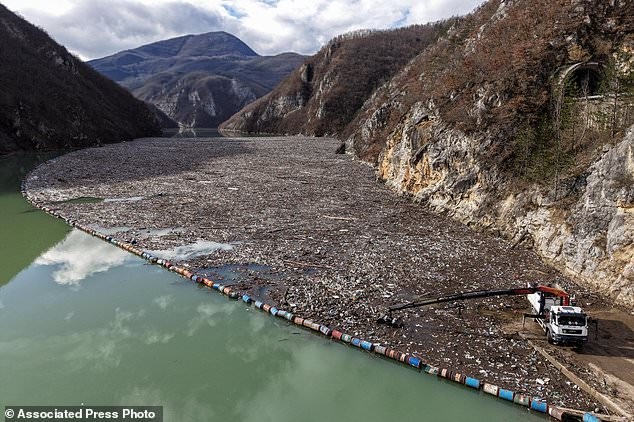
The waste flowing into the Drina originates from illegal dumps upstream in Bosnia and nearby Serbia and Montenegro. A network of smaller tributaries feeds the Drina, each carrying its own share of debris. Officials from all three countries have pledged cooperation, but a lasting solution remains elusive. An aerial view shows tons of waste filling the Drina river in Visegrad, Bosnia, Thursday, Feb. 5, 2026. (AP Photo/Armin Durgut) When the garbage is dredged from the water, it ends up at local landfills where it burns slowly, releasing toxic particles into the air. Furtula describes this as a vicious circle polluting his town. "It is coming from three countries - Montenegro, Serbia and Bosnia," he said. "But no one would admit it's theirs."
What Could Be Done and Why the Region Struggles to Improve
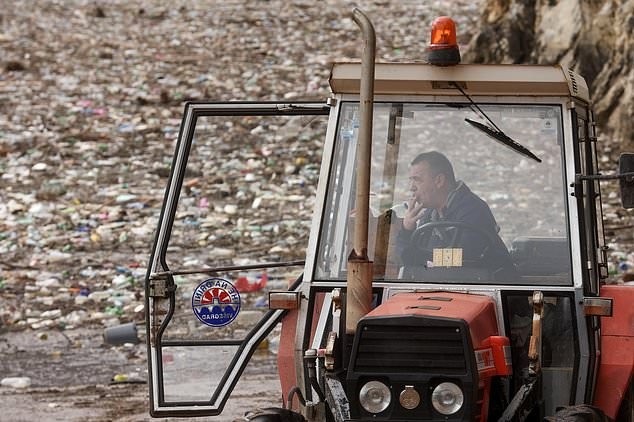
Officials from Bosnia, Serbia and Montenegro have pledged to work together, yet progress remains slow. There have been discussions at the ministerial level, including a 2019 meeting at the site, but no durable solution has emerged years later. The broader context matters too: decades after the wars of the 1990s, the Western Balkans lag behind much of Europe economically and environmentally. There are diverse ideas to tackle the problem, including mapping illegal dump sites and installing cameras and barriers in several municipalities, rather than letting all the trash end up in Visegrad. Furtula argues for a transparent approach, saying, "Furtula said there are various possibilities to deal with the garbage problem, including mapping the illegal dump sites and installing cameras and barriers in several municipalities, rather than allowing all the trash to come to Visegrad." An aerial view shows tons of waste filling the Drina river in Visegrad, Bosnia, Thursday, Feb. 5, 2026. (AP Photo/Armin Durgut) This broader environmental struggle is intertwined with other regional challenges, including air pollution and the EU accession process, where environmental protections are a key condition for membership.