


Wild theory claims the world ended in 2012 and we’re living in the apocalypse chaos


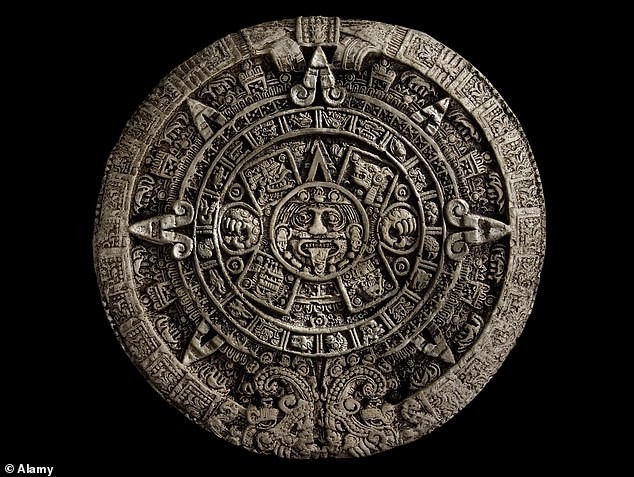
A shocking theory that claims our world ended in 2012, and humanity has been living in a simulation ever since, has regained online popularity. The theory was born out of the ancient prophecy surrounding the Mayan calendar, which was said to mark the end of the world on December 21, 2012. It referred to the end of a major cycle in the ancient Mayan Long Count calendar, which some people believed predicted a catastrophic apocalypse or some sort of global transformation. However, 2012 appeared to come and go without a world-ending cataclysm, leading experts to suggest that the Mayans did not predict the end of the world, but a simple cycle rollover in their astronomical calendars. Now, called the 2012 phenomenon, it has regained online popularity, spurred on by recent events like the Covid-19 pandemic, various climate crises, and social and political unrest throughout the world, creating a near-endless sense of dread.
In This Article:
A world beyond: post-glitch universes and simulated reality claims
The belief is that the world we see today is considered a 'post-glitch' universe, a sort of parallel dimension where all human consciousness was sent when our original universe came to an end over a decade ago. The controversial 'simulation' theory has given the Mayan doomsday prophecy new life, as supporters claim everything that's happened after December 21, 2012 has taken place in a simulated reality where all human consciousness was transferred. Simulation or afterlife theorists have argued that the world's end was a programmed reset or collective death event, with ongoing existence sustained by advanced aliens, a matrix-like system, or some type of spiritual framework created by a God-like being. The ancient Mayan calendar system allegedly came to an end on December 21, 2012, however further research has suggested that this end was just a transition to a new calendar cycle. Now, called the 2012 phenomenon, it has regained online popularity, spurred on by recent events like the Covid-19 pandemic, various climate crises, and social and political unrest throughout the world, creating a near-endless sense of dread.
Internet whispers and doomsday memes: the online echo chamber
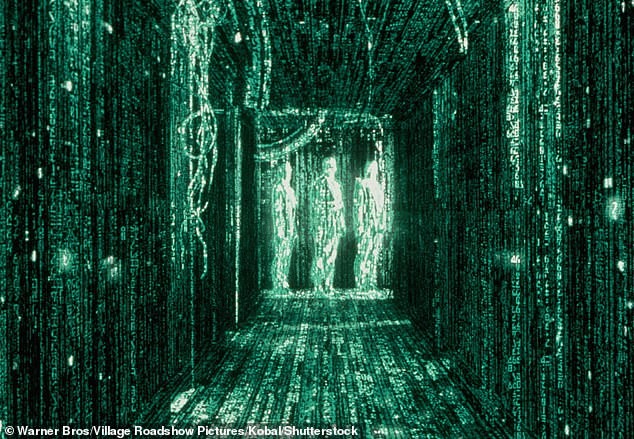
On social media, claims that the world ended in 2012 have become a common excuse for why strange, catastrophic, or unexplainable events take place throughout the world. There has been no credible scientific or historical evidence that can confirm this theory as being true, with the controversial interpretations of the Mayan calendar being repeatedly debunked by experts in physics, archaeology, and astronomy. "All the doomsday prophets can't fool me," one person on X claimed. "I know the world ended in 2012 and that we are actually in the final thoughts of a shared consciousness made of billions of dying brains." "The world ended in 2012. We are in the purgatory," another social media user declared. "Sometime after Dec 21st, 2012, our timeline splintered off into whatever reality this is," someone else theorized. In the blockbuster movie The Matrix (Pictured), Keanu Reeves discovers we're living in a simulated reality hundreds of years from now

Science meets skepticism: NASA, CERN and the physics of a possible false reality
David Morrison, a senior scientist at NASA, had called the claims that a rogue planet would spiral toward the Earth and destroy humanity a 'big hoax' in 2012. However, simulation theorists came to a much subtler end 13 years ago, when scientists at CERN's Large Hadron Collider (LHC) discovered the Higgs boson, a fundamental particle often called the 'God particle,' during high-energy experiments. Proponents have argued that these particle collisions accidentally created a microscopic black hole that rapidly expanded and consumed the Earth, destroying our original reality. In this theory, rather than everyone dying, human consciousness was transferred to a parallel universe or a simulated world, allowing life to continue seamlessly but with noticeable 'glitches' like the Mandela Effect - when a large group of people share the same false memory.
Elon Musk and the idea that reality could be a cosmic video game
Even billionaire tech pioneer Elon Musk has mentioned his belief in the simulation theory, citing it as the possible explanation for God's grand design in our world. During a podcast interview on December 9, Musk suggested that our creator could be simply running a massive computer simulation, with our lives being nothing more than 'somebody's video game.' He also speculated that our world could be an 'alien Netflix series,' saying that the purpose of life would therefore be to keep humanity exciting to increase our 'ratings' and prevent our creator from turning the computer off.