


White-Collar Apocalypse AI Will Automate Every Desk Job in 18 Months Says Microsoft AI Chief


"Congratulations, office workers. Most of what you do at your cozy desk jobs will soon be automated with AI, according to the extremely questionable projections of Microsoft’s AI CEO Mustafa Suleyman." That perspective comes as Suleyman—a figure surrounded by controversy in tech circles—frames what he calls a coming shift in which AI models, in his words, are on the verge of achieving “human-level performance on most, if not all professional tasks.” The claim, made in context of a Financial Times interview published Wednesday, has set off alarms about the future of work and the pace of automation.

In This Article:
Suleyman’s Bold Forecast Sets a Market-Driven Alarm
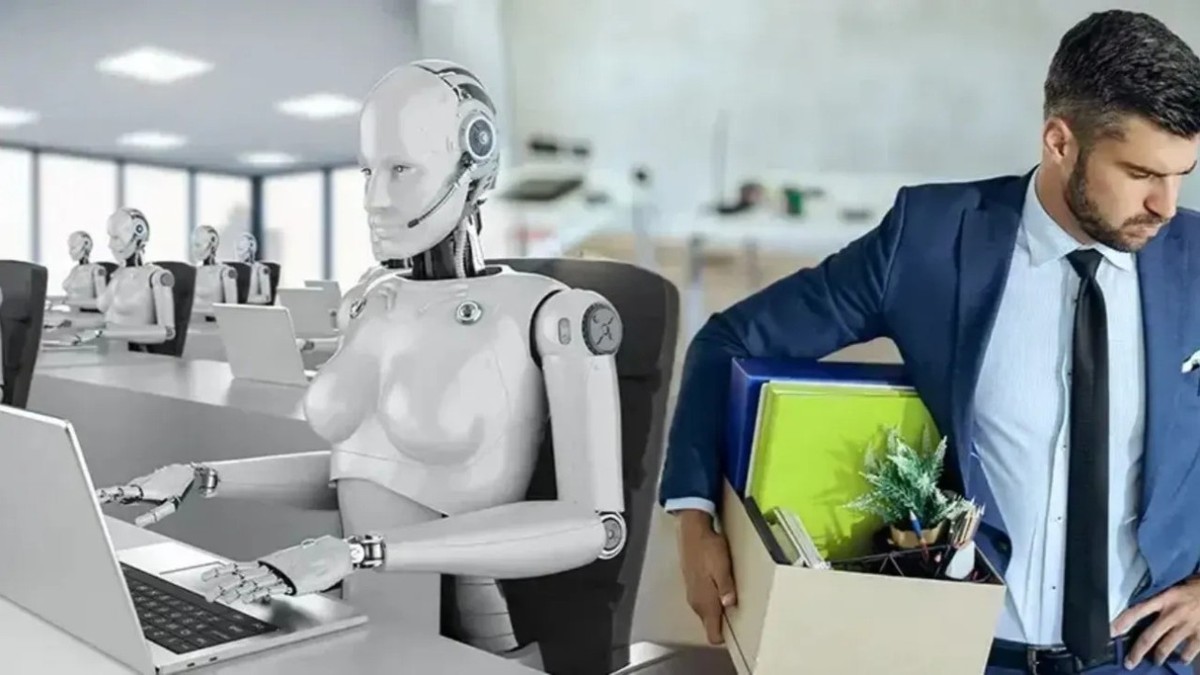
So white collar work where you’re sitting down at a computer, either being a lawyer or an accountant or a project manager or a marketing person, most of those tasks will be fully automated by an AI within the next 12 to 18 months, Suleyman said. Suleyman’s bold assertion comes amid renewed anxiety over AI’s potential to disrupt the job market. The release of Anthropic’s new Claude Cowork AI agent helped spark a broad stock market selloff last week, as investors feared that it could automate tasks like legal work, something that also jeopardized the bottom line of large software companies who make a killing off of providing the specialized programs to complete those office tasks. According to the Microsoft AI chief, heavy AI automation can already be seen in fields like software engineering. “Many software engineers report that they are now using AI-assisted coding for the vast majority of their code production,” Suleyman said in the interview, “which means that their roles shifted now to this meta function of debugging, scrutinizing, of doing the strategic stuff like architecting,” and “putting things into production.” “So it’s a quite different relationship to the technology,” he added. “And that’s happened in the last six months.”
AI’s Today: The Engineering World Talks Back
It’s true that many programmers are now using AI coding tools and agents. Microsoft’s CEO — the main one, not the AI one — Satya Nadella has claimed that over a quarter of its code is written with AI. But the quality of AI-generated code and other outputs remains suspect, with some studies finding that these purported automation miracles overwhelmingly fail to complete common remote work and office tasks. Equally, AI’s ability to yield economic gains for the companies that embrace it is questioned; some research suggests that AI does not lead to an increase in productivity and may even slow down workflows, including in fields like programming, where humans are forced to double and triple check AI outputs. AI may in reality be intensifying work, as its introduction leads to employees being expected to take on even greater workloads, resulting in burnout and lower quality work. Nonetheless, AI leaders insist on sounding the alarm. Last summer, Anthropic CEO Dario Amodei proclaimed that AI could wipe out half of all entry-level white collar jobs. OpenAI CEO Sam Altman echoed that the tech is poised to destroy entire categories of work.
The Alarm Bells Ring: Layoffs, AI Washing, and the Long Road Ahead
Don’t get us wrong: AI-related layoffs are already happening. Many companies, however, are arguably using the pretense of AI to fire employees for purely financial reasons, a practice that some are calling “AI washing.” And given how fresh AI automation is, it’s still unclear how sustainable it will be for companies to heavily depend on the tech in the long-term, a reality that some over-eager firms are already having to reckon with. More on AI: AI Is a Burnout Machine. I’m a tech and science correspondent for Futurism, where I’m particularly interested in astrophysics, the business and ethics of artificial intelligence and automation, and the environment.