


We Are Everywhere The US Army's Secret Mind Control Recruitment Video Unveiled


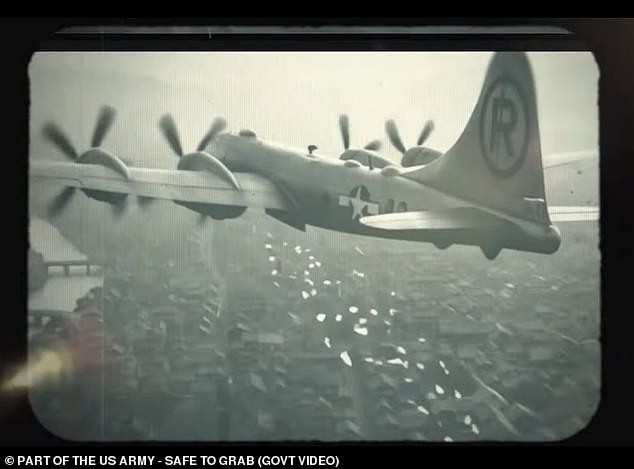
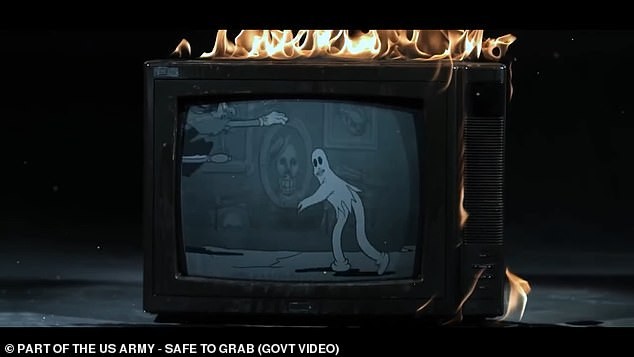
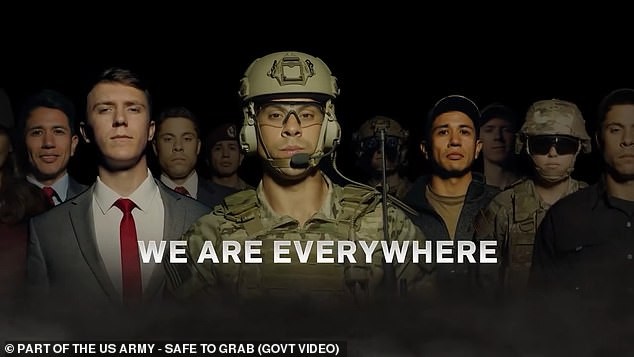
A secretive US military unit has released a new recruitment video packed with cryptic messages and unsettling imagery. The 4th Psychological Operations‑Airborne (4th PSYOP), based at Fort Bragg in North Carolina, specializes in influence campaigns aimed at shaping how enemies think, react and communicate. The film has been described as the Army's strongest pitch yet for its influence warfare unit, designed to attract recruits who can craft viral memes as confidently as they can jump out of aircraft. It closes with the unit's lightning bolt patch and a pulsing QR code directing viewers to goarmy.com/PSYOP. The clip opens on a burning 1980s CRT television that flickers to life with the dancing ghost from Fleischer Studios' 1930 cartoon Swing You Sinners! Within seconds, the screen jumps to a dark forest where leaflets fall through the trees, followed by shots of soldiers standing among civilians as the words We are everywhere flash across the frame. The video then appears to rewind to a WWII era bombing run, showing a plane dropping pamphlets over a crowd below. A narrator says: 'There's another force applied in combat that we generally don't think of as a weapon of war. That weapon is words.' His gravel voiced warning repeats: 'We are everywhere. Words are our weapon.' Finally, the reel ends on the unit's patch and a pulsing QR code directing viewers to goarmy.com/PSYOP.
In This Article:
Opening Visuals A Burning CRT TV A 1930s Cartoon Ghost and Leaflets in a Forest
The video opens with a grainy shot of an old Zenith TV in a dark void, VHS lines rolling as a ghostlike version of Koko the Clown flickers on the screen. The cabinet edges glow with animated flames, and faint 1930s jazz plays under a modern beat. The pacing ramps up immediately. Arabic-script leaflets fall from an aircraft. A soldier rides in a tank strapped with a massive loudspeaker blasting distorted messages. There is also a brief animated segment that appears to show a quill turning into a dagger. Inside a dim command tent, PSYOP specialists type across multilingual dashboards that track sentiment and morale. The video is packed with unexpected Easter eggs: nods to conspiracy theories, the WWII Ghost Army that tricked Nazi generals, and even a Pepe the Frog GIF decked out in a clown suit. Pepe is a hate symbol by the alt right movement. The WWII Ghost Army was a secret US Army unit officially called the 23rd Headquarters Special Troops. The video shows what appears to be WWII, with bombers dropping leaflets from the skies. The 4th Psychological Operations‑Airborne, based at Fort Bragg in North Carolina, specializes in influence campaigns aimed at shaping how enemies think, react and communicate. Another part of the video conveys the idea of blasting messages to the public as soldiers move through worn torn towns.
The Ghost Army of WWII and Modern Deception
The WWII Ghost Army, officially the 23rd Headquarters Special Troops, used inflatable tanks, trucks and artillery to create the illusion of large forces where there were none. Soldiers also played pre recorded sounds of troops and vehicles over loudspeakers to simulate army movements. They sent fake radio traffic to trick German intelligence into thinking units were present. Live actors and props were sometimes used to stage fake headquarters. Their deception efforts saved thousands of lives by diverting German troops from real operations. The unit's work remained classified for decades and is only recently widely recognized. The video includes reminders that the Ghost Army’s legacy lives on in modern influence campaigns. The 4th PSYOP is known to conduct 'influence activities to target psychological vulnerabilities and create or intensify fissures, confusion, and doubt in adversary organizations.' 'We use all available means of dissemination – from sensitive and high tech to low-tech, to no-tech, and methods from overt, to clandestine, to deception,' the organization's official website reads. Soldiers looking to join the PSYOP must endure a physically and mentally demanding training pipeline, which starts with a grueling assessment and selection that lasts for 10 days.
The Mission and Methods of the 4th PSYOP
The 4th Psychological Operations‑Airborne, based at Fort Bragg in North Carolina, specializes in influence campaigns aimed at shaping how enemies think, react and communicate. The unit’s charter extends from broad public messaging to targeted operations designed to influence specific groups, often in contested environments. 'We use all available means of dissemination – from sensitive and high tech to low-tech, to no-tech, and methods from overt, to clandestine, to deception,' the organization’s official website reads. This section also highlights that the video promotes a shift toward influence war as a key element of modern combat.
The Harsh PSYOP Training Pipeline
Soldiers looking to join the PSYOP must endure a physically and mentally demanding training pipeline. It starts with a grueling assessment and selection that lasts 10 days. Master Sgt. Mathews, the Noncommissioned Officer in Charge of the PSYOP Assessment and Selection course, told Task and Purpose: 'We're looking at soldiers who are adept at conducting research to understand target audiences.' 'And use critical thinking to determine the best methods and arguments to influence and effectively communicate verbally and in writing using multimedia.' The first 10 days of PSYOP focus on a candidate's physical fitness, mental resilience, critical thinking, communication skills and sustainability. Candidates are not just doing physical challenges, but are writing reports, crafting narratives, or presenting arguments, simulating real-world PSYOP tasks. These individuals also undergo psychological evaluations to determine their suitability for the demanding nature of the operation's roles. A narrator says: 'There's another force applied in combat that we generally don't think of as a weapon of war. That weapon is words.' Candidates who meet the standards are invited to continue with the Psychological Operations Qualification Course. This includes studying human psychology, sociology and cultural dynamics to design effective influence strategies, identifying and analyzing groups for tailored messaging and crafting messages that align with mission objectives and resonate with target audiences. During this time, soldiers will test their abilities in dynamic environments, using tactics to confuse and find vulnerabilities within each other. They also train on the ethical considerations of PSYOP missions, including avoiding manipulation that violates international law or military ethics. After the 10 day assessment, soldiers are put through 41 weeks of physically and mentally demanding training, called the PSYOP Qualification Course. The last few months have seen soldiers learn how to use propaganda and other methods to influence the thoughts, emotions, and behaviors of a target audience, often in enemy territory.
Ethics and the Word Power in Influence Campaigns
The official PSYOP creed emphasizes ethical boundaries and the need to respect international law. 'We use all available means of dissemination – from sensitive and high tech to low-tech, to no-tech, and methods from overt, to clandestine, to deception,' the organization’s website states. PSYOP personnel receive rigorous training that includes studying ethics and the legal frameworks governing influence operations. The content also notes that PSYOP operations are designed to target psychological vulnerabilities and to create or intensify fissures, confusion, and doubt in adversary organizations while adhering to international law.
A New Era of Influence Warfare Recruitment
The video is being hailed as the Army's strongest pitch yet for its influence warfare unit, designed to attract recruits who can craft viral memes as confidently as they can jump out of aircraft. It ends with the unit's patch and QR code, inviting viewers to learn more at goarmy.com/PSYOP. The film suggests a future where mind influence is a core component of military success and raises questions about ethics and the long term effects of such operations.