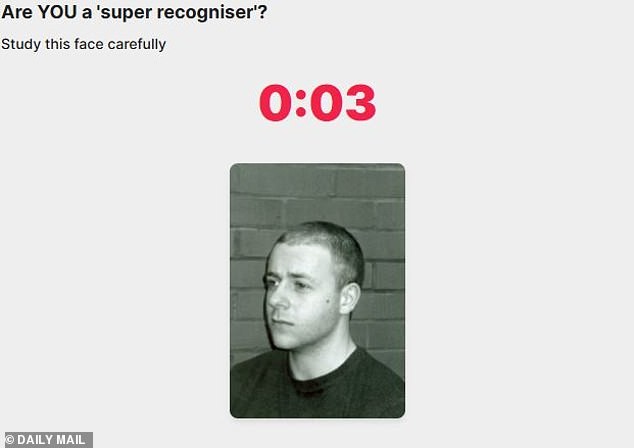


Você é um super recogniser? Faça o teste para ver se pertence ao grupo elite de pessoas que nunca esquecem um rosto


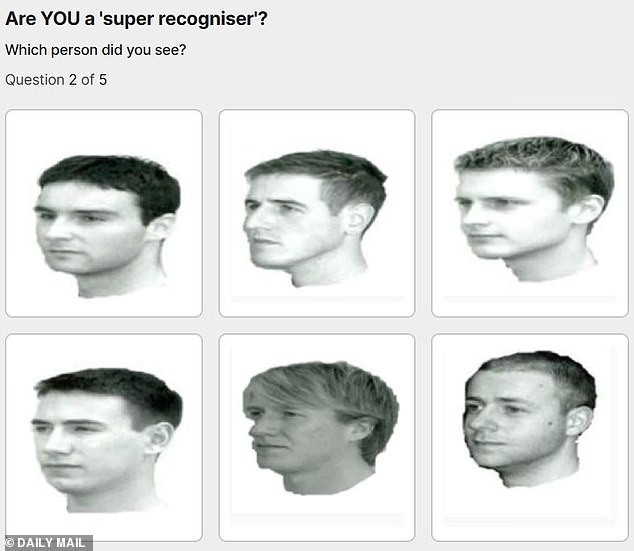
Você se orgulha de nunca esquecer um rosto, ou consegue sempre reconhecer um amigo de longa data caminhando pela rua? Se sim, você pode ser um 'super recogniser'. Super recognisers são um grupo de elite de pessoas com uma vantagem genética rara que lhes confere um real poder de reconhecer rostos. Agora, cientistas criaram um teste para você descobrir se pode ter essas mesmas habilidades raras. O quiz abaixo é uma versão encurtada de um teste de super recogniser criado pelos cientistas da University of Greenwich. Tudo que você precisa fazer é olhar para os rostos com atenção por cinco segundos, e então tentar reconhecer a mesma pessoa numa fila. Se você obtiver cinco de cinco, pode ser um sinal de que tem o que é necessário para tornar-se um super recogniser profissional. Então, quantos rostos você consegue identificar? Super recognisers são um grupo de pessoas cuja habilidade de detectar rostos excede muito a da população em geral. Esses indivíduos raros têm a capacidade de reconhecer alguém a partir de uma imagem de CCTV desfocada ou escolher um adulto numa multidão com base numa foto de infância. É por isso que a Polícia Metropolitana contratou cerca de 140 super recognisers, que foram decisivos na identificação de suspeitos durante a repressão aos distúrbios de 2011 em Londres, na Operação Withern. Eles também têm uma habilidade única de detetar imagens falsas, tornando-os extremamente úteis para encontrar identidades falsas, imagens adulteradas ou deepfakes geradas por IA. Num estudo recente, os investigadores constataram que super recognisers conseguiam detetar rostos gerados por IA 64 por cento das vezes, após apenas cinco minutos de treino. No entanto, os cientistas acreditam que não se pode tornar-se num super recogniser; é preciso nascer com isso. Fatores ambientais, como a exposição à diversidade, parecem desempenhar um papel nas competências de reconhecimento facial, já que pessoas de cidades tendem a ter melhor desempenho do que pessoas em cidades pequenas. Estas imagens desfocadas seriam suficientes para você identificar alguém numa multidão? Se sim, pode ser um super recogniser. Neste teste, precisa escolher o rosto com base na imagem granulada em preto e branco. Os super recognisers vão achar isso bem mais fácil do que a pessoa comum. Prosopagnosia é um distúrbio neurológico caracterizado pela incapacidade de reconhecer as faces das pessoas. Também conhecido como 'face blindness', a gravidade da condição depende do grau de comprometimento que a pessoa sofre. Alguns portadores podem ter apenas dificuldade em reconhecer um rosto familiar, enquanto outros não conseguem discriminar entre rostos desconhecidos, e em casos mais graves, os portadores não conseguem distinguir um rosto de um objeto. Alguns portadores não conseguem reconhecer os próprios rostos. Hollywood actor Brad Pitt, comedian Stephen Fry and former Health Secretary Patricia Hewitt are among those who have admitted suffering from face blindness. Fonte: National Institute of Neurological Disorders and Stroke No entanto, pesquisas sugerem que ser um 'super recogniser' é amplamente determinado pelos seus genes. Professor Josh Davis, psicólogo e líder do projeto Super Recognisers na University of Greenwich, disse ao Daily Mail: "We know that face recognition ability has a genetic influence from 'twin studies', because identical twins tend to generate identical test scores." "We know that face recognition ability has a genetic influence from 'twin studies', because identical twins tend to generate identical test scores." "We know that face recognition ability has a genetic influence from 'twin studies', because identical twins tend to generate identical test scores." Scientists aren't actually sure what makes super recognisers different, as there isn't any evidence to suggest they have a unique brain structure. But Professor Davis says that their brains might be 'hot–wired in a different way to the brains of other people.' Researchers have found that super recognisers had a big spike in brain activity about 100 milliseconds after seeing a face, well before most people perceive a set of facial features as a whole face. 'The higher levels of activity in super–recognisers may be associated with greater efficiency at integrating these features, and configurations of features into the whole,' says Professor Davis. Super recognisers have a unique ability to find faces, which is why they were used extensively by the Met Police during Operation Withern, to track down suspects from the 2012 London Summer Riots using CCTV footage like this If you are a super recogniser, you may have already noticed that your ability to spot faces is well above the norm. 'One common sign is that super recognisers find that they are far better than their friends/family at spotting when B–list and even C–list actors appear in different films and TV shows,' says Professor Davis. 'Super recognisers seem to easily spot actors who appear in different historical dramas despite substantial changes in fashion and quite strong make–up.' Another common sign is that you are able to spot old acquaintances out of the blue, even when decades have passed. Louise Bruder is a certified super recogniser working for the identity verification firm Yoti, training other super recognisers to spot fraudulent IDs. Ms Bruder told Daily Mail she always knew she had a 'very good memory for faces' and frequently found herself recognising people she had only met very briefly – often to much confusion and embarrassment when they couldn't remember her. And, while working part–time in a local pub, her unique gift made her every underage drinker's worst nightmare. 'I remember a group of lads came in, very pleasant, and they all dutifully produced ID's for the landlord when he asked them,' says Ms Bruder. Louise Bruder is a certified super recogniser working for the identity verification firm Yoti, training other super recognisers to spot fraudulent IDs. She says she always knew she had a strong memory for faces 'I just wasn't quite happy with that and said, 'Do you mind if I take a little look?'. 'I went through them all and said, 'Well, this one's fake. This one isn't fake, but is that your brother? You look just like him!'. However, it was only when she took the University of Greenwich's online tests that she realised just how unusual her talent was. After acing the first short test, Ms Bruder went on to take a more rigorous series of examinations, which ultimately ended with her making a new career as a professional super recogniser. If you also aced the first test and think that you have what it takes, you can find all the further tests on the Super Recognisers website here. And if you do have a knack for spotting faces in a crowd, Ms Bruder says you might be surprised to discover you are a super recogniser as well. She says: "It doesn't cost you anything to do the fun test, and who knows where it will lead?" "I played a rogue game on my phone on a Friday night. Nine years later, I'm still here." Super recognisers are uniquely skilled at spotting AI–generated faces. Can you tell which of these is a fake? Take the test below to find out the answers One of the biggest jobs for a professional super recogniser is searching through potentially suspicious ID photos to check for anyone who might be using a deep fake to hide their identity. But with AI image–generating tools becoming more sophisticated, even Ms Bruder says it is getting harder to see when someone is using a deep fake to hide their identity. Luckily, there are a few key signs of AI fakery that make it easier to detect any potential impostors. Ms Bruder says that one rule she always uses is: 'If in doubt, have a count.' AI–generated images will often have the wrong number of fingers, toes, or even teeth. She adds: 'Not to make a judgement on someone's appearance, but if the misalignment of their features looks really out of whack compared to the rest of the image, that would perhaps give us some warning.' Around the edge of the picture in particular, you might be able to spot random areas of pixilation, extremely wonky ears, or bits of hair that don't attach to the hairline, all of which are good signs of an AI fake.
O que é um super recogniser e como funciona na prática
O que é um super recogniser? Os super recognisers são um grupo raro de pessoas com uma habilidade extraordinária para reconhecer rostos, mesmo a partir de imagens desfocadas ou de multidões. Eles podem identificar alguém a partir de uma foto de infância ou reconhecer um adulto na multidão. A Polícia Metropolitana já utilizou cerca de 140 super recognisers para rastrear suspeitos, incluindo durante a Operação Withern, relacionada aos distúrbios de Londres de 2011. Eles também têm a capacidade de detectar imagens falsas, o que os torna úteis para combater IDs falsos e deepfakes. A investigação de um estudo recente revelou que os super recognisers conseguiam identificar rostos gerados por IA 64% das vezes após apenas cinco minutos de treino, mas os cientistas mantêm que não se pode treinar alguém para ser um 'super recogniser' — é uma característica com origem genética. Embora não exista uma diferença clara na anatomia cerebral entre super recognisers e o público em geral, acredita-se que o cérebro deles possa estar 'hot–wired in a different way to the brains of other people.' Professor Josh Davis, da University of Greenwich, destacou que existe influência genética na capacidade de reconhecimento facial, citando estudos com gêmeos identicos. "We know that face recognition ability has a genetic influence from 'twin studies', because identical twins tend to generate identical test scores." Pode uma pessoa tornar-se um 'super recogniser'? Ainda não se sabe ao certo; fatores ambientais, como exposição à diversidade, também influenciam as capacidades de reconhecimento facial, com residentes de zonas urbanas, geralmente, a ter melhor desempenho. Louise Bruder, uma reconhecida 'super recogniser', trabalha na Yoti e treina outros profissionais para detectar IDs fraudulentos. Ela relata que sempre soube ter uma "very good memory for faces" e muitas vezes reconhecia pessoas que conhecera apenas de passagem. O caso de Bruder começou a mudar ao fazer os testes online da University of Greenwich, que a levaram a uma carreira como 'super recogniser'. Se você também estourar o primeiro teste, pode descobrir que tem talento para reconhecer rostos em multidões — e pode ser que seja um 'super recogniser' também. "It doesn't cost you anything to do the fun test, and who knows where it will lead?" diz Bruder. "I played a rogue game on my phone on a Friday night. Nine years later, I'm still here." Como reconhecer rostos gerados por IA? Ainda que a tecnologia evolua, existem sinais que ajudam a detectar fraudes visuais. "If in doubt, have a count" é uma regra que Bruder usa. Além disso, imagens geradas por IA costumam ter números errados de dedos, pés ou dentes, conforme aponta Bruder. "Not to make a judgement on someone's appearance, but if the misalignment of their features looks really out of whack compared to the rest of the image, that would perhaps give us some warning." Os contornos ao redor da imagem, o pixilamento irregular, orelhas desproporcionais ou fios de cabelo que não se ligam à linha capilar são indícios comuns de uma possível IA falsa.