


The Road That Powers Electric Trucks While They Drive


An experimental highway charging system has left engineers astonished as it demonstrated wireless power transfer to a heavy electric truck while it was in motion. American researchers from Purdue University tested a dynamic charging technology beneath a concrete road surface on a quarter-mile stretch of US Highway 52/231 near West Lafayette, Indiana. The test, reported by Interesting Engineering, shows a path toward charging fleets without plugging in, potentially shrinking battery packs and reducing downtime for long-haul electric vehicles.
In This Article:
Where the test happened and how it works
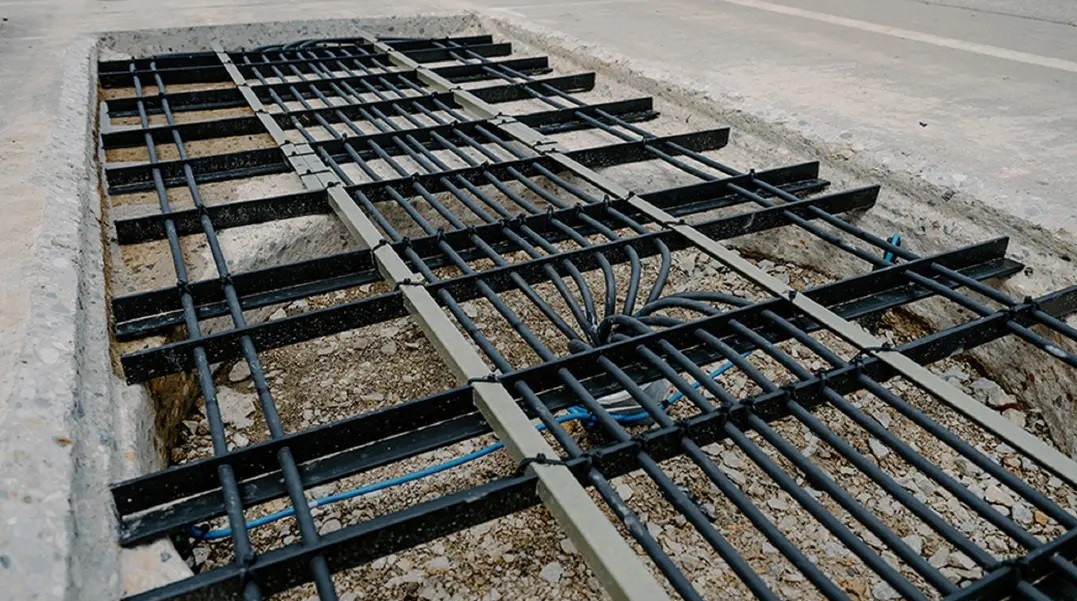
The trial was conducted on a quarter-mile (about 0.40 km) stretch of US Highway 52/231 near West Lafayette, Indiana. Purdue University researchers implemented the innovative technology of dynamic energy transfer under the road’s concrete pavement. Energy was transmitted to the vehicle via electromagnetic coils installed beneath the road surface, charging a specially equipped electric tractor-trailer.
The results: charging at highway speed
During the test, a specially equipped Class 8 Cummins electric tractor-trailer could be charged at speeds of around 105 km/h. The system delivered about 190 kilowatts of power to the truck, which is roughly equivalent to the energy consumption of around 100 average American homes.
Expert analysis and implications for the industry
Professor Dionysios Aliprantis, from Purdue University’s Electrical Engineering and Computer Science department, stressed the difficulty of transferring electricity through a magnetic field over such a long distance and at such high vehicle speeds, noting that the vehicle weighs tens of tons. He added that the development requires far greater engineering precision than ordinary electronics like smartphones. John Cress, a technical specialist at Cummins, called the technology a promising solution for the development of commercial transportation on the roads of the future. According to the researchers, implementing such a system would significantly reduce the size of electric vehicle batteries, including those for freight vehicles, addressing range and recharge time concerns.
What this could mean for the future of freight
Experts say highway-based wireless charging could reshape fleet planning, allowing for smaller battery packs or even enabling longer-range electric freight. The Purdue–Cummins collaboration suggests that such a system would help eliminate range limitations and long charging downtime, paving the way for a faster transition to electric trucking on America’s highways. Further work is needed to scale the technology, ensure safety, reliability, and cost-effectiveness, and determine how best to integrate it into public infrastructure.