

The $120,000 Job No American Wants to Do Even With Thousands of Openings


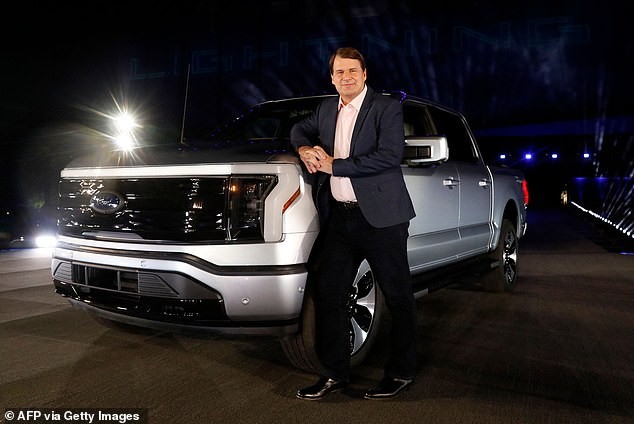
Thousands of vacancies for six-figure, blue collar jobs remain unfilled in the United States because Americans are simply uninterested in hands-on work, experts said. The automotive giants that once had workers rush to help build cars for the front lines during World War II are now hurting to find skilled trade workers. Ford CEO Jim Farley said there were 5,000 mechanic jobs hiring that could earn workers up to $120,000 - almost double the average salary in America. However, he was struggling to fill those positions as the US is suffering a shortage of workers skilled in manual labor. "We are in trouble in our country," Farley warned. "We are not talking about this enough. We have over a million openings in critical jobs, emergency services, trucking, factory workers, plumbers, electricians, and tradesmen. It’s a very serious thing." He said dealerships across the country had a 'bay with a lift and tools and no one to work in it.' Part of the problem is the time it takes to make the six-figure salaries in the industry, which often does flat rate jobs, meaning, in order to earn a high salary, one would have to work quickly to do more tasks. Another obstacle is the length of time it takes to learn the job - five years.
In This Article:
Ford Says 5,000 Mechanic Jobs Could Pay Up to 120,000 Yet Fill Rates Lag
Farley said dealerships across the country had a 'bay with a lift and tools and no one to work in it.' He said dealerships across the country had such a bay, and that part of the problem is the time it takes to make the six-figure salaries in the industry, which often does flat rate jobs, meaning, in order to earn a high salary, one would have to work quickly to do more tasks. Another obstacle is the length of time it takes to learn the job - five years. In November, Ford CEO Jim Farley said there were 5,000 mechanic jobs hiring that could earn workers up to $120,000 - almost double the average salary in America.

Six Figure Pay Comes Slowly and Costs a Lot The Hidden Price of Mastering a Transmission
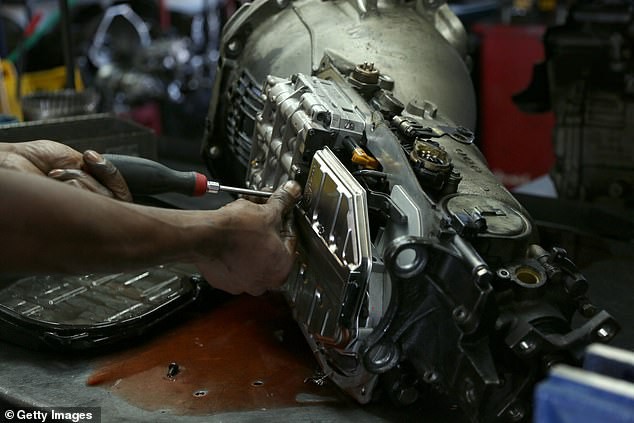
Ted Hummel, 39, of Ohio, is a senior master technician who specializes in transmissions and makes $160,000 per year after more than a decade in the business. But for those who stick it out, like Ted Hummel, 39, of Ohio, one can rake in unbelievably good salaries like Hummel's $160,000. Hummel, a senior master technician who specializes in transmissions, took around a decade to even break the $100,000 mark. "Would YOU rather earn $120,000 as a mechanic or $70,000 in an office?" "They always advertised back then, you could make six figures," Hummel, who has an associate's degree in automotive technology, told the Wall Street Journal (WSJ). He started working for Klaben Ford Lincoln in Kent, near Cleveland, in August 2012. It wasn't until 2022 that he made more than $100,000, he told the WSJ. "As I was doing it, it was like: \"This isn’t happening.\" It took a long time." Ford's job center starts off skilled trade workers around $42,000 a year, according to listings viewed by the Daily Mail. For an auto mechanic in Southeast Michigan, the starting rate is $43,260, with an increase after three consecutive months of employment. The job also requires eight years of previous experience or apprenticeship, but does not require a college degree. Outside the time it takes to master the skills to become a highly-paid mechanic, it's also a costly market to get into, as technicians more often than not have to provide their own tools. An industrial truck mechanic starts at $44,435 and requires the same as the auto mechanic. Hummel, a father-of-two who is at the highest status he can be in his position, is one of the few left in America who can deal with the beast that is a car's transmission, a 300-pound machine that gives the wheels power. He is rarely without work as his skills are needed, so much so that his boss told WSJ they wish they could clone him. And Hummel, who works at a flat rate, has mastered his expertise and can work quickly to fix the transmission. However, this wasn't the case when he first got into the line of work. In his novice years, it would take him up to 20 hours to fix a single transmission as he had to often refer to Ford manual to make sure he was following the steps correctly, he told WSJ. Unlike Hummel, who has found a way to break the six-figure mark, many mechanics don't and many give up long before even achieving the wealth marker. Outside the time it takes to master the skills, it's also a costly market to get into, as technicians more often than not have to provide their own tools. A specialized torque wrench that Hummel owns costs $800. Ford requires him to have the tool, he told WSJ. The job also takes its toll on the body, which could leave workers out of the bay for months as they heal, impacting their income significantly. Farley said that Ford has struggled to fill mechanic positions, as America is suffering a shortage for those skilled in manual labor. Unlike the rest of the job market, which is seeing white-collar workers being laid off in droves, blue-collar jobs are abundant for those who want them. An estimated 345,000 new trade jobs are expected to come before 2028, according to Forbes. But for every five people who retired from skilled trades, only two are replacing them, the magazine said, leaving one million jobs unfulfilled. With skill gaps - as more Americans are getting college degrees - there\'s will be 2.1 million unfilled manufacturing jobs by 2030, the magazine said.

Forecasts Point to a Growing Gap With Millions of Unfilled Trade and Manufacturing Jobs by 2030
An estimated 345,000 new trade jobs are expected to come before 2028, according to Forbes. But for every five people who retired from skilled trades, only two are replacing them, the magazine said, leaving one million jobs unfulfilled. With skill gaps - as more Americans are getting college degrees - there\'s will be 2.1 million unfilled manufacturing jobs by 2030, the magazine said.