


Russia Patents a Spacecraft with Artificial Gravity Promising Safer, Longer Deep‑Space Missions


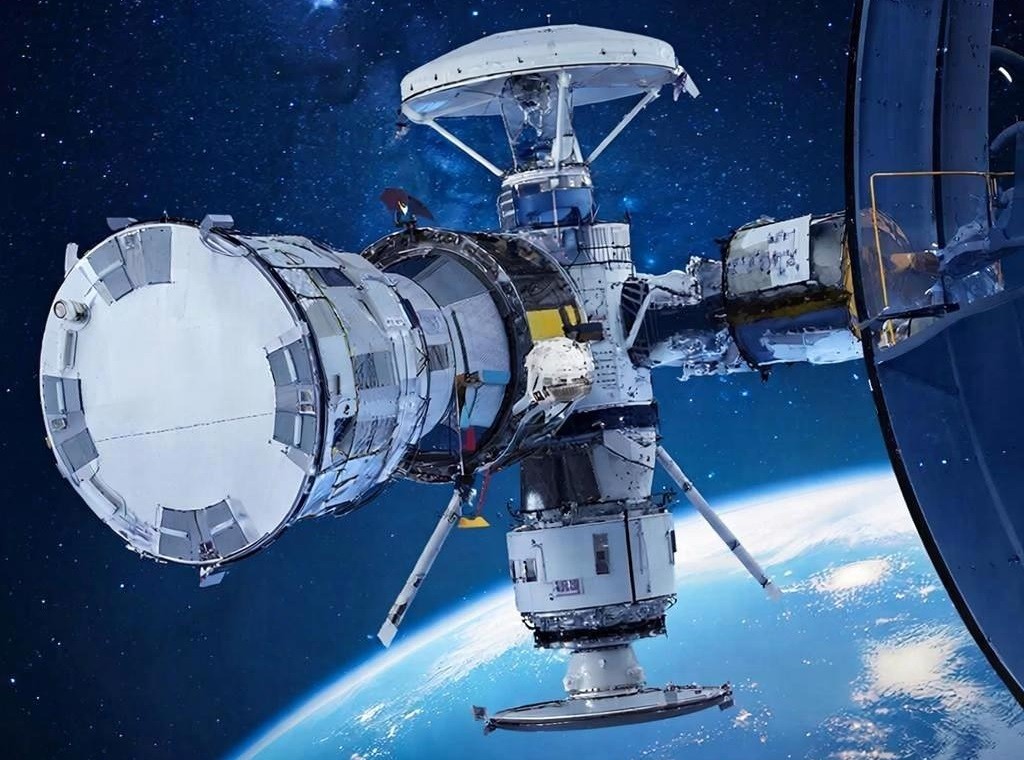
The state corporation Roscosmos announced that the Russian company Energia has been granted a patent for a unique spacecraft project equipped with an artificial gravity system, according to TASS. This innovative solution promises to significantly improve the comfort and safety of long-duration space missions. Photo from open sources / Illustrative image created by AI According to the patent obtained by TASS, the design includes a central module consisting of a stationary and a rotating part, connected by a hermetic flexible adaptor. The system is complemented by living modules, equipment for rotation, and power sources. The authors of the project emphasized that the rotation of the system will create a gravity force equivalent to half of Earth's gravity, or about 0.5 g. This innovation is of great significance for future deep-space flights, as prolonged exposure to microgravity negatively affects astronauts' health, including muscle atrophy and loss of bone density. Artificial gravity will significantly reduce health risks for the crew and increase the duration of expeditions. This patent signals interest in the concept of artificial gravity at a time when the completion of the International Space Station (ISS) is approaching and plans are being developed to create new national and commercial stations. According to Space, NASA and Roscosmos currently plan to deorbit the ISS in 2030 using a modified SpaceX Dragon capsule, so that the station will burn up in the atmosphere over the Pacific Ocean. Russia has pledged to remain aboard the ISS until 2028.
In This Article:
A central module with stationary and rotating parts connected by a hermetic flexible adaptor
According to the patent, the central module comprises a stationary part and a rotating part, connected by a hermetic flexible adaptor. The system is complemented by living modules, equipment for rotation, and power sources. The authors of the project emphasized that the rotation of the system will create a gravity force equivalent to half of Earth's gravity, or about 0.5 g.
Health benefits of artificial gravity for long‑duration missions
Long-duration exposure to microgravity negatively affects astronauts' health, including muscle atrophy and loss of bone density. This is why artificial gravity is seen as a crucial solution, as it will significantly reduce health risks for the crew and allow longer expeditions.
Context: ISS near its end and plans for new stations
This patent signals interest in the concept of artificial gravity at a time when the completion of the International Space Station is approaching and plans are being developed to create new national and commercial stations.
Deorbit plans for the ISS and Russia’s commitment until 2028
According to Space, NASA and Roscosmos currently plan to deorbit the ISS in 2030 using a modified SpaceX Dragon capsule, so that the station will burn up in the atmosphere over the Pacific Ocean. Russia has pledged to remain aboard the ISS until 2028.