


Production starts on schedule for the world’s first flying car in Silicon Valley


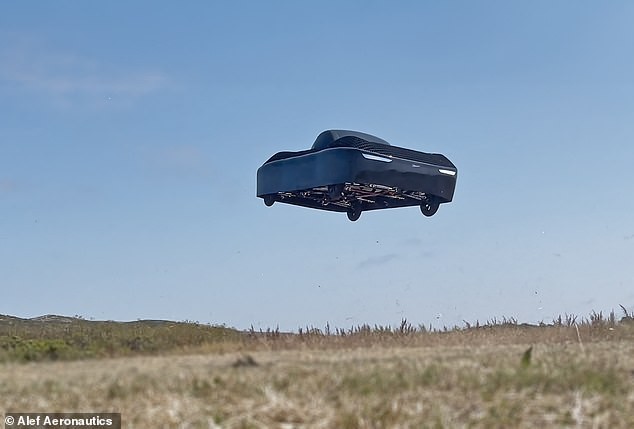
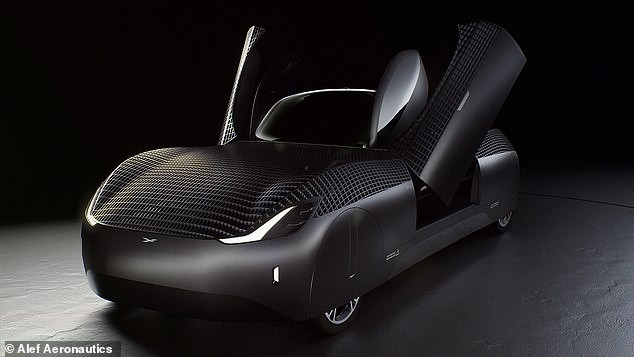
If you've ever dreamed of soaring over traffic on your daily commute, your dreams could soon be a reality – as the world's first flying car enters production. The Alef Model A Ultralight uses eight propellers hidden in the boot and bonnet to take off at any time. And when you're done flying, the futuristic £235,000 vehicle can land and drive like any normal car. After more than a decade of development, the US–based Alef Aeronautics has finally announced that the first customers will soon get their flying cars. The futuristic vehicles will be hand–assembled in the company's facility in Silicon Valley, California. However, Alef Aeronautics says that each car will take 'several months' of craftsmanship before it is safe to send out to customers. The first handmade cars will only be delivered to a few customers to test out the experimental vehicles in real–world conditions. The company says this slow rollout will allow it to work out any potential issues before the flying car enters mass production. The 'world's first' flying car (pictured) has finally entered production, as Alef Aeronautics announces that its first all–electric vehicle will be hand assembled in the US. Alef Aeronautics' futuristic vehicle can be driven around like a normal car on the streets or take off and fly using eight propellers hidden in its carbon–fibre mesh body. Jim Dukhovny, CEO of Alef Aeronautics, says: "We are happy to report that production of the first flying car has started on schedule. The team worked hard to meet the timeline, because we know people are waiting. We're finally able to get production off the ground." "Unlike flying taxis, which rely on airports or vertiports, Alef Aeronautics says its vehicle is the first true 'flying car' that can both drive on the roads and fly."
In This Article:
The Model A Ultralight pairs road driving with flight using eight hidden propellers
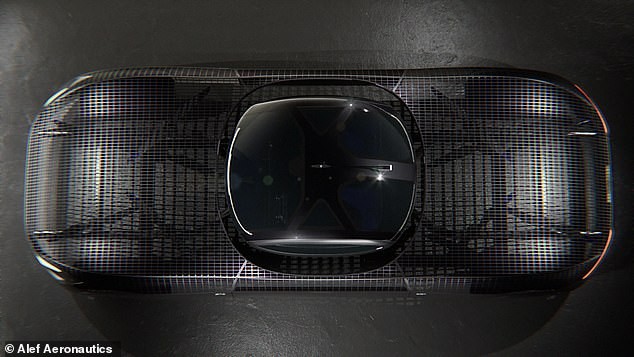
The Model A is both a road–legal vehicle and an aircraft capable of taking off without wings via eVTOL (electric vertical take–off and landing). On the ground, the Model A drives just like a normal electric car, thanks to four small engines in each of the wheels. But the driver's seat is also surrounded by powerful propellers that provide enough thrust for flight at a cruising speed of 177 km/h. The carbon–fibre mesh body – measuring around 5 metres by 2 metres – allows air to pass through the car while keeping the spinning blades safely covered. The company says that the car will have enough room for the pilot and one passenger, and have a range of 322 km on the ground and 177 km in the air. The entire car weighs just 385 kg (850 lbs), so that it can be classified as an ultralight 'low speed vehicle' – a legal classification for small electric vehicles like golf carts. That means the car will be capped at 40 km/h on public roads despite being able to drive faster. Having received airworthiness certification from the Federal Aviation Administration (FAA) in 2023, Alef Aeronautics is now edging closer to making the Model A a reality – over a decade after the company was founded. The company reports that it has received 3,500 pre–orders, collectively worth more than £800 million. Mr Dukhovny claims the car, which is aimed at the general public, is relatively simple to use and would take just 15 minutes to learn. The Model A Ultralight, which will soon be in customers' hands, is a stripped–down prototype version of Alef's flagship Model A flying car. The entire car weighs 385 kg (850 lbs). "The first customers will only be allowed to test their flying cars under 'very controlled conditions'," the company says. Alef Aeronautics will send a limited number of its flying cars to customers for them to test in 'very controlled conditions'. The company adds that each customer will need to receive training in compliance and maintenance before flying.
A high-stakes race to electric air transport with billion-dollar bets and cautious pilots
Advances in electric motors, battery technology and autonomous software have triggered an explosion in the field of electric air taxis. Larry Page, CEO of Google parent company Alphabet, has poured millions into aviation start-ups Zee Aero and Kitty Hawk, which are both striving to create all‑electric flying cabs. Page, who co-founded Google with Sergey Brin back in 1998, has personally invested $100 million (£70 million) into the two companies, which have yet to publicly acknowledge or demonstrate their technology. AirSpaceX unveiled its latest prototype, Mobi-One, at the North American International Auto Show in early 2018. Like its closest rivals, the electric aircraft is designed to carry two to four passengers and is capable of vertical take-off and landing. AirSpaceX has even included broadband connectivity for high speed internet access so you can check your Facebook News Feed as you fly to work. Aside from passenger and cargo services, AirSpaceX says the craft can also be used for medical and casualty evacuation, as well as tactical Intelligence, Surveillance, and Reconnaissance (ISR). Airbus is also hard at work on an all-electric, vertical-take-off-and-landing craft, with its latest Project Vahana prototype, branded Alpha One, successfully completing its maiden test flight in February 2018. The self-piloted helicopter reached a height of 5 metres before successfully returning to the ground. In total, the test flight lasted 53 seconds. Airbus previously shared a well-produced concept video, showcasing its vision for Project Vahana. The footage reveals a sleek self-flying aircraft that seats one passenger under a canopy that retracts in similar way to a motorcycle helmet visor. AirSpaceX is another company with ambitions to take commuters to the skies. The Detroit-based start-up has promised to deploy 2,500 aircrafts in the 50 largest cities in the United States by 2026. AirSpaceX unveiled its latest prototype, Mobi-One, at the North American International Auto Show in early 2018. Like its closest rivals, the electric aircraft is designed to carry two to four passengers and is capable of vertical take-off and landing. AirSpaceX has even included broadband connectivity for high speed internet access so you can check your Facebook News Feed as you fly to work. Aside from passenger and cargo services, AirSpaceX says the craft can also be used for medical and casualty evacuation, as well as tactical Intelligence, Surveillance, and Reconnaissance (ISR). Uber Elevate has been another front in the race, with Uber CEO Dara Khosrowshahi tentatively discussing plans during a technology conference in January 2018. “I think it’s going to happen within the next 10 years,” he said.
Industry bets, challenges and the dream of flight for the masses
The field has exploded as advances in electric motors, battery technology and autonomous software push the development of electric air taxis forward. The Jetsons could become a reality before long, but experts caution that wide adoption will come slowly and safely. The production line for the Model A is expected to remain deliberately limited for now, with pilots undergoing training, strict compliance checks, and extensive test flights before any broader rollout. As Page’s investments show, this is as much about investment confidence as it is about technology. Dara Khosrowshahi, Uber’s chief executive officer, said at a technology conference in January 2018: “I think it’s going to happen within the next 10 years.”