


Overparenting Undermines Resilience Five Alarming Signs and How to Let Them Learn


It’s a familiar scene: Your kid is stuck on a problem or upset about a situation. Before they’ve even finished explaining, you swoop in with solutions. That’s what good parents do, right? But when rescuing becomes routine, it undermines the skills kids need to build confidence and resilience. As a clinical psychologist who works with anxious children, teens and parents, and as a parent myself, I know how quickly loving support can turn into overparenting. Overparenting blends overinvolvement with overprotection, repeatedly signaling to kids that the world is unsafe and that they can’t handle challenges without adult support. This can chip away at confidence, deepening dependence and amplifying anxiety. Here are five signs you might be overparenting, and what kids actually need in order to grow and thrive.

In This Article:
- Sign 1 When Kids Struggle Parents Jump In
- Sign 2 Constant Reassurance Feeds Anxiety and Stops Growth
- Sign 3 Lowered Expectations Shielding from Discomfort
- Sign 4 Emphasis on Outcomes Over Learning to Navigate Setbacks
- Sign 5 Adult Discomfort Drives Hovering and Undermines Confidence
- Finding Balance Guiding Without Rescuing
Sign 1 When Kids Struggle Parents Jump In
When kids struggle, many parents instinctively step in. This might look like negotiating reduced courseloads, intervening with a friend’s parents, or rearranging schedules to minimize discomfort. But kids can’t become confident problem-solvers unless they are given the chance to try, stumble and succeed on their own. What to do: Pause before offering solutions. Then ask, “What do you think you could try?” This encourages independent thinking and teaches kids that their ideas matter.

Sign 2 Constant Reassurance Feeds Anxiety and Stops Growth
Many parents worry that experiencing anxiety, sadness or frustration is somehow harmful. This can drive constant reassurance, distraction or attempts to “fix” every upset: “Don’t be sad, let’s do something fun!” But painful feelings are a natural part of life, and learning to cope with them is essential to healthy development. What to do: Normalize and name the emotion, then express confidence in your kid’s ability to cope with painful feelings: “It makes sense that you feel frustrated, and I know you can handle it.”
Sign 3 Lowered Expectations Shielding from Discomfort
One subtle overparenting pattern is adjusting expectations based on what we fear our child can’t handle, rather than what they’re capable of learning to manage. We lower the bar to prevent upset — excusing kids from practice, lessons or other routines because it might be tiring or stressful — and filter all feedback to buffer hurt feelings. This helps our kid feel better in the moment, but expecting fragility can inadvertently teach children to see themselves as fragile. What to do: Ask yourself whether your expectations fit your child’s age and abilities. Are the challenges they face truly risky, or just uncomfortable? Offer support that helps them grow, rather than shielding them from every difficulty.
Sign 4 Emphasis on Outcomes Over Learning to Navigate Setbacks
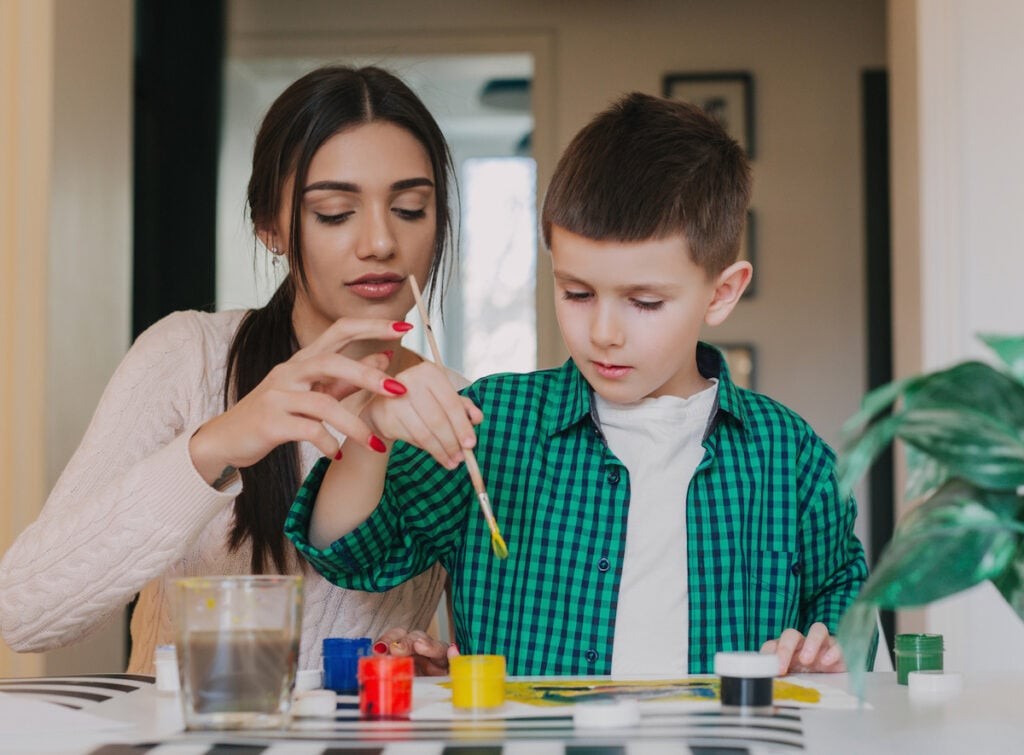
Overparenting often emphasizes results — preventing mistakes, smoothing feelings or guaranteeing success — rather than teaching kids how to navigate setbacks. This might look like negotiating group assignments with a teacher to ensure your kid gets the “perfect” project partners, arguing with a coach over a disappointing decision, or micromanaging every step in a craft to make sure it’s done correctly. But true growth comes when expectations falter and kids learn to adapt. What to do: Let mistakes happen. Resist the urge to retrieve forgotten homework, argue a bad grade or buy a treat after a disappointing performance. Support your child as they problem-solve, adapt and learn from the process.
Sign 5 Adult Discomfort Drives Hovering and Undermines Confidence
Many overparenting behaviors stem from adult discomfort and fears about failure, judgment or long-term consequences. This could look like calling a friend’s parents after a minor disagreement out of concern about social fallout, or hovering over homework because you are anxious about your kid’s performance. While well-intentioned, it’s easy for kids to interpret this behavior as a lack of parental confidence in them, planting seeds of doubt in their own abilities. What to do: Pause and reflect: “Is this about their safety, or my discomfort with seeing them struggle?” Model how to tolerate discomfort when there’s no immediate solution.
Finding Balance Guiding Without Rescuing
Overparenting often stems from love and protection, yet shielding kids from every challenge can heighten the anxiety we hope to prevent. Swing too far the other way, and neglect breeds the same result. The key is balance: guide without controlling, support without rescuing, coach while trusting. Resilience develops when kids feel secure enough to try and free enough to learn on their own. Dr. Meredith Elkins is a clinical psychologist specializing in anxiety disorders in children and parents. She is faculty at Harvard Medical School, co-director of the McLean Anxiety Mastery Program at McLean Hospital and is the author of ”Parenting Anxiety: Breaking the Cycle of Worry and Raising Resilient Kids.” Want to get ahead at work with AI? Sign up for CNBC’s new online course, Beyond the Basics: How to Use AI to Supercharge Your Work. Learn advanced AI skills like building custom GPTs and using AI agents to boost your productivity today. Use coupon code EARLYBIRD for 25% off. Offer valid from Jan. 5 to Jan. 19, 2026. Terms apply.