


Kamchatka Buried Under Record Snow as Nature Roars and AI Tricks Surface


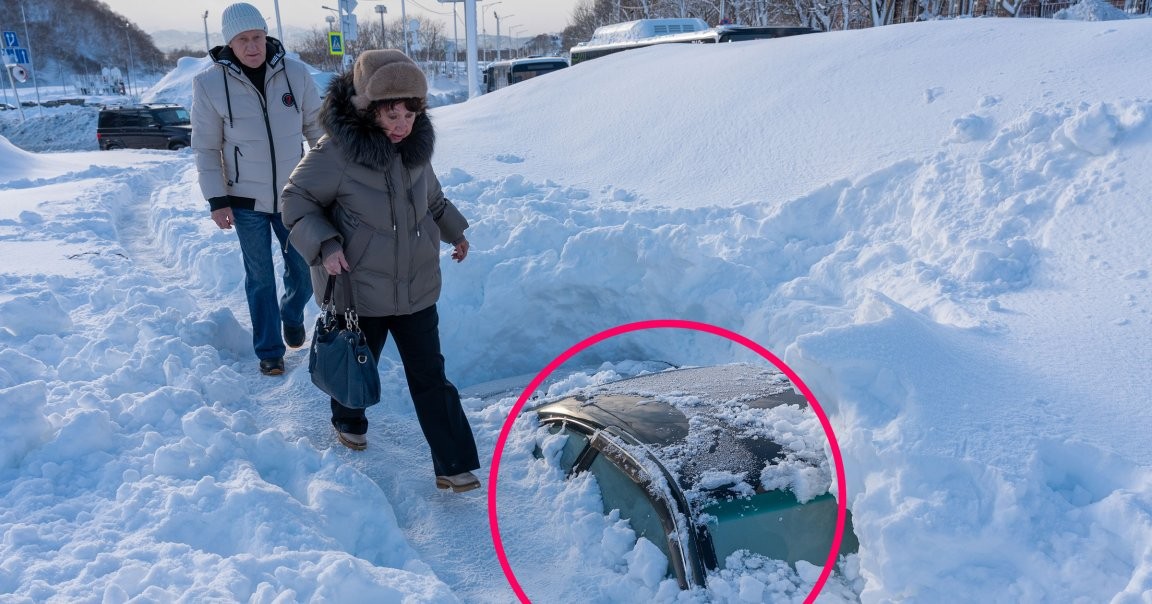
While much of North America is still recovering from a devastating winter storm over the weekend, other parts of the globe have already been through much worse. Consider the Kamchatka Peninsula, a Russian territory that reaches into the Pacific Ocean northeast of Japan, which has been battling with record amounts of snow this winter. On January 16 alone, a small city on the peninsula’s southern coast, called Petropavlovsk-Kamchatskiy, experienced 1.68 meters of snow, effectively burying local residents and their cars completely. Some areas saw more than 1.98 meters in just the first half of January. One video that went viral on social media last week shows a local resident jumping out of his window several stories up, only to land in a deep blanket of snow below. A time-lapse recorded by a CCTV camera shows entire cars being buried in a matter of hours, forcing residents to shovel narrow channels just to get down the block. According to the Russian state-operated news agency RIA Novosti, it was the most snowfall in the peninsula the Kamchatka hydrometeorology department has seen in about 60 years.
In This Article:
- Petropavlovsk-Kamchatskiy Buried Under Up to 1.98 Meters of Snow in January
- Viral Clips Versus Reality Some Snow Videos Are Not Real
- NASA Satellite Images Show Snow Cover Visible From Space
- AI Generated Clips Stir Confusion as Local Says They Are Not Real
- Kamchatka the Most Volcanically Active Region on Earth With a History of Quakes and Eruptions
- Putting U.S. and Canadian Snowstorms in Perspective
- About the Author
Petropavlovsk-Kamchatskiy Buried Under Up to 1.98 Meters of Snow in January
On January 16 alone, Petropavlovsk-Kamchatskiy recorded 1.68 meters of snowfall, burying residents and their cars. Across the Kamchatka peninsula, some locations measured more than 1.98 meters in the first half of January.
Viral Clips Versus Reality Some Snow Videos Are Not Real
One video that went viral on social media last week shows a local resident jumping out of his window several stories up, only to land in a deep blanket of snow below. A time-lapse recorded by a CCTV camera shows entire cars being buried in a matter of hours, forcing residents to shovel narrow channels just to get down the block. According to the Russian state-operated news agency RIA Novosti, it was the most snowfall in the peninsula the Kamchatka hydrometeorology department has seen in about 60 years.
NASA Satellite Images Show Snow Cover Visible From Space
Satellite images highlighted by NASA show the peninsula being buried by snow, turning it into a white snowball that can easily be spotted from space.
AI Generated Clips Stir Confusion as Local Says They Are Not Real
Yet as the New York Times reports, AI-generated videos have added to the confusion, showing unrealistic apocalyptic scenes. One fake clip, for instance, shows residents sliding down massive ramps of snow that reach the top of ten-story apartment blocks. Petropavlovsk-Kamchatsky local Andrey Stepanchuk told the NYT that many of the videos circulating online were not real, describing the situation as 'nothing catastrophic'.
Kamchatka the Most Volcanically Active Region on Earth With a History of Quakes and Eruptions
Beyond the snow, Kamchatka is one of the most volcanically active regions on the planet; NASA says it’s the most volcanically active region in the world. Kamchatka was struck by a magnitude 8.8 earthquake last summer, the sixth largest on record since 1900. Just weeks later, the Krasheninnikov volcano near the east coast erupted for the first time in 'at least 400 years'.
Putting U.S. and Canadian Snowstorms in Perspective
In short, Kamchatka’s experiences with the brute force of Mother Nature really put the latest snowstorm blanketing much of the United States and Canada into perspective. More on snow: Meteorologist Warns That Winter Storm Means Trees Are About to Start Exploding
About the Author
I'm a senior editor at Futurism, where I edit and write about NASA and the private space sector, as well as topics ranging from SETI and artificial intelligence to tech and medical policy.