


The Confession of a Woman Who Lived with Heroin for 15 Years: “It Started as Rebellion, Ended as Hell, God saved me”


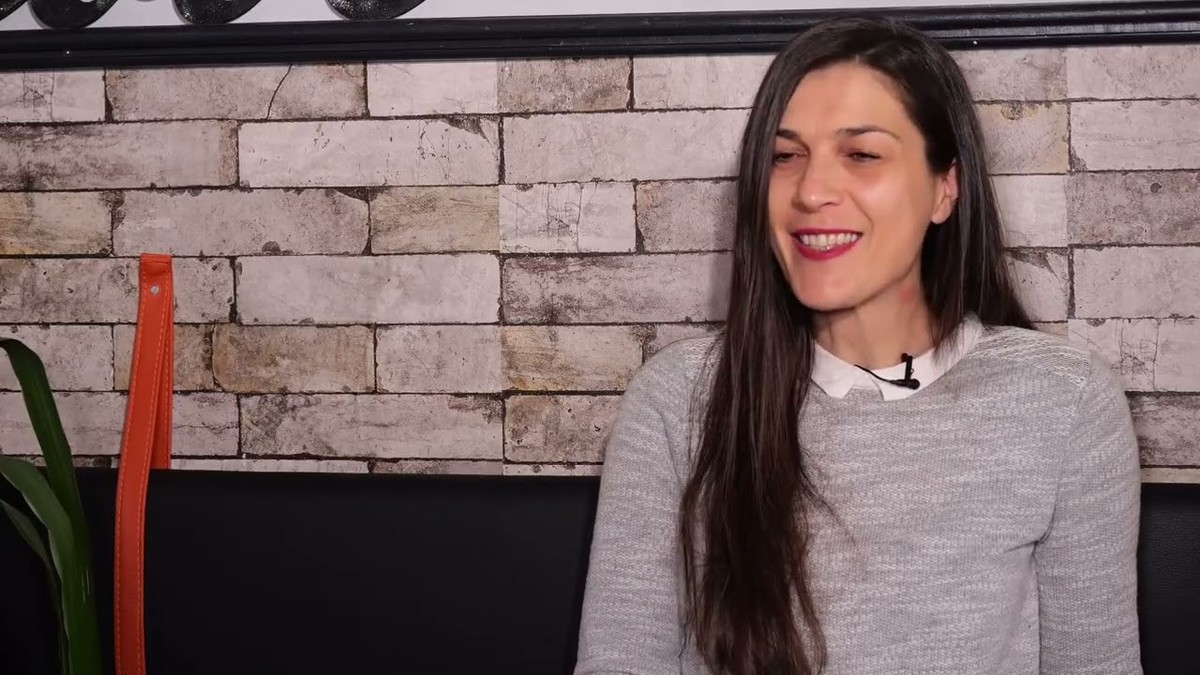
Tina Pantović did not grow up on the street. She did not come from a broken home. She was not hungry, abandoned, or deprived. She grew up in a small, tightly knit place where everyone knows everyone, in a patriarchal environment where reputation often matters more than truth, and silence more than honest conversation. On the outside, her childhood looked “fine.” In many ways, it was. But it was also strict—controlled, measured, contained. Everything was acceptable as long as it fit the expected image. Anything outside that image felt forbidden. As a girl, she had dreams. She wanted to become an actress. She played piano. She finished music school. She had talent, ambition, a rich inner world. But those desires had little room to breathe. Her life was constantly monitored: when she went out, who she was with, what time she returned. Not because she was causing trouble, but because of a sentence that quietly ruled everything: “What will people say?” That pressure planted the first seed.
In This Article:
Pressure, Silence and the Dream of Freedom
Tina lived in a place where being seen mattered more than truth, and silence was valued over honest conversation. The pressure of being watched wore on her. The question “What will people say?” became a sentence that quietly ruled everything. This pressure planted the first seed. In her teenage years—when a person naturally starts searching for space, identity, and freedom—Tina began to feel that she was living someone else’s life. The more control she felt, the stronger the rebellion grew inside her. It wasn’t loud at first. It was quiet. Internal. And dangerous. At 13, she smoked her first cigarette. Then she tried marijuana. Not because she understood what she was doing, but because those moments gave her something she had been starving for: a feeling of freedom. Not real freedom—an illusion of it. But to a suffocating mind, even an illusion feels like air.
Escape into Independence and the Edge of Boundaries
After high school, she left for university. For her, it was not just education—it was escape. From home. From expectations. From the constant pressure of being watched and judged. The new environment welcomed her with open arms. Nightlife, alcohol, drugs—everything that looked like independence. At that point, she promised herself she would never go further than what she had already tried. But life rarely respects promises like that. Heroin didn’t arrive like a shock. It arrived quietly. As “something stronger.” As “just once.” As “only this.” And before she realized it, her studies became secondary. After a year and a half, she dropped out and returned home. But the problem had already moved in with her. The next 15 years became years of heavy addiction, secrecy, and lies.
The Moment It All Began to Crack: The Quiet Arrival of Heroin
There were attempts to stop. Programs. Institutions. Treatments. Nothing lasted. The cycle kept repeating. At one point, she ended up in a military medical facility and experienced three hours of clinical death. She remembers a feeling of crossing into something final, a door opening, a point beyond return. But even that moment did not immediately save her. For another two years, she continued sinking deeper. She describes a period in which she no longer cared whether she lived or died. Walking the streets with a needle, without shame, without fear, without a tomorrow in her mind. Not because she wanted pain—because she felt numb to everything.
August 2008: The Turning Point and the Road to Rehab
The turning point came in August 2008. Not with cinematic drama. Not with a magical instant transformation. It came with something painfully simple: her mother arrived and knocked on the door. “Open up,” her mother said. “It’s mom.” In that moment, Tina felt something she describes as a call she could not ignore. She knew it was the end of the road. And she opened the door. She went to rehabilitation in Novi Sad. For the first time, she says, she was not judged. Not stared at. Not treated like a disgrace. She was surrounded by people who carried the same wounds—people who understood addiction from the inside. The process was long. Hard. Full of resistance. Full of internal fights. She admits she was stubborn—deeply stubborn—and that her personality often fought the very help she needed.
A Return Home and a Life Rebuilt
After rehab, life did not become easy. In fact, it became even more demanding. She married soon after and became pregnant. She found herself alone in a new city, without a familiar support system, facing the pressures of motherhood and adult life. But this time, she says, she was not alone inside herself. Today, more than 16 years later, Tina does not tell her story to preach. She does not pretend there is a simple formula. She does not promise that recovery is painless or fast. She only testifies to one thing: it is possible. Not everyone will walk the same path. Not everyone will understand it through the same faith. But anyone who believes they are “still in control” should understand how quickly that belief can collapse. This is not just a story about drugs. It is a story about suffocation, escape, and a freedom that was paid for at a brutal price. And it is a warning: not every rebellion leads to salvation. Some rebellions lead straight into hell.