

Inside the Enigmatic World of Freemasons a British Journalist Goes Inside Their Headquarters to Reveal Secrets Rumours and Revelations


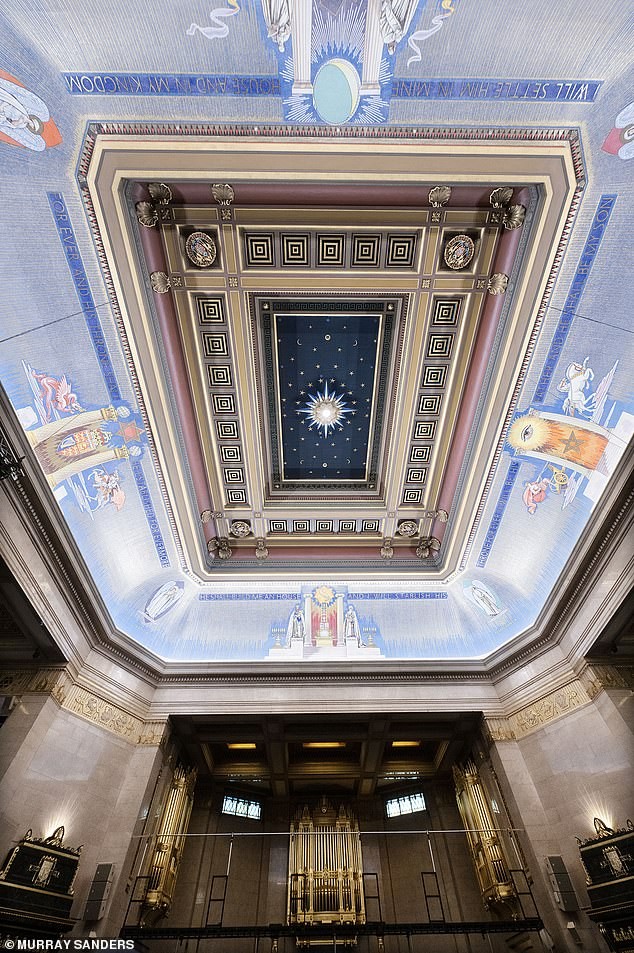
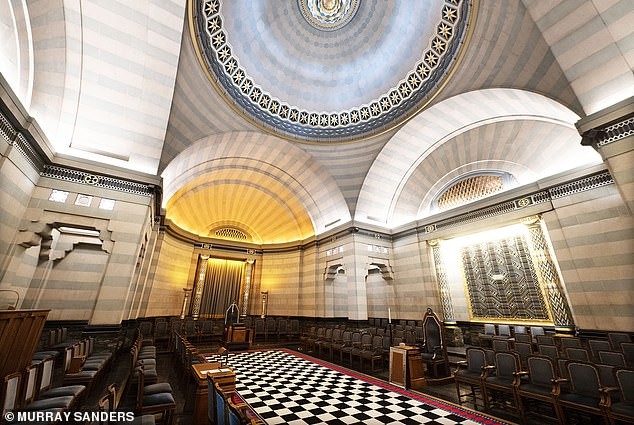
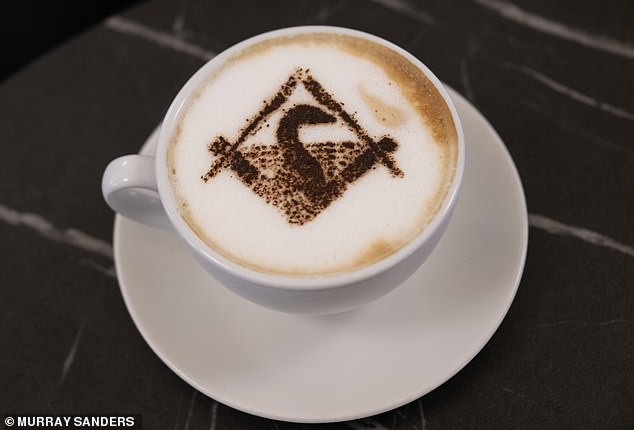
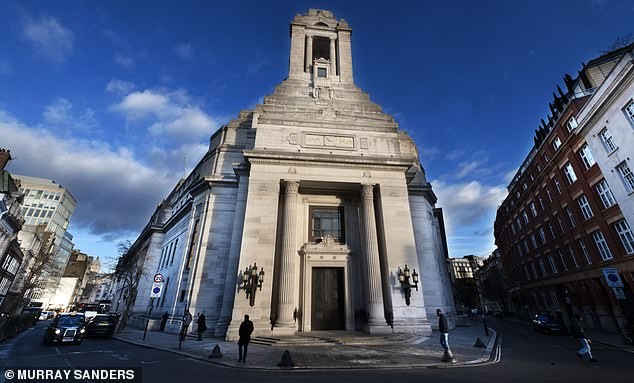
To the rest of us, the UK's 170,000 Freemasons have always seemed a bit 'other'. A bit different. Some might even say, 'a bit bloody weird'. There's plenty to make them stand out. The elaborate rituals they enjoy involving ropes and blindfolds and a couple of lumps of stone. The symbols of ducks and stars, and an 'all-seeing' eye. The ornate lambskin aprons and pristine white gloves. The strictly single-sex lodges. And the occasional flashing of bare legs and left breasts – more of which later. Not forgetting their enthusiasm for secrecy about everything from special handshakes to who is, and is not, a member. And their raison d'etre – to help each other out. So perhaps it's little wonder they've sparked a few conspiracy theories over the past 300 years. Some say they're responsible for the Pyramids, the French Revolution and even the sinking of the Titanic – others that they have tentacles in everything from the IMF to the rise of cryptocurrencies. So with all that swirling around, it's a teeny bit of a letdown to meet Adrian Marsh, the Grand Secretary of the United Grand Lodge of England (UGLE), in a magnificent 1930s art deco building in the middle of London. Yes, he looks very smart and serious and even the cappuccino he's sipping is adorned with a complex masonic symbol on the foam. 'We have a special stencil, they don't do it by hand,' he explains. But other than that, Adrian, a retired CFO of a listed company, looks completely normal in his dark suit, white shirt and neatly-trimmed beard. He doesn't even have gloves on. He is, however, very angry with the top brass at the Metropolitan Police who have, in a bid to make the force more transparent, decided the Freemasons should be made a 'declarable association', along with any other 'hierarchical organisations with confidential membership that requires members to support and protect each other'. Which means every serving police officer and employee of the Met must reveal whether they are, or ever have been, a Freemason. 'We are being discriminated against and labelled. It undermines our public credibility. It is illegal and unfair and very anti-masonic,' says Adrian. 'Our members are frightened and anxious because this attaches a stigma to being a member of an organisation that has been law abiding for the last 300 years.' Adrian Marsh, the Grand Secretary of the United Grand Lodge of England, says: 'We are being discriminated against and labelled. It undermines our public credibility. It is illegal and unfair and very anti-masonic' The Freemason's headquarters, Freemason's Hall - a magnificent 1930s art deco building in Covent Garden, central London Ever since the late 1700s, in fact, when the ancient guild created by stonemasons – who of course wore gloves and aprons to work – formed the first masonic lodges (the name for regional branches of the freemasons). Today, they feel so strongly about their right to privacy that on Christmas Eve, just after the Met's new policy was announced, UGLE fired back an emergency injunction, due to be heard next week, and an application for judicial review of the Met's decision. 'It's against General Data Protection Regulation. It's against the law. No other organisations require disclosure,' he says. He's right. Not even the military, nor the Government. Even new judges – who from 1999 to 2009 were required to publicly disclose Masonic affiliation – now only have a 'voluntary obligation' to tell superiors. There has, of course, long been a sense that the police and the masons have been a bit too muddled up for anyone's good, not least their own. The current dispute dates back to March 1987 and the murder of Daniel Morgan, a 37-year-old private detective and father of two who was found with an axe in his head, in the car park of the Golden Lion pub in Sydenham, south-east London. No one has ever been convicted. There were rumours of a masonic cover-up at the time and the investigation has been endlessly picked over for prejudice. Finally, in 2021 an independent review panel noted that one detective involved was a Freemason who later went to work with a prime suspect, that 10 police officers in the investigations were Freemasons and that police officers' membership of the organisation had been 'a source of recurring suspicion and mistrust in the investigations'. The panel made clear they had 'not seen evidence that masonic channels were corruptly used in connection with either the commission of the murder, or to subvert the police investigations'. But they still recommended tighter rules on Freemasons in the police force. Four years later, in September 2025, a questionnaire popped up on MetNet, The Met's intranet, asking staff if they thought membership of hierarchical organisations – such as the Masons – should become a declarable fact and the result informed their policy change. 'Nothing has ever been proven!' Adrian tells me. 'There was never any evidence. We would never put the masons above the law – which is why we had to bring this legal action.' The ceiling of the Grand Temple in the Freemasons Hall Even the cappuccinos served in the headquarters are adorned with a complex masonic symbol on the foam The masons are particularly distressed because it all goes against the main thrust of Freemasonry – community, integrity, kindness and strength. 'We are really just trying to do good,' he says, then tells me how they support local communities and raise £50million a year for charity. Which is amazing. But also – given it is human nature to mistrust things we don't understand – perhaps a good reason to stop being so secretive about everything. 'We're not secretive, we're really not!' he insists. 'People think we are, but we're not anymore. Not for ages.' And so he and a young chap called Shaun Butler, Director of Membership, spend the next 10 minutes reminding me that the United Grand Lodge of England's amazing building is open to the public, which means anyone can nip in for a stencilled coffee or a drink in the bar. There's also a shop, where we could all buy a pair of white gloves and a lambskin pinny, and an onsite museum where we can mug up on masonic history. And they have four meetings a year that often start with an hour and half of pomp and dress-up and end in a jolly dinner – which is almost always lasagne. They are also having a huge drive to attract the young, who are often lonely and need structure in their lives – so there are now more than 70 lodges attached to universities around the country. Then they show me around, glowing with pride as we admire the enormous individual temples within the lodge and immaculate black and white chequered carpets. The 1.5-tonne bronze doors and magnificent mosaic hallway were used for filming in TV spy series Slow Horses. They also remind me that, rather than having to be nominated, anyone can apply to join online now. So long as we're of 'good character', believe in a higher being such as God, pay the annual £160 sub and don't have a criminal record. 'We've very inclusive, always have been – perhaps because of all the dressing up,' says Adrian, who explains that they've have always had a strong gay community and a number of trans members. 'Anyone – that is, as long as they were born male.' (And vice versa for the women's lodges.) The trouble, of course, is that however open and honest they are now – last year they started lifting the veil via TikTok videos – there are centuries of obfuscation to unravel. Could they really have been responsible for the sinking of the Titanic, the assassination of JFK and control the World Bank? And all that speculation about membership. Because while a small fraction of the senior members with 'influence' are disclosed, the majority are not. We all know some of the famous names of old – Winston Churchill, Peter Sellers, Ernest Shackleton, Alf Ramsey, the Duke of Edinburgh, King George VI and George Washington, but Adrian tells me that today it's mostly lawyers and black cab drivers rather than masters of the universe. But last year there was fevered speculation that Simon Cowell had joined a lodge after he was spotted on a jet ski sporting a masonic symbol. So was he? 'It was the owner of the boat who was a mason, not Simon,' explains Adrian. 'Jeremy Clarkson was photographed on the same jet ski and he definitely isn't a mason!' But they tell me Frank Bruno is – 'he's quite a new member'. And that the Grand Master – for the 58th year running – is HRH The Duke of Kent who is now 90 years old. But, what with the slimming down of the Royal Family and just a smattering of the children of dukes and earls, they have no idea who the next royal Grand Master will be. Generally, despite all their efforts, numbers are sliding – still at about six million around the world, but down to 170,000 in the UK, the majority aged over 50. In the women's lodges – which have been running since 1908, it's worse. 'We lost more than half during Covid,' Carol Cole, Grand Master of The Honourable Fraternity of Ancient Freemasons, which has about 1,000 members, tells me. Which means this row with the Met and all the associated publicity couldn't come at a worse time. It also stirs up all those old rumours that brotherly backscratching compromised policing in the unreconstructed 1970s and 80s. In 2016, the Independent Police Complaints Commission said it was investigating whether Freemason membership had influenced officers in the South Yorkshire Police after the 1989 Hillsborough disaster and alleged cover-up. The building has enormous individual temples within and immaculate black and white chequered carpets And in 2024, historian Russell Edwards claimed that notorious serial killer Jack The Ripper was protected from conviction because he was a Mason. But, again, as Adrian stresses, nothing was ever proven. 'Nothing. Not a shred of evidence.' They are particularly cross that the consultation was so flimsy. Just over 2,000 of the force's 32,000 police officers completed the questionnaire, with 66 per cent saying Freemasons should declare. By Adrian's reckoning, there are probably about 400 masons in the Met, just over one per cent. Some – he's not sure how many – have now declared. Others, like a detective constable I spoke to this week, have not – because he is worried about what it would do to his job prospects. Suddenly the Grand Secretary of the United Grand Lodge of England looks rather fed up with the whole thing. So I change the subject and we talk about his own masonic journey. How he joined years ago to impress his future father-in-law – and has loved it ever since – the amazing friendships, the sense of community, the dinners where you never know who you'll be sitting next to. Membership boss Shaun, 32, signed up soon after he left Royal Holloway and missed the sense of camaraderie from university, but found it here. And neither have a need for their partners to be part of it. Adrian's wife has apparently heard enough masonic chat to last her a lifetime and, for Shaun, it's his special thing – along with Newcastle United FC. But even with this brilliant new spirit of masonic openness and the lovely chat we are having, there are still a few no-go areas. Such as the handshake. When I ask to see it, Adrian fudges and flusters, says something nonsensical about shaking hands with everyone in the country and explains that it's part of the ancient ritual that makes the masons special – and which they all protect so carefully. 'It's just fun. We're good at pomp and ceremony in this country, though we understand that it isn't everyone's cup of tea.' True. I can't see either Cowell or Clarkson in white gloves and lambskin aprons going through the extraordinary three-stage initiation ceremony. 'Some do find it rather emotional,' says Shaun. They both remember one candidate – a Muslim security guard – getting cold feet and dashing off to the loo for a few minutes beforehand. But most love it. Particularly all the daftness with the bare legs and breasts, where the left trouser is rolled up above the knee to show the candidate is a free man and not shackled, and the naked left breast – to, well, show that he's a man. And what of the women? 'Oh yes, they get them out, they show their bare breast, but they've never let us see.' When later I ask Carol Cole, she is more circumspect. 'We fold our top back a bit to show our bra – if we choose to wear a bra' – she says firmly. 'But that is all.' Back to Adrian and Shaun, who have been excellent hosts, so proud of their beautiful lodge and desperate to protect their beloved members in the police force. At the end of my tour, as we sit on matching velvet thrones in the lodge's Grand Temple, with the all-seeing eye gazing down on us and those symbolic stars and ducks and lumps of stone everywhere, I brave the million dollar question. Do the masons really have fingers in every pie – do they actually rule the world? 'No' says Adrian. But he's squinting up at the ceiling, not quite looking me in the eye. So I ask again and this time he does, saying firmly, if a teeny bit regretfully: 'No. No we don't.' But they do get to flash their legs and breasts and enjoy a very jolly lasagne dinner together every few months.
In This Article:
Freemason Hall Open to the Public Yet Cloaked in Mystery
The Freemason's Hall - a magnificent 1930s art deco building in Covent Garden, central London. Ever since the late 1700s, in fact, when the ancient guild created by stonemasons – who of course wore gloves and aprons to work – formed the first masonic lodges (the name for regional branches of the freemasons). Today, they feel so strongly about their right to privacy that on Christmas Eve, just after the Met's new policy was announced, UGLE fired back an emergency injunction, due to be heard next week, and an application for judicial review of the Met's decision. 'It's against General Data Protection Regulation. It's against the law. No other organisations require disclosure,' he says. He's right. Not even the military, nor the Government. Even new judges – who from 1999 to 2009 were required to publicly disclose Masonic affiliation – now only have a 'voluntary obligation' to tell superiors. There has, of course, long been a sense that the police and the masons have been a bit too muddled up for anyone's good, not least their own. The current dispute dates back to March 1987 and the murder of Daniel Morgan, a 37-year-old private detective and father of two who was found with an axe in his head, in the car park of the Golden Lion pub in Sydenham, south-east London. No one has ever been convicted. There were rumours of a masonic cover-up at the time and the investigation has been endlessly picked over for prejudice. Finally, in 2021 an independent review panel noted that one detective involved was a Freemason who later went to work with a prime suspect, that 10 police officers in the investigations were Freemasons and that police officers' membership of the organisation had been 'a source of recurring suspicion and mistrust in the investigations'. The panel made clear they had 'not seen evidence that masonic channels were corruptly used in connection with either the commission of the murder, or to subvert the police investigations'. But they still recommended tighter rules on Freemasons in the police force. Four years later, in September 2025, a questionnaire popped up on MetNet, The Met's intranet, asking staff if they thought membership of hierarchical organisations – such as the Masons – should become a declarable fact and the result informed their policy change. 'Nothing has ever been proven!' Adrian tells me. 'There was never any evidence. We would never put the masons above the law – which is why we had to bring this legal action.' The ceiling of the Grand Temple in the Freemasons Hall Even the cappuccinos served in the headquarters are adorned with a complex masonic symbol on the foam The masons are particularly distressed because it all goes against the main thrust of Freemasonry – community, integrity, kindness and strength. 'We are really just trying to do good,' he says, then tells me how they support local communities and raise £50million a year for charity. Which is amazing. But also – given it is human nature to mistrust things we don't understand – perhaps a good reason to stop being so secretive about everything. 'We're not secretive, we're really not!' he insists. 'People think we are, but we're not anymore. Not for ages.' And so he and a young chap called Shaun Butler, Director of Membership, spend the next 10 minutes reminding me that the United Grand Lodge of England's amazing building is open to the public, which means anyone can nip in for a stencilled coffee or a drink in the bar. There's also a shop, where we could all buy a pair of white gloves and a lambskin pinny, and an onsite museum where we can mug up on masonic history. And they have four meetings a year that often start with an hour and half of pomp and dress-up and end in a jolly dinner – which is almost always lasagne. They are also having a huge drive to attract the young, who are often lonely and need structure in their lives – so there are now more than 70 lodges attached to universities around the country. Then they show me around, glowing with pride as we admire the enormous individual temples within the lodge and immaculate black and white chequered carpets. The 1.5-tonne bronze doors and magnificent mosaic hallway were used for filming in TV spy series Slow Horses. They also remind me that, rather than having to be nominated, anyone can apply to join online now. So long as we're of 'good character', believe in a higher being such as God, pay the annual £160 sub and don't have a criminal record. 'We've very inclusive, always have been – perhaps because of all the dressing up,' says Adrian, who explains that they've have always had a strong gay community and a number of trans members. 'Anyone – that is, as long as they were born male.' (And vice versa for the women's lodges.) The trouble, of course, is that however open and honest they are now – last year they started lifting the veil via TikTok videos – there are centuries of obfuscation to unravel. Could they really have been responsible for the sinking of the Titanic, the assassination of JFK and control the World Bank? And all that speculation about membership. Because while a small fraction of the senior members with 'influence' are disclosed, the majority are not. We all know some of the famous names of old – Winston Churchill, Peter Sellers, Ernest Shackleton, Alf Ramsey, the Duke of Edinburgh, King George VI and George Washington, but Adrian tells me that today it's mostly lawyers and black cab drivers rather than masters of the universe. But last year there was fevered speculation that Simon Cowell had joined a lodge after he was spotted on a jet ski sporting a masonic symbol. So was he? 'It was the owner of the boat who was a mason, not Simon,' explains Adrian. 'Jeremy Clarkson was photographed on the same jet ski and he definitely isn't a mason!' But they tell me Frank Bruno is – 'he's quite a new member'. And that the Grand Master – for the 58th year running – is HRH The Duke of Kent who is now 90 years old. But, what with the slimming down of the Royal Family and just a smattering of the children of dukes and earls, they have no idea who the next royal Grand Master will be. Generally, despite all their efforts, numbers are sliding – still at about six million around the world, but down to 170,000 in the UK, the majority aged over 50. In the women's lodges – which have been running since 1908, it's worse. 'We lost more than half during Covid,' Carol Cole, Grand Master of The Honourable Fraternity of Ancient Freemasons, which has about 1,000 members, tells me. Which means this row with the Met and all the associated publicity couldn't come at a worse time. It also stirs up all those old rumours that brotherly backscratching compromised policing in the unreconstructed 1970s and 80s. In 2016, the Independent Police Complaints Commission said it was investigating whether Freemason membership had influenced officers in the South Yorkshire Police after the 1989 Hillsborough disaster and alleged cover-up. The building has enormous individual temples within and immaculate black and white chequered carpets And in 2024, historian Russell Edwards claimed that notorious serial killer Jack The Ripper was protected from conviction because he was a Mason. But, again, as Adrian stresses, nothing was ever proven. 'Nothing. Not a shred of evidence.' They are particularly cross that the consultation was so flimsy. Just over 2,000 of the force's 32,000 police officers completed the questionnaire, with 66 per cent saying Freemasons should declare. By Adrian's reckoning, there are probably about 400 masons in the Met, just over one per cent. Some – he's not sure how many – have now declared. Others, like a detective constable I spoke to this week, have not – because he is worried about what it would do to his job prospects. Suddenly the Grand Secretary of the United Grand Lodge of England looks rather fed up with the whole thing. So I change the subject and we talk about his own masonic journey. How he joined years ago to impress his future father-in-law – and has loved it ever since – the amazing friendships, the sense of community, the dinners where you never know who you'll be sitting next to. Membership boss Shaun, 32, signed up soon after he left Royal Holloway and missed the sense of camaraderie from university, but found it here. And neither have a need for their partners to be part of it. Adrian's wife has apparently heard enough masonic chat to last her a lifetime and, for Shaun, it's his special thing – along with Newcastle United FC. But even with this brilliant new spirit of masonic openness and the lovely chat we are having, there are still a few no-go areas. Such as the handshake. When I ask to see it, Adrian fudges and flusters, says something nonsensical about shaking hands with everyone in the country and explains that it's part of the ancient ritual that makes the masons special – and which they all protect so carefully. 'It's just fun. We're good at pomp and ceremony in this country, though we understand that it isn't everyone's cup of tea.' True. I can't see either Cowell or Clarkson in white gloves and lambskin aprons going through the extraordinary three-stage initiation ceremony. 'Some do find it rather emotional,' says Shaun. They both remember one candidate – a Muslim security guard – getting cold feet and dashing off to the loo for a few minutes beforehand. But most love it. Particularly all the daftness with the bare legs and breasts, where the left trouser is rolled up above the knee to show the candidate is a free man and not shackled, and the naked left breast – to, well, show that he's a man. And what of the women? 'Oh yes, they get them out, they show their bare breast, but they've never let us see.' When later I ask Carol Cole, she is more circumspect. 'We fold our top back a bit to show our bra – if we choose to wear a bra' – she says firmly. 'But that is all.' Back to Adrian and Shaun, who have been excellent hosts, so proud of their beautiful lodge and desperate to protect their beloved members in the police force. At the end of my tour, as we sit on matching velvet thrones in the lodge's Grand Temple, with the all-seeing eye gazing down on us and those symbolic stars and ducks and lumps of stone everywhere, I brave the million dollar question. Do the masons really have fingers in every pie – do they actually rule the world? 'No' says Adrian. But he's squinting up at the ceiling, not quite looking me in the eye. So I ask again and this time he does, saying firmly, if a teeny bit regretfully: 'No. No we don't.' But they do get to flash their legs and breasts and enjoy a very jolly lasagne dinner together every few months.
A History of Controversy From the Morgan Case to TikTok Rumours
The current dispute between Freemasonry and the police runs deep. The murder of Daniel Morgan, a 37-year-old private detective and father of two who was found with an axe in his head in the car park of the Golden Lion pub in Sydenham, south-east London, in March 1987 sparked rumours of a masonic cover-up and has been endlessly scrutinised for prejudice. There were rumours of a masonic cover-up at the time and the investigation has been endlessly picked over for prejudice. Finally, in 2021 an independent review panel noted that one detective involved was a Freemason who later went to work with a prime suspect, that 10 police officers in the investigations were Freemasons and that police officers' membership of the organisation had been 'a source of recurring suspicion and mistrust in the investigations'. The panel made clear they had 'not seen evidence that masonic channels were corruptly used in connection with either the commission of the murder, or to subvert the police investigations'. But they still recommended tighter rules on Freemasons in the police force. Four years later, in September 2025, a questionnaire popped up on MetNet, The Met's intranet, asking staff if they thought membership of hierarchical organisations – such as the Masons – should become a declarable fact and the result informed their policy change. 'Nothing has ever been proven!' Adrian tells me. 'There was never any evidence. We would never put the masons above the law – which is why we had to bring this legal action.' The phrase 'Nothing has ever been proven' is quoted here to reflect the tone of Adrian's stance on the matter.
Open Doors How Freemasonry Welcomes Members and the Initiation Ceremonies
The masons are particularly distressed because it all goes against the main thrust of Freemasonry – community, integrity, kindness and strength. 'We are really just trying to do good,' he says, then tells me how they support local communities and raise £50million a year for charity. Which is amazing. But also – given it is human nature to mistrust things we don't understand – perhaps a good reason to stop being so secretive about everything. 'We're not secretive, we're really not!' he insists. 'People think we are, but we're not anymore. Not for ages.' And so he and a young chap called Shaun Butler, Director of Membership, spend the next 10 minutes reminding me that the United Grand Lodge of England's amazing building is open to the public, which means anyone can nip in for a stencilled coffee or a drink in the bar. There's also a shop, where we could all buy a pair of white gloves and a lambskin pinny, and an onsite museum where we can mug up on masonic history. And they have four meetings a year that often start with an hour and half of pomp and dress-up and end in a jolly dinner – which is almost always lasagne. They are also having a huge drive to attract the young, who are often lonely and need structure in their lives – so there are now more than 70 lodges attached to universities around the country. Then they show me around, glowing with pride as we admire the enormous individual temples within the lodge and immaculate black and white chequered carpets. The 1.5-tonne bronze doors and magnificent mosaic hallway were used for filming in TV spy series Slow Horses. They also remind me that, rather than having to be nominated, anyone can apply to join online now. So long as we're of 'good character', believe in a higher being such as God, pay the annual £160 sub and don't have a criminal record. 'We've very inclusive, always have been – perhaps because of all the dressing up,' says Adrian, who explains that they've have always had a strong gay community and a number of trans members. 'Anyone – that is, as long as they were born male.' (And vice versa for the women's lodges.) The trouble, of course, is that however open and honest they are now – last year they started lifting the veil via TikTok videos – there are centuries of obfuscation to unravel. Could they really have been responsible for the sinking of the Titanic, the assassination of JFK and control the World Bank? And all that speculation about membership. Because while a small fraction of the senior members with 'influence' are disclosed, the majority are not. We all know some of the famous names of old – Winston Churchill, Peter Sellers, Ernest Shackleton, Alf Ramsey, the Duke of Edinburgh, King George VI and George Washington, but Adrian tells me that today it's mostly lawyers and black cab drivers rather than masters of the universe. But last year there was fevered speculation that Simon Cowell had joined a lodge after he was spotted on a jet ski sporting a masonic symbol. So was he? 'It was the owner of the boat who was a mason, not Simon,' explains Adrian. 'Jeremy Clarkson was photographed on the same jet ski and he definitely isn't a mason!' But they tell me Frank Bruno is – 'he's quite a new member'. And that the Grand Master – for the 58th year running – is HRH The Duke of Kent who is now 90 years old. But, what with the slimming down of the Royal Family and just a smattering of the children of dukes and earls, they have no idea who the next royal Grand Master will be. Generally, despite all their efforts, numbers are sliding – still at about six million around the world, but down to 170,000 in the UK, the majority aged over 50. In the women's lodges – which have been running since 1908, it's worse. 'We lost more than half during Covid,' Carol Cole, Grand Master of The Honourable Fraternity of Ancient Freemasons, which has about 1,000 members, tells me. Which means this row with the Met and all the associated publicity couldn't come at a worse time. It also stirs up all those old rumours that brotherly backscratching compromised policing in the unreconstructed 1970s and 80s. In 2016, the Independent Police Complaints Commission said it was investigating whether Freemason membership had influenced officers in the South Yorkshire Police after the 1989 Hillsborough disaster and alleged cover-up. The building has enormous individual temples within and immaculate black and white chequered carpets And in 2024, historian Russell Edwards claimed that notorious serial killer Jack The Ripper was protected from conviction because he was a Mason. But, again, as Adrian stresses, nothing was ever proven. 'Nothing. Not a shred of evidence.' They are particularly cross that the consultation was so flimsy. Just over 2,000 of the force's 32,000 police officers completed the questionnaire, with 66 per cent saying Freemasons should declare. By Adrian's reckoning, there are probably about 400 masons in the Met, just over one per cent. Some – he's not sure how many – have now declared. Others, like a detective constable I spoke to this week, have not – because he is worried about what it would do to his job prospects. Suddenly the Grand Secretary of the United Grand Lodge of England looks rather fed up with the whole thing. So I change the subject and we talk about his own masonic journey. How he joined years ago to impress his future father-in-law – and has loved it ever since – the amazing friendships, the sense of community, the dinners where you never know who you'll be sitting next to. Membership boss Shaun, 32, signed up soon after he left Royal Holloway and missed the sense of camaraderie from university, but found it here. And neither have a need for their partners to be part of it. Adrian's wife has apparently heard enough masonic chat to last her a lifetime and, for Shaun, it's his special thing – along with Newcastle United FC. But even with this brilliant new spirit of masonic openness and the lovely chat we are having, there are still a few no-go areas. Such as the handshake. When I ask to see it, Adrian fudges and flusters, says something nonsensical about shaking hands with everyone in the country and explains that it's part of the ancient ritual that makes the masons special – and which they all protect so carefully. 'It's just fun. We're good at pomp and ceremony in this country, though we understand that it isn't everyone's cup of tea.' True. I can't see either Cowell or Clarkson in white gloves and lambskin aprons going through the extraordinary three-stage initiation ceremony. 'Some do find it rather emotional,' says Shaun. They both remember one candidate – a Muslim security guard – getting cold feet and dashing off to the loo for a few minutes beforehand. But most love it. Particularly all the daftness with the bare legs and breasts, where the left trouser is rolled up above the knee to show the candidate is a free man and not shackled, and the naked left breast – to, well, show that he's a man. And what of the women? 'Oh yes, they get them out, they show their bare breast, but they've never let us see.' When later I ask Carol Cole, she is more circumspect. 'We fold our top back a bit to show our bra – if we choose to wear a bra' – she says firmly. 'But that is all.' Back to Adrian and Shaun, who have been excellent hosts, so proud of their beautiful lodge and desperate to protect their beloved members in the police force. At the end of my tour, as we sit on matching velvet thrones in the lodge's Grand Temple, with the all-seeing eye gazing down on us and those symbolic stars and ducks and lumps of stone everywhere, I brave the million dollar question. Do the masons really have fingers in every pie – do they actually rule the world? 'No' says Adrian. But he's squinting up at the ceiling, not quite looking me in the eye. So I ask again and this time he does, saying firmly, if a teeny bit regretfully: 'No. No we don't.' But they do get to flash their legs and breasts and enjoy a very jolly lasagne dinner together every few months.
Final Word Do Freemasons Run the World No They Do Not
At the tour’s end, I sit with Adrian and Shaun on matching velvet thrones in the lodge’s Grand Temple, the all-seeing eye gazing down on us and those symbolic stars and ducks and lumps of stone everywhere. I brave the million-dollar question one more time: do the masons really rule the world? 'No' says Adrian. But he’s squinting up at the ceiling, not quite looking me in the eye. So I ask again and this time he does, saying firmly, if a teeny bit regretfully: 'No. No we don’t.' But they do get to flash their legs and breasts and enjoy a very jolly lasagne dinner together every few months. The rest, as they say, is history.