


I Started Going Bald a Year Ago—and I Tried Everything Before It Was Too Late


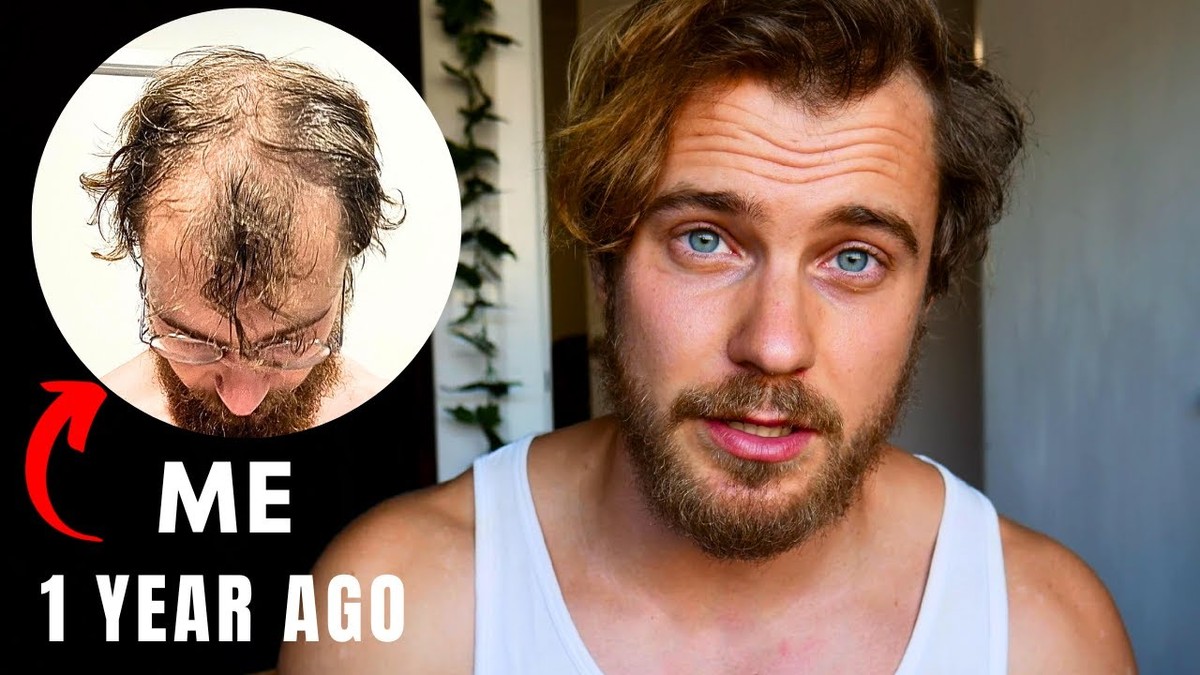
A year ago, I started losing my hair. Not the “it’s thinning a little” kind of thing—more like waking up, looking in the mirror, and realizing the line isn’t where it used to be. And the worst part wasn’t the hair itself. It was what it did to my head. I’d catch myself talking to a girl while my brain was stuck on one question: “Is she looking at my hairline? Can she see my scalp?” It messed with me. A stupid kind of insecurity, but real—one that makes you feel smaller, like you’ve lost control over how you look. That’s why I’m writing this: because I refused to accept “it is what it is.” I wanted a plan. I wanted to try everything that made sense before the moment came when it’s simply “too late.” One important thing: this is my personal experience and my routine. It’s not medical advice. If you have significant shedding, or you’re considering medications (like finasteride/dutasteride) or minoxidil, that’s a conversation with a dermatologist—not the internet.
In This Article:
- Step 1 — Why is my hair falling out?
- Step 2 — Two fronts: calm down DHT and stimulate regrowth
- Step 3 — Saw palmetto: the first thing that worked (and the first thing that punished me if I took it wrong)
- Step 4 — Finasteride: results with a cost you have to measure
- Step 5 — Dutasteride: strongest option, and it felt terrible
- Step 6 — Daily discipline for regrowth: Minoxidil, scalp massage, microneedling
- Step 7 — Gelatin trick for thicker hair
- Step 8 — Scalp environment kills results: lifestyle and environment
- What I would tell myself from a year ago
Step 1 — Why is my hair falling out?
The biggest mistake people make (and I was tempted to make it too) is starting with “what should I apply?” before understanding “what’s happening?” I boiled it down to two paths: Path one: deficiencies. If you’re low in certain vitamins and minerals, hair can become thin, weak, and start shedding more than usual. I focused on zinc, vitamin D, vitamin C, and biotin—because those are commonly linked to hair quality and growth. Path two: male-pattern hair loss (androgenetic alopecia). This is where people want to tell themselves “it’s not that,” but if it is, you’re better off knowing early. I checked it in the most brutally simple way: genetics. My dad. My grandpa. My grandpa on my mom’s side. That gives you a pretty raw picture of what might be coming. With male-pattern hair loss, one hormone enters the story: DHT (dihydrotestosterone). It’s not that “DHT is evil.” The issue is that some people’s follicles are sensitive to it—and over time, under that influence, follicles start to miniaturize: the hair gets thinner, shorter, weaker… and then disappears. Once I understood this, my head cleared: if my issue is DHT sensitivity, then my fight isn’t “a shampoo.” My fight is a strategy.
Step 2 — Two fronts: calm down DHT and stimulate regrowth
I decided to play on two fronts — calm down DHT and stimulate regrowth I saw the options as two routes: 1. a “natural” route (lower risk of harsh side effects, often milder effects) 2. a “pharma/medication route” (potentially stronger effects, but with risks you have to take seriously) And I’ll be honest: I initially went toward the “harsher” route and later realized it wasn’t the smartest first move. If I could go back, I’d tell myself: start with the natural route first.
Step 3 — Saw palmetto: the first thing that worked (and the first thing that punished me if I took it wrong)
The first thing I actually felt working was saw palmetto. I treated it like a natural DHT blocker and—yes—it worked for me. I felt like shedding calmed down and I even started seeing some hair come back once I added it. But here’s the reality nobody puts in ads: if you take it on an empty stomach, it can wreck you. I learned that the hard way—stomach pain, a nasty feeling, and literally hours stuck in the bathroom. So if someone is even considering it: “natural” does not mean “consequence-free.”
Step 4 — Finasteride: results with a cost you have to measure
Then comes the most controversial part: finasteride. I used it. And I’ll say it straight: I didn’t get the scariest side effect people always talk about (for example, erectile dysfunction), but I did feel something that was enough to make me cautious— a drop in mood and motivation. That’s where I set a rule that became my foundation: lowest effective dose. So I started splitting pills and taking a minimal amount, trying to get DHT control without crushing myself mentally. For me, the most “tolerable” routine ended up being saw palmetto daily plus a low finasteride dose a few times a week. The point wasn’t “more is better.” The point was “as little as possible—while still working.” And yes—I’m aware this is a long game. I asked myself the question nobody wants to ask: “What does this mean in 10 years?” I don’t know. That’s exactly why I didn’t want to raise the dose unless I saw a real reason.
Step 5 — Dutasteride: strongest option, and it felt terrible
I also tried dutasteride. Full dose. And honestly—I felt so bad that I decided it wasn’t for me. In my experience, it was the “strongest” option, and personally I wouldn’t treat it as a first choice, if at all.
Step 6 — Daily discipline for regrowth: Minoxidil, scalp massage, microneedling
This was a big mental shift for me: blocking DHT is one thing, but regrowth requires a routine you do every day, like training. Minoxidil — nightly, no negotiation I used minoxidil every night. I applied it where I was most vulnerable (for me—my temples) and rubbed it in. Scalp massage — 10 minutes that became a ritual Then I used a scalp massager and massaged my scalp for around 10 minutes every night. For me it became a ritual: apply, rub in, massage—done. Microneedling — helpful, but only if you do it intelligently I added microneedling too, but carefully. I didn’t like the idea of dragging a roller across my scalp, because the logic is simple: pulling can damage things. I leaned more toward stamping—pressing straight down, not dragging—because it felt safer. I also aimed for a needle length that could actually reach the scalp (around 1mm), since shorter lengths felt less effective. I did it twice a week.
Step 7 — Gelatin trick for thicker hair
Alongside regrowth, I cared about one practical thing: thicker hair shafts make hair look denser. So I used gelatin, because in my experience it helped make my hair feel “thicker.” And yes—I even remember finding a product at one point that combined gelatin and saw palmetto, basically built around that idea: block and strengthen.
Step 8 — Scalp environment kills results: lifestyle and environment
There’s something many people ignore: you can have a “routine,” but if you keep doing things that make your hair dry, brittle, and your scalp unhealthy—you’re fighting yourself. I set rules: no smoking, no habitual heavy drinking, and I tried not to live on processed food. And one more thing that might sound odd, but made sense to me: being mindful about water that dries my hair out and strips natural oils (I personally focused on fluoride as a factor linked—at least in my mind—to dryness). The point is simple: if your scalp is dry and damaged, you’re creating “bad soil” for growth.
What I would tell myself from a year ago
I’d say: don’t panic—but don’t wait. First, figure out why you’re losing hair. Second, if it’s genetic and DHT-driven, don’t waste years on shampoos. Third, choose the lowest-risk approach that still makes sense and watch how your body responds. And fourth—discipline. Night after night. Week after week. No magic. Just routine. I did all of this because I didn’t want to keep living with that feeling—talking to someone while my brain is screaming, “can they see my scalp?” I wanted that weight gone. And my goal was simple: to give myself a chance—before it was too late.