


From a Single Tweet to a New City in Wyoming A Crypto DAO Gathers 5,000 People and Sets Its Sights on 16.2 Hectares


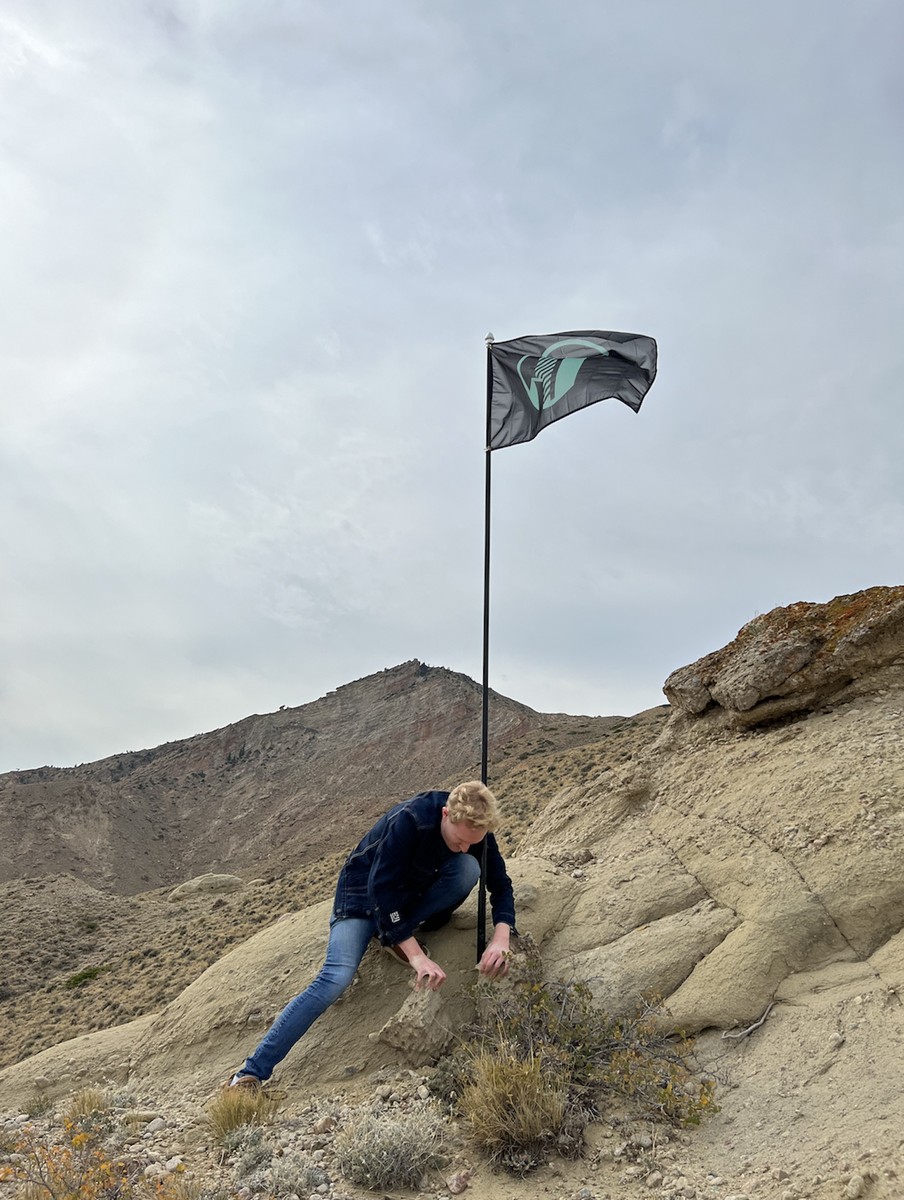
If you’ve ever wondered what it would take to build a new city, Scott Fitsimones starts with the blunt truth: it’s not easy. You have to survey terrain, secure state approvals, buy land, build infrastructure, and—hardest of all—convince people to actually move there. And until humanity starts settling Mars, land is finite, and “the good spots are probably all taken.” That’s the foundation of his argument: a city isn’t just an idea. It’s an administrative machine. If you want to speed up how cities get built—or how urban change happens—you have to attack the places where the machine stalls: coordination, permitting, ownership, governance, and decision-making. So instead of pitching the grand traditional route—institutions, investors, top-down planning—he proposes starting smaller. “Like really, really small.” What if you begin with the internet? He did exactly that. He tweeted. Not a polished manifesto. Not a masterplan. More like a signal flare: who wants to help figure this out? People responded—strangers from around the world. Internet friends became a group chat. The group chat became a project. They pooled cryptocurrency into a shared treasury, researched locations together, and within three months they bought land: 16.2 hectares in Wyoming, near Yellowstone National Park.
In This Article:
- When a group chat turns into an organization
- Why he wanted this in the first place war with bureaucracy
- The on chain city permitting budgets and property as a public ledger
- How a DAO actually works Discord facilitators and bounties
- Money and power citizenship and 5 000 people voting
- Parcel 0 what collective decision making looks like in practice
- What comes next what to build and who gets access
- Proof of scale why he thinks this isn’t hypothetical
- Theyre not for everything early stage reality consensus friction regulation
- The promise ownership spreads and the upside isn’t reserved
- His closing claim DAOs as the next leap in human coordination
When a group chat turns into an organization
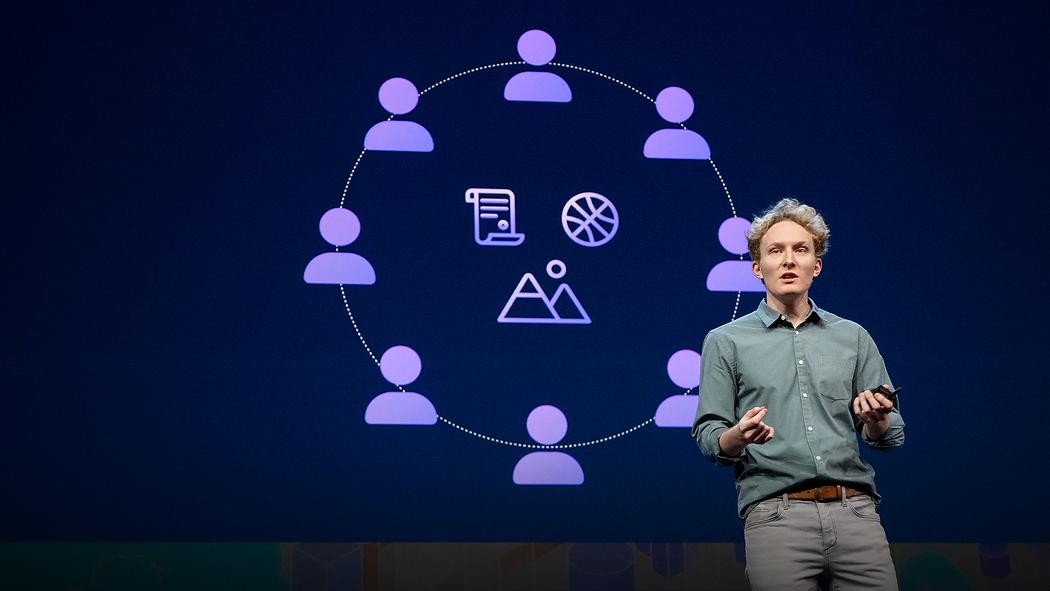
Their answer was a DAO—a Decentralized Autonomous Organization. They called it CityDAO. In Fitsimones’ framing, a DAO isn’t a buzzword—it’s a structure: an internet-native organization, governed by blockchain, collectively owned, and aligned around a shared mission. Most DAOs raise funds into a communal treasury, then members vote on how those funds are used. He makes the contrast with the system people already understand. In a traditional company, direction moves top-down: a CEO and executives set priorities and budgets, and execution flows down the org chart. In a DAO, members operate more like peers: they contribute capital, propose initiatives, work on projects, and decide collectively. Instead of relying on a boss to enforce decisions, smart contracts encode the rules—so, for example, a project gets funded if a proposal passes a vote. That’s where he moves from mechanics to power. In a normal company, if it succeeds, most of the upside goes to a small group—founders, early employees, investors—who are often already high net-worth. A DAO, he argues, behaves more like a crypto co-op: a larger pool of people can own a piece, participate in governance, and share the upside.
Why he wanted this in the first place war with bureaucracy
CityDAO, he says, didn’t come from a whitepaper. It came from frustration. He’d been battling city red tape while building a start-up intended to help cities make better use of empty parking lots. And his example is deliberately mundane—because that’s the point. It took them more than three months to get a permit just to sell parking in San Francisco. He calls it an archaic bureaucratic nightmare. Then he lists the kinds of improvements his “urbanist self” wants to see happen: a food truck park, a logistics hub, maybe housing, a farmers market. In the real world, these are tedious to build. They can take months or years—or they can be illegal because of zoning laws. So when he talks about “building cities,” he’s also talking about speeding up ordinary urban change by removing friction from coordination and approval. And he points out that the friction isn’t limited to city hall—it’s embedded in property transactions too. Even buying the land took them more than a month: find an agent, coordinate tours, make offers, wait for counteroffers, put down a deposit, form an LLC, file paperwork. That’s where his “on-chain city” idea enters.
The on chain city permitting budgets and property as a public ledger
Fitsimones says CityDAO was among the first DAOs bold enough to buy land, and even that exposed how slow the legacy system is. CityDAO imagines an “on-chain city” where permits, budgets, laws, deeds, and records live transparently on a blockchain—and smart contracts speed up transactions while reducing bureaucracy. He gives the payoff as a time comparison: processes that can take weeks today—buying or selling property, taking out a loan against land—could happen “in seconds” through a smart contract. It’s not a promise that tomorrow’s real estate will be two clicks. It’s his claim about speed: if rules are encoded and trust is replaced by verifiable records, timelines collapse.
How a DAO actually works Discord facilitators and bounties
The obvious question is: fine—but how does this work with real humans? With chaos, disagreement, ego, noise? He describes DAOs as financial flash mobs: they can form almost overnight around an idea. Most start with a handful of people who realize they need a much larger collective effort. So they begin where modern coordination begins: a community inside a group chat server—most commonly Discord. Inside Discord, CityDAO runs weekly community calls where members pitch ideas and debate proposals. Channels are organized by teams and projects. Instead of a formal boss, each team has an elected facilitator who runs regular meetings. People can contribute full-time or part-time, but one common method is bounties—small tasks you can jump in, complete, and get rewarded for. It’s deliberately both informal and strict: casual chat layered over formal governance and treasury management.
Money and power citizenship and 5 000 people voting
Many DAOs fund early growth by selling a governance token—a token that gives holders voting rights. You can buy tokens with crypto like Ethereum, or earn them by contributing work: design, research, writing code. CityDAO, he says, raised over $6 million from 5,000 people through a governance token called “Citizenship.” Those “citizens” vote on key decisions, including where the next land purchase should be. This is where he brings out the famous DAO nickname: “group chats with a bank account.” And he voices the reaction everyone has: “Sharing a bank account with my significant other is already hard enough. Now you’re telling me I have to share one with 5,000 people on the internet?” His answer: the blockchain makes the shared account less insane. Funds sit in a public on-chain treasury anyone can audit. Spending happens through proposals: a member writes the proposal, the community debates it, and token holders vote to approve or reject it. No boss. Just a process.
Parcel 0 what collective decision making looks like in practice
Their first major proposal was predictable: which land should they buy? They debated must-haves and nice-to-haves. Contributors searched Wyoming listings, narrowed options down to the top three, documented pros and cons, and presented a final recommendation for a vote. They voted to acquire “Parcel 0” near Cody, Wyoming—chosen for being close to an airport, having an on-site well for water, and (as he jokes) meeting “the most important criterion of all: being near Kanye West.” He quickly clarifies it wasn’t actually in the criteria—though their land happens to be near Kanye’s ranch. The joke serves a point: collective governance isn’t sterile. It’s human. It has humor, mess, culture—but still relies on proposals and votes.
What comes next what to build and who gets access
Buying land was step one. The next steps are harder: voting on what gets built, who gets to use it, and when. He mentions bigger proposals floating around: buying land in the Amazon for conservation, or building a network of DAO-owned spaces that citizens could visit anytime—a decentralized city, perhaps. And he widens the lens: DAOs are already doing real things—building products, investing in start-ups, buying assets, funding research, raising money.
Proof of scale why he thinks this isn’t hypothetical
To show CityDAO isn’t an isolated curiosity, he points to other high-profile DAOs: * ConstitutionDAO raised over $47 million in seven days to try to buy a copy of the U.S. Constitution—and he notes it can take longer than seven days just to form a company and open a bank account. * Krause House is aiming to buy an NBA team; LinksDAO a golf course—where members can participate in major decisions. * PleasrDAO collects art and NFTs and bought the only copy of an unreleased Wu-Tang Clan album—making DAO members the only people who can legally listen to it. * VectorDAO is a design collective reshaping the agency model by giving members ownership in projects. * MetaCartel and Seed Club decide what start-ups to fund. * VitaDAO funds research. * UkraineDAO raised over $6 million to donate toward Ukrainian defense efforts. His point is simple: coordination at speed, with money, without a CEO is already happening.
Theyre not for everything early stage reality consensus friction regulation
Fitsimones doesn’t end on pure hype. He says it directly: it’s still early for DAOs, and they’re certainly not for everything. Because they require consensus-building, they can move slower than a traditional company where a boss can decide quickly. He even uses ConstitutionDAO as a cautionary example: they were outbid at Sotheby’s by the CEO of Citadel, and some argue the transparency and decentralization made coordination harder. Then he hits the legal landmine: traditional corporate structures are battle-tested; DAOs are new, and they can end up in uncharted regulatory waters. That’s why places like Wyoming have been passing laws recognizing DAOs—and CityDAO used one of those legal frameworks to buy its first land. That’s why it’s in Wyoming. Even the “radically new model” still needs bridges into the existing legal world.
The promise ownership spreads and the upside isn’t reserved
If the kinks get worked out, he argues DAOs can expand economic opportunity by letting more people share the upside of ownership—real estate, sports teams, fine art—assets that would typically be owned by a single high net-worth individual, but which DAOs can now buy and “democratize.” Then he offers the scenario meant to feel inevitable: what if the next social network or ride-hailing app were a DAO? Every time you posted valuable content or drove late nights, you’d earn small pieces of ownership. And because ownership includes voting rights, you could use that power to propose changes if you believed there was a fairer or better way to run the system. That’s his full circle: not just pooling money, but pooling governance.
His closing claim DAOs as the next leap in human coordination
He ends with a compressed arc of civilization: agriculture enabled cities; the internet enabled global information sharing; and now, he argues, DAOs enable us to coordinate, trust, and build together in a fairer way on larger-scale problems than ever before. And maybe—just maybe—a DAO can even build the next great city.