


Eyes Don’t Lie Can You Guess a Woman’s Age From Her Gaze


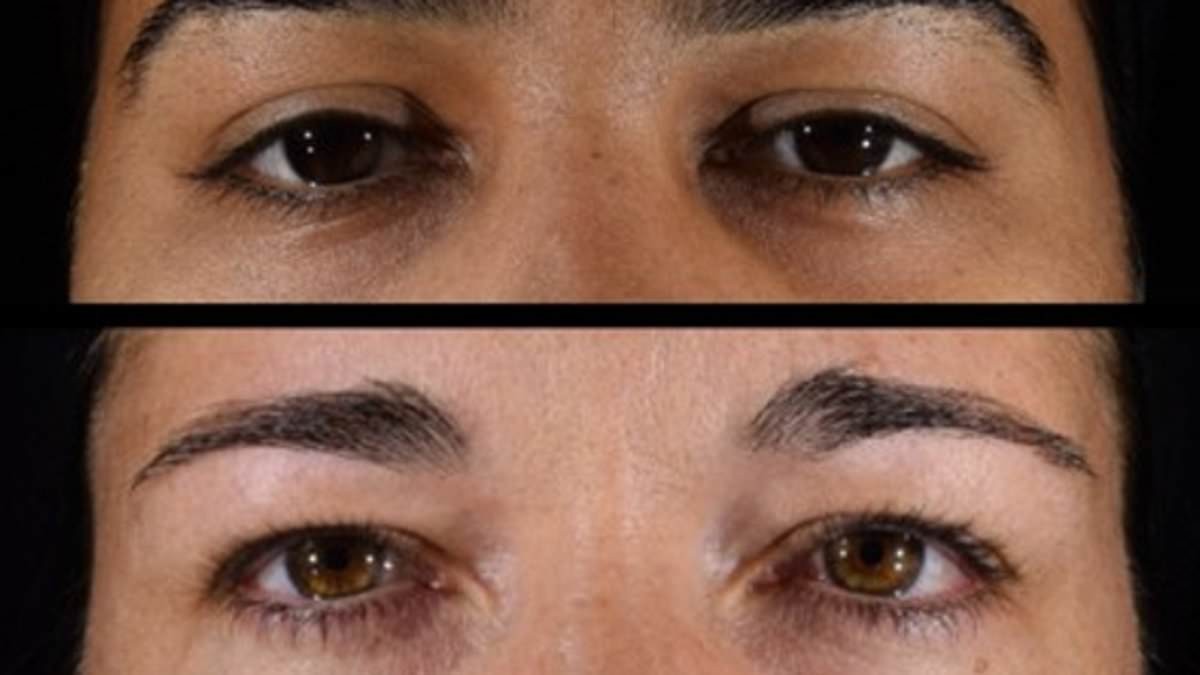
It’s always a good idea to tread carefully when guessing someone’s age – but can you work out how old these women are from cropped photos? While greying hair and sagging skin are obvious indicators, the introduction of hair dye and Botox mean they are no longer reliable clues. As part of a study, researchers collected a range of pictures from people of varying ages and ethnicities. These images were then cropped so only the eye and eyebrow area were visible. A group of 600 participants were asked to rate the photographs in terms of age, health and attractiveness. Analysis revealed certain features were strongly linked to a person being perceived as older. These pictures below are from a mix of of younger women, aged roughly between 20 and 35, and middle-aged women, aged roughly between 35 and 50. But can you tell which images belong to which group? The researchers revealed that wrinkles around the eyes – known colloquially as ‘crow’s feet’ – and are the primary driver of age perception across all ethnic groups. Are you good at guessing age? Women with more wrinkles, and ones with deep lines, were judged as being older. This can make it easy to pick out women who are aged 50 and above but it can be tricky to distinguish between younger than this – especially if they have good skincare. The scientists said crow’s feet are a significant age predictor across all the ethnic groups involved in the study, which included Chinese, Japanese, French, Indian and South African. With this information, do you fare any better with these next batch of images?
In This Article:
Picture A is from the middle-aged group
From the images above, picture A is from the middle-aged group. Picture A, identified in the study’s sequence, is used here to illustrate the judging process as observers compare eyes and brows in isolation. The researchers revealed that wrinkles around the eyes – known colloquially as ‘crow’s feet’ – and are the primary driver of age perception across all ethnic groups. The skin around the eye region is one of the most difficult to address in clinical diagnosis and aesthetic treatment, the team notes. This underscores why these eye-area cues persist as a quick heuristic for age across diverse populations. The crow’s feet are a significant age predictor across the groups studied, which included Chinese, Japanese, French, Indian and South African participants. Wrinkles around the eyes were also associated with perceptions of reduced health and attractiveness, a pattern that repeats across the dataset. ‘The skin around the eye region is one of the most difficult to address in clinical diagnosis and aesthetic treatment,’ the team wrote in the International Journal of Cosmetic Science. ‘The skin around the eyes is thinner than in other facial regions and has fewer sebaceous glands, making it more vulnerable to intrinsic and extrinsic ageing effects, ranging from genetics to lifestyle habits. The dynamic lines, particularly the crow\'s feet wrinkles, which appear during mimic muscle contraction are temporary at younger ages but become static over time and are a primary sign of ageing. This explains the high concern reported particularly by women aged over 40 years who are dissatisfied with their appearance.’
Picture B is from the younger group
Picture B, by contrast, is from the younger group. The study’s framing here uses eyes alone to challenge viewers to separate younger-looking features from older impressions, reinforcing how easily eye-area cues can mislead when other facial signals are masked. From the images above, picture A is from the middle-aged group. Meanwhile pictures B and C are from the younger group. ‘The skin around the eye region is one of the most difficult to address in clinical diagnosis and aesthetic treatment,’ the team wrote in the International Journal of Cosmetic Science. ‘The skin around the eyes is thinner than in other facial regions and has fewer sebaceous glands, making it more vulnerable to intrinsic and extrinsic ageing effects, ranging from genetics to lifestyle habits. The dynamic lines, particularly the crow\'s feet wrinkles, which appear during mimic muscle contraction are temporary at younger ages but become static over time and are a primary sign of ageing. This explains the high concern reported particularly by women aged over 40 years who are dissatisfied with their appearance.’
Picture C is from the younger group
Picture C is from the younger group. Like A and B, these images were selected to be evaluated in isolation of full facial context, focusing strictly on the eye and brow region to test how age is inferred. From the images above, picture A is from the middle-aged group. Meanwhile pictures B and C are from the younger group. The researchers revealed that wrinkles around the eyes – known colloquially as ‘crow’s feet’ – and are the primary driver of age perception across all ethnic groups. Are you good at guessing age? Women with more wrinkles, and ones with deep lines, were judged as being older. In this batch, B and C are younger, and the study notes that good skincare can blur lines that would otherwise reveal age more clearly.
Picture D is from the middle-aged group
In these images, picture D is from the middle aged group. The researchers presented a second batch of eye-area photos to test consistency in age judgments across a new set of observers and photos. In these images, picture E is from the younger group while photos D and F are from the middle aged group. The researchers note the continued influence of crow’s feet on age perception across ages and ethnicities. The study’s broader conclusion remains: crow’s feet are a robust cue used by observers across diverse populations to estimate age from eyes alone.
Picture E is from the younger group
Picture E is from the younger group. This section examines how under-eye skin colour and radiance can influence perceived health and vitality, adding a wrinkle-focused lens to aging judgments. From the larger set, picture E is younger, while D and F are middle-aged, as summarized by the researchers. The results also showed that differences in under-eye skin colour and radiance could influence how healthy a woman was rated. Women with more wrinkles, and ones with deep lines, were judged as being older - such as this participant.
Picture F is from the middle-aged group
Picture F is from the middle-aged group. In the final section, observers continued to categorize eye-area photos in a fresh batch, reinforcing the pattern that the number and depth of eye wrinkles tracks with perceived age and health scores across the panel. The upper layer of skin has to renew regularly as it is made of dead cells. As you get older, it takes longer for your epidermis to renew itself - and it shows more and more signs of your age. Overall, the study highlights that the eye region is a critical window into ageing, with crow\'s feet serving as a universal cue across ethnicities, and that health and attractiveness judgments tend to align with the perceived age indicated by eye wrinkles.