


Egg rejuvenation for IVF could redefine motherhood after 40 and beyond


The start of a reproductive revolution? A novel technique to “rejuvenate” human eggs may dramatically improve IVF success rates in older women, scientists say. “We have been able to achieve the first rejuvenation of a human egg in vitro. What this means is we could reduce the fraction of eggs with genetic defects,” Dr. Agata Zielinska, a co-founder and co-chief executive of Ovo Labs, which wants to commercialize the treatment, told BBC Radio 4’s Today. “If this could then be translated to the clinic, this could potentially be the biggest improvement in IVF success rates of the last decade,” she continued. Poor egg quality is the primary cause of IVF failure and miscarriage in older women. As women age, their eggs are more prone to chromosomal errors — this new approach seemingly reverses age-related defects. The Ovo Labs team gave donated eggs microinjections of the protein Shugoshin 1, which protects chromosomes. Those eggs were nearly half as likely to have a defect as untreated eggs. “Overall, we can nearly halve the number of eggs with [abnormal] chromosomes. That’s a very prominent improvement,” said Melina Schuh, a director at the Max Planck Institute for Multidisciplinary Sciences in Germany, according to The Guardian. “Most women in their early 40s do have eggs, but nearly all of the eggs have incorrect chromosome numbers,” added Schuh, who is also a co-founder of Ovo Labs. “This was the motivation for wanting to address this problem.” Previous research found that in women ages 20 to 32, about 1 in 5 eggs has a chromosome error. By a woman’s mid-30s, more than half of her eggs contain too many or too few chromosomes — a leading cause of miscarriage, infertility and conditions like Down syndrome. And with each passing year, the risk of chromosomal abnormalities continues to rise. Experts maintain that this sharp decline in egg quality accounts for the relationship between advancing age and a drop in IVF success rates. “Currently, when it comes to female factor infertility, the only solution that’s available to most patients is trying IVF multiple times so that, cumulatively, your likelihood of success increases. What we envision is that many more women would be able to conceive within a single IVF cycle,” said Zielinska. The method targets aneuploidy, an abnormal number of chromosomes, which stems from errors during meiosis. Meiosis is a process that aims to ensure that the resulting zygote gets the proper number of chromosomes when the sperm fertilizes the egg. Unfortunately, with older eggs, the proteins that form the “glue” holding the chromosome pairs can degrade over time, leading to aneuploidy. Schuh and her team found that microinjections of Shugoshin 1 into mouse and human eggs can help keep chromosome pairs together. Eggs showing a defect decreased from 53% to 29%, and in women over 35, from 65% to 44%. “What is really beautiful is that we identified a single protein that, with age, goes down, returned it to young levels, and it has a big effect,” said Schuh. “We are just restoring the younger situation again with this approach.” She notes, however, that the approach would not extend fertility beyond menopause, when egg reserves run out. The findings were presented last week at the British Fertility Conference in Edinburgh. What do you think? Post a comment. Schuh and her team do not anticipate safety issues and are in talks with regulators about testing their technique in clinical trial. Experts maintain that a crucial question will be whether this improvement in egg quality translates into embryos with fewer genetic errors. Share your stance. Please adhere to our This is not a good thing. Really. There are all these women who have bought in to the feminist drivel that they can spend their 20's having fun and traveling and building a career and yadda yadda yadda. And then in their early 30's when they've done their "healing" and completed "their journey" they... So, how are all these 70 year old+ grandparents awarded custody of their grandkids? Is it because they can keep up?? Foster Parents have no age limitations - so, why aren't people ranting against an 80 year old caring for children in their home? Daycares have no age limit on Staff and Social Ser... Have babies when you're young and will have the energy to take care of them and keep up with them. Have them by age 30 if possible.

A breakthrough in the lab a breakthrough in the lab: Shugoshin 1 injections nearly halve chromosomal defects in eggs
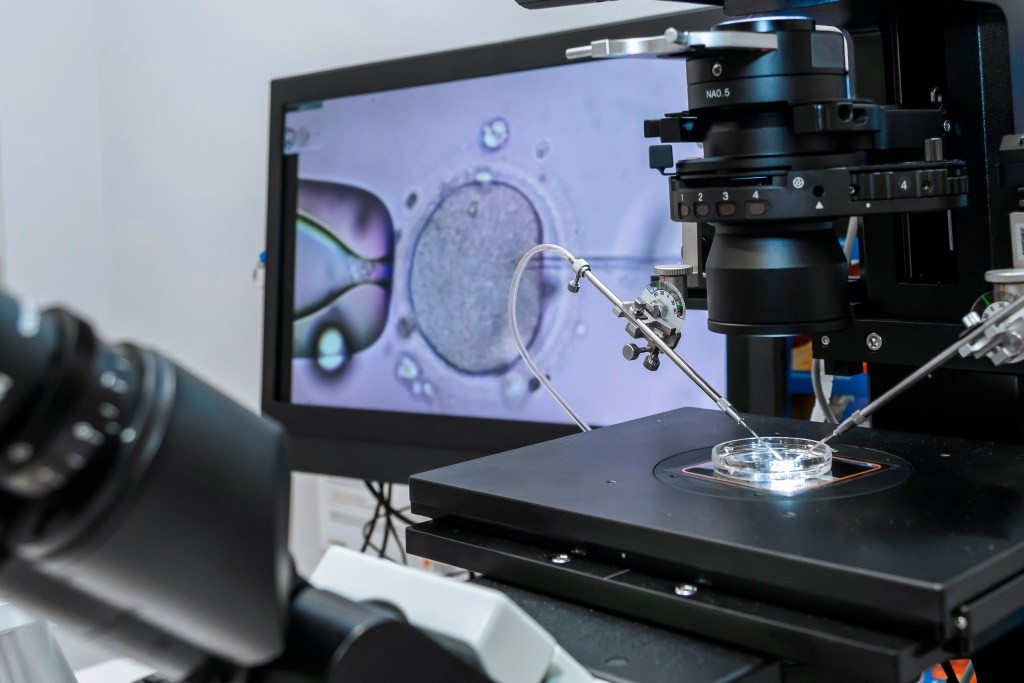
A breakthrough in the lab and the biology behind it: The Ovo Labs research focused on a protein called Shugoshin 1 that protects chromosomes during cell division. The team performed microinjections of Shugoshin 1 into donated human eggs and observed improvements in chromosome stability. Eggs showing a defect decreased from 53% to 29%, and in women over 35, from 65% to 44%. “What is really beautiful is that we identified a single protein that, with age, goes down, returned it to young levels, and it has a big effect,” said Schuh. “We are just restoring the younger situation again with this approach.” The scientists note that the approach would not extend fertility beyond menopause, when egg reserves run out. The team presented their findings at the British Fertility Conference in Edinburgh and indicated that safety reviews and regulatory consultations are ongoing to test the method in clinical trials. Experts say the key question is whether the improved egg quality translates into embryos with fewer genetic errors. Schuh and her team do not anticipate safety issues and are in talks with regulators about testing their technique in clinical trial. This could potentially be the biggest improvement in IVF success rates in the last decade, but more work is needed to determine if these egg-level improvements translate to better pregnancy outcomes. There are ongoing discussions with regulators about clinical trials, and the scientific community will be watching closely to see if this breakthrough can be translated into a safe and effective treatment for women. What do you think? Post a comment.
What comes next: safety, trials, and the limits of the breakthrough
Not everything is resolved. While the laboratory findings are promising, several crucial questions remain before this technique becomes a clinical option. Schuh notes that the approach would not extend fertility beyond menopause, when egg reserves run out. Schuh and her team are pursuing clinical trials and are in talks with regulators about testing their technique in humans, with safety reviews guiding the process. Experts emphasize that whether the improvement in egg quality reduces the rate of embryos with genetic errors remains to be proven in practice. Public reaction is mixed. The article invites readers to share their stance, and readers have begun to weigh in with comments, some praising the science and others raising concerns about broader social implications. Share your stance. Please adhere to our This is not a good thing. Really. There are all these people who have quoted that feminism has told women they can do anything, but then face backlash when they don’t meet the societal expectations of motherhood. Some commenters argue that the technology could complicate family planning, while others welcome the possibility of fewer miscarriages and healthier embryos. The article also includes reader comments addressing topics such as career, parenting, and aging, including debates about the role of age in caregiving and the ethics of delaying motherhood. This section provides a space for readers to reflect on the social and ethical implications of advancing reproductive technologies and to consider how such breakthroughs might shape families and society in the coming years.