


Crypto Millionaire Bets the Caribbean on a Paradise with Its Own Court System


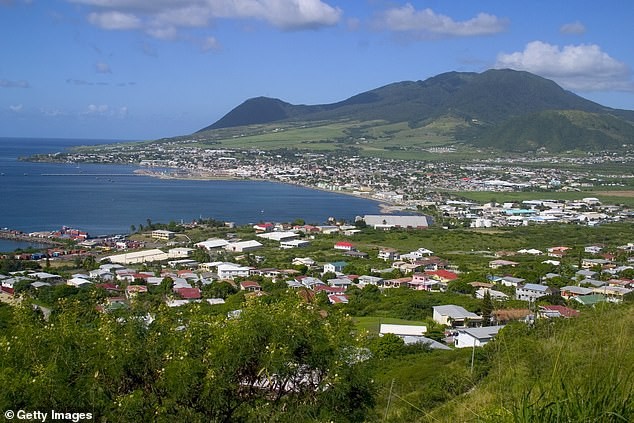
A crypto millionaire is planning to set up a 'paradise on earth' on a Caribbean island, complete with its own court system, under a controversial new law that has sparked fears of a 'state within a state'. Olivier Janssens, a wealthy bitcoin investor, is buying up land on the island of Nevis as part of a proposed multibillion-dollar development called Destiny. The deal, which would be made through his company, South Nevis Ltd, is expected to reshape large parts of the island's southern coastline. The project has been made possible by legislation passed in summer 2025 by the government of St Kitts and Nevis, which allows the creation of so-called Special Sustainability Zones. These zones give developers wide latitude to run large-scale projects, including the ability to establish their own 'dispute resolution services and mechanisms'.
In This Article:
- Destiny land purchases reshape Nevis' southern coastline
- Law that enables Special Sustainability Zones
- A libertarian network state on the Caribbean horizon
- Destiny would include villas, clinics and terraced homes
- Locals alarmed by scale and private law amid growth
- Questions over conflicts of interest in land sales
- Citizenship ties and Belgium’s cautionary stance
- Nevis at a glance and Caribbean connections
Destiny land purchases reshape Nevis' southern coastline
The deal, which would be made through South Nevis Ltd, is expected to reshape large parts of the island's southern coastline. Janssens' Destiny project is described by the Nevis government as a multibillion-dollar development. The plans also include a notable investment in infrastructure as part of the broader Destiny vision.
Law that enables Special Sustainability Zones
These zones give developers wide latitude to run large-scale projects, including the ability to establish their own 'dispute resolution services and mechanisms'. The legislation was passed in the summer of 2025 by the government of St Kitts and Nevis. It also sets up the framework that could allow Destiny to introduce its own courts for certain matters to make the development more attractive to investors and residents, while still ultimately remaining subject to national law.
A libertarian network state on the Caribbean horizon
Destiny is part of a growing trend among wealthy figures in technology and cryptocurrency circles to establish semi-autonomous communities known as 'network states', designed around libertarian principles and minimal government interference. The concept positions private projects as quasi-sovereign hubs aligned with liberal ideals.

Destiny would include villas, clinics and terraced homes
The development would include villas, medical clinics and terraced residential areas. Janssens' company, South Nevis Ltd, declined to disclose the total cost or future property prices, but the Nevis government has described Destiny as a multibillion-dollar project. Janssens has said it would include a $50 million investment in Nevis's infrastructure if approved.
Locals alarmed by scale and private law amid growth
The proposals have generated significant unease among islanders and opposition politicians, who worry about the scale of the project, its impact on water and power supplies, and the prospect of a private legal system operating alongside national courts. Kelvin Daly, a member of the opposition Nevis Reformation Party, said the law enabling Special Sustainability Zones was passed without public consultation, fuelling anxiety among residents. 'They've been very careful in using the word 'sustainable,' he said. 'It's just a highfalutin way of saying economic zone with added benefit.' Some locals fear the development could become physically and socially cut off from the rest of the island, while long-term residents have already complained of being displaced as land is acquired. One opponent has even written a song protesting the project.

Questions over conflicts of interest in land sales
Janssens' plans have raised concerns among local residents and say the community could become socially cut off from the rest of the island. The real estate agent involved is Sharon Brantley, who is married to Nevis' premier, Mark Brantley. Opposition figures have raised concerns about potential conflicts of interest, though neither Mark Brantley nor Sharon Brantley responded to requests for comment.
Citizenship ties and Belgium’s cautionary stance
Janssens holds both Belgian and Nevisian citizenship, having obtained the latter through the federation's citizenship-by-investment programme, which offers passports in exchange for minimum investments of $250,000 or qualifying property purchases. He has said he would consider giving up his Belgian passport if he could secure an alternative that allows visa-free access to Europe, describing his feelings toward Belgium as one of 'repulsion'.
Nevis at a glance and Caribbean connections
Nevis, which forms part of the twin-island nation of St Kitts and Nevis, has a population of around 13,200 and covers just 93 square kilometres. Its economy is heavily reliant on tourism and real estate, with the federation's total GDP estimated at about $1.1 billion. Several notable people have their own islands in the Caribbean, including businessman Richard Branson, pop star Shakira, and film mogul Tyler Perry.