


Converse Once Built Tires Before Chuck Taylors


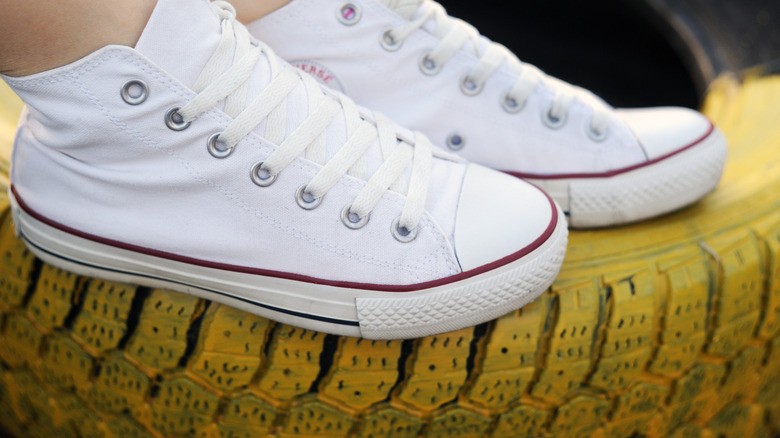
Did you know Converse used to make tires as well as shoes? The company behind the star-logo sneakers also produced tires at one point in its history. The crossover between fashion and automotive worlds isn’t new—think Gucci’s 2012 edition of Fiat 500 or Ferrari’s lines of high-fashion clothing—but Converse’s ties to the car world predate many famous collaborations. When Converse began in 1908, it was known as the Converse Rubber Company and specialized in a variety of rubber products, including rain boots and hunting boots, as well as car tires and other goods. Other rubber manufacturers dipped their toes in both industries during that era, including Converse competitors Goodyear and Goodrich. Goodrich even sold its shoe designs to Converse before exiting the sneaker business, and Converse’s tire days ended as the company ultimately went all in on basketball shoe production in the 1920s. The trend for early 20th-century rubber producers was a jack-of-all-trades approach. Converse produced a wide range of rubber products, including multiple forms of rubber footwear, but also tires—until it became master of one product. In 1917, Converse released the product it’s best known for in today’s economy—the rubber-soled, canvas high-top All Star Converse designed specifically for basketball. At the time, it was a simple move to keep its employees working during the summer because its other products were manufactured from fall through spring. But after Converse hired former basketball star Chuck Taylor to market the sneakers in 1921, the shoes exploded in popularity, and Converse began to dominate the athletic shoe scene. Today, more than 550 million pairs of Chucks have been produced.
In This Article:
Converse's Early Rubber Roots and the Tire Era
Converse's founding in 1908 saw the company produce a variety of rubber goods, from rain boots to hunting boots, and even car tires. It wasn’t alone in pursuing both rubber and automotive markets; Goodyear and Goodrich were among its peers dabbling in both areas. Goodrich sold its shoe designs to Converse before exiting the sneaker business. The tire era faded as Converse began to focus on one product: basketball shoes, in the 1920s.
The All Star Era Begins: 1917 and the Birth of a Basketball Icon
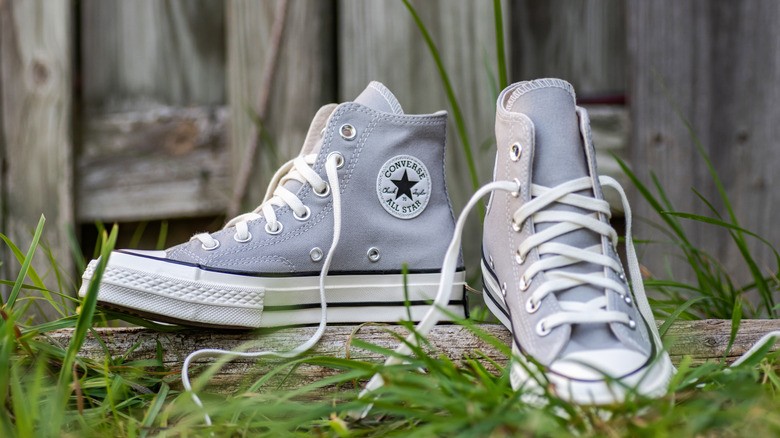
In 1917, Converse released the product it’s most known for in today’s economy—the rubber-soled, canvas high-top All Star Converse designed specifically for basketball. At the time, it was a simple move to keep its employees working during the summer because its other products were manufactured from fall through spring. But after Converse hired former basketball star Chuck Taylor to market the sneakers in 1921, the shoes exploded in popularity, and Converse began to dominate the athletic shoe scene. As of today, over 550 million pairs of Chucks have been produced.
The Tire Mystery: What Happened to the Converse Tires?
But what happened to the tires? Given that Converse and its many competitors produced a smorgasbord of rubber products in the pre-digital age, the exact destination(s) of its tires appears to have been poorly documented. It seems that no one really knows exactly what cars received Converse’s tires originally or if they’re still producing them today—a quick Google search of “Does Converse still make tires?” reveals a company called Converse Tire, but its website isn’t operational (which could indicate that the business isn’t either), and its affiliation with Converse as the shoemaker is unclear. At any rate, the timely success of its basketball shoe in a competitive rubber industry seems like as good a reason as any to specialize and forgo car shoe production.
A Pivot That Shaped a Brand
The story of Converse is a reminder that early diversification can lead to a singular, dominant product. The tire business faded, and the All Star line rose to become the defining product of the company, proving that focus can reinvent a company’s destiny.