

Colossal 8-Meter Life Form Emerges from the Past


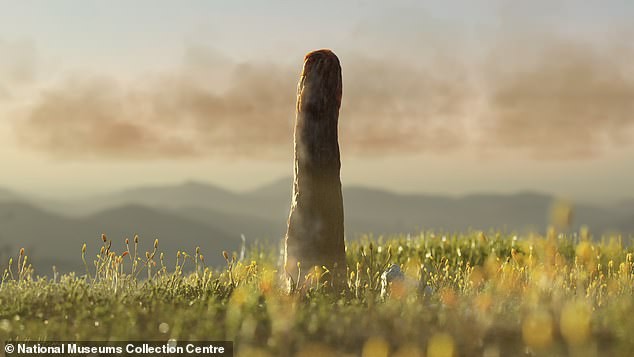
Colossal life stood about 8 meters tall and lived on Earth around 410 million years ago, becoming extinct roughly 360 million years ago. Until now, it was thought to be a form of fungus. In a new fossil analysis, scientists from National Museums Scotland argue that prototaxites was neither a fungus nor a plant. Instead, they say it belonged to an entirely extinct evolutionary branch of life. This discovery challenges long-held beliefs about life on Earth and opens a window into a lost chapter of biology.
In This Article:
Prototaxites: A Giant of Prehistoric Life That Defies Fungal or Plant Classification
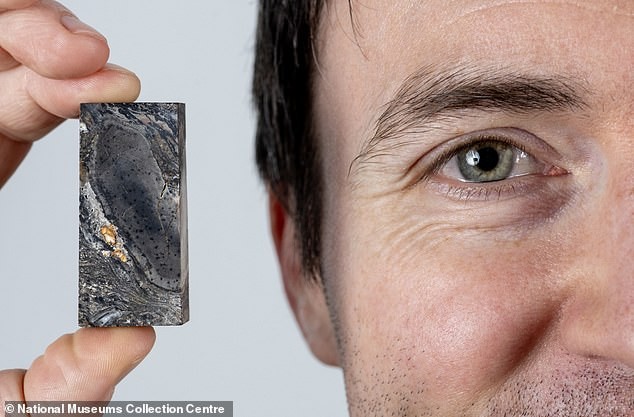
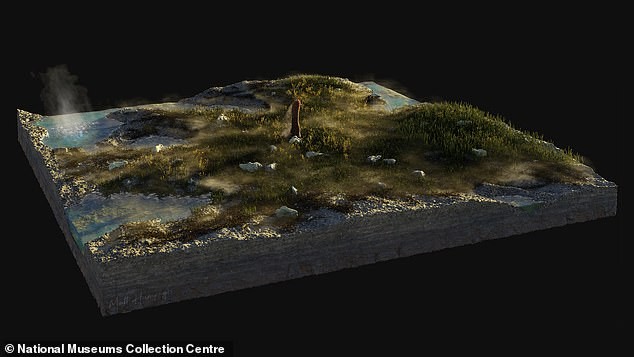
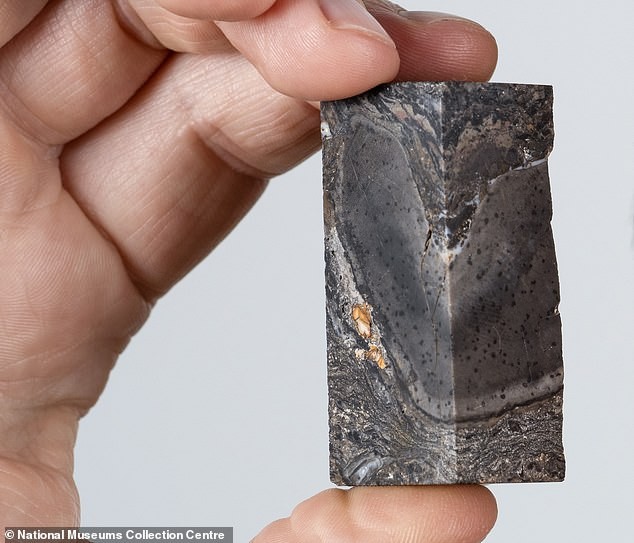
Prototaxites stood as an enormous lifeform that reached about 8 meters in height. It lived roughly 410 million years ago and became extinct around 360 million years ago. The fossil was found in the Rhynie chert, a sedimentary deposit near Rhynie, Aberdeenshire. Until now, it was thought to be a form of fungus. A new fossil analysis by scientists from National Museums Scotland suggests prototaxites was neither a fungus nor a plant. Instead, the team argues that prototaxites belonged to an entirely extinct evolutionary branch of life. "It's really exciting to make a major step forward in the debate over prototaxites, which has been going on for around 165 years," said Dr Sandy Hetherington, co–lead author of the study. "They are life, but not as we now know it, displaying anatomical and chemical characteristics distinct from fungal or plant life, and therefore belonging to an entirely extinct evolutionary branch of life." "Even from a site as loaded with palaeontological significance as Rhynie, these are remarkable specimens and it's great to add them to the national collection in the wake of this exciting research." "The Rhynie chert is incredible," said Dr Corentin Loron, co–lead author of the study. "It is one of the world's oldest, fossilised, terrestrial ecosystems and because of the quality of preservation and the diversity of its organisms, we can pioneer novel approaches such as machine learning on fossil molecular data." "There is a lot of other material from the Rhynie chert already in museum collections for comparative studies, which can add important context to scientific results."
A New Life Form Not Fungus or Plant The Independent Evolutionary Experiment
In their new study, the researchers analysed both the chemistry and anatomy of the fossil to understand which group it fits into. Their results back up the theory that prototaxites were an entirely different form of life, no longer found on Earth. The fossil has now been added to the collections of National Museums Scotland in Edinburgh. "We're delighted to add these new specimens to our ever–growing natural science collections which document Scotland's extraordinary place in the story of our natural world over billions of years to the present day." "This study shows the value of museum collections in cutting–edge research as specimens collected over time are, cared for and made available for study for direct comparison or through the use of new technologies." "As previous researchers have excluded prototaxites from other groups of large complex life, we concluded that prototaxites belonged to a separate and now entirely extinct lineage of complex life," explained Laura Cooper, co–first author of the study. "Prototaxites, therefore, represents an independent experiment that life made in building large, complex organisms, which we can only know about through exceptionally preserved fossils."
From Fungi to the Deep History of Life on Earth
Not until 1969 were fungi officially granted their own 'kingdom,' alongside animals and plants, though their distinct characteristics had been recognised long before that. Yeast, mildew and molds are all fungi, as are many forms of large, mushroom-looking organisms that grow in moist forest environments and absorb nutrients from dead or living organic matter. Unlike plants, fungi do not photosynthesize, and their cell walls are devoid of cellulose. Geologists studying lava samples taken from a drill site in South Africa discovered fossilised gas bubbles 800 meters underground. In April 2017, they revealed that these gas bubbles are believed to contain the oldest fungi ever found. Researchers were examining samples taken from drill-holes of rocks buried deep underground, when they found the 2.4-billion-year-old microscopic creatures. They are believed to be the oldest fungi ever found by around 1.2 billion years. Earth is about 4.6 billion years old. The previous earliest examples of eukaryotes—the 'superkingdom' of life that includes plants, animals and fungi, but not bacteria—dates to 1.9 billion years ago. That makes this sample 500 million years older. It was believed that fungi first emerged on land, but the newly-found organisms lived and thrived under an ancient ocean seabed. And the dating of the find suggests that not only did these fungus-like creatures live in a dark and cavernous world devoid of light, but they also lacked oxygen.