


China plans a 200,000 satellite mega-constellation and space fears go into overdrive


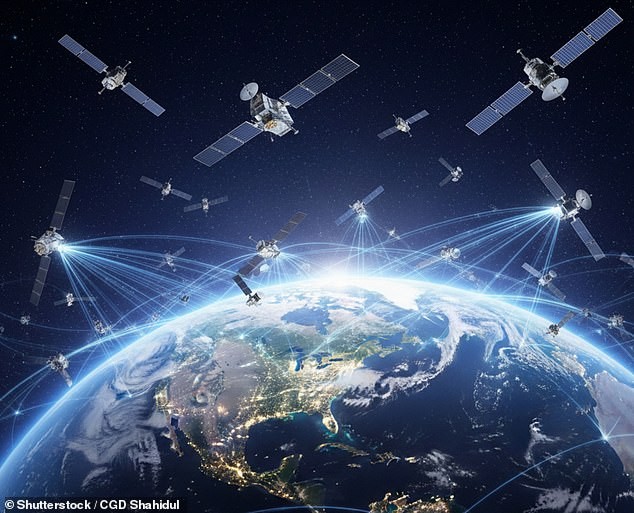
China has filed applications to launch almost 200,000 satellites into space, sparking fears that the nation intends to build a mega-constellation. On December 29, a newly formed body called the Institute of Radio Spectrum Utilisation and Technological Innovation filed applications for two satellite constellations. Each would contain 96,714 satellites spread over 3,660 orbits. If completed, China's mega-constellation would dwarf SpaceX's plan to put 49,000 Starlink satellites in orbit. Together, CTC-1 and CTC-2 would be the largest assembly of satellites ever placed in orbit, and could effectively lock competitors out of a region of low-Earth orbit. As the broader space race heats up, not only are the two nations racing to establish a permanent presence on the Moon, but they are also competing for dominance in low-Earth orbit. According to China in Space, the Nanjing University of Aeronautics claims that the satellites will focus on: "Low-altitude electromagnetic space security, integrated security defence systems, electromagnetic space security assessment of airspace, and low-altitude airspace safety supervision services." This suggests the constellations may play a similar role to the SpaceX Starshield satellites used by the US military for secure tracking and communications. These applications were filed with the International Telecommunications Union (ITU), a UN body that allocates spectrum allowances in space. With the applications filed, other operators will need to demonstrate to the ITU that new satellites in this orbit won't interfere with the constellation's operations. These satellites may have any number of benign functions, from tracking extreme weather and providing navigation for aircraft to offering Starlink-style communication services. However, the applications come at a time of increasing tension between the space ambitions of China and the US. Not only are the two nations racing to be the first to establish a permanent presence on the Moon, but they are also competing for dominance in the field of low-Earth orbit.
In This Article:
CTC-1 and CTC-2 would house nearly 200 000 satellites
Each of these enormous collections of spacecraft, dubbed CTC-1 and CTC-2, would contain 96,714 satellites spread over 3,660 different orbits. If completed, the new mega-constellation would dwarf even SpaceX's bold ambition to put 49,000 Starlink satellites in orbit. Together, CTC-1 and CTC-2 would be the largest assembly of satellites ever put in orbit, and would effectively lock competitors out of a region of low-Earth orbit.

Security concerns surround the plan as authorities stay quiet on purpose
With Chinese authorities remaining quiet about the satellites' intended use, experts have raised concerns that the constellation may pose a security or defence threat. As reported by China in Space, the Nanjing University of Aeronautics claims that the satellites will focus on: 'Low-altitude electromagnetic space security, integrated security defence systems, electromagnetic space security assessment of airspace, and low-altitude airspace safety supervision services.' This suggests the constellations may play a similar role to the SpaceX Starshield satellites used by the US military for secure tracking and communications. These applications were filed with the ITU, and, importantly, Under the ITU's rules, they must launch at least one satellite within seven years of the initial filing, with another seven years to complete launching all the satellites. China might have legitimate aims to build the constellations, but there is nothing preventing China from filing a 'dummy' application to lock off a section of space for later use. Victoria Samson, Chief Director of space security and stability for Secure World Foundation, told New Scientist: 'It is possible they’re just trying to create some space for later on.'

A broader landscape: capacity questions and a dense roster of lunar lander players
This section includes a closer look at the practical feasibility of the satellite plan, plus a showcase of major players in lunar lander concepts. In 2021, Xi Jinping asserted that space is 'an important strategic asset for the country that must be well managed and utilised and, more importantly, protected.' China now has approximately 1,000 satellites in orbit, marking a significant increase from around 40 satellites in 2010. While the two new constellations might become part of China’s growing military space presence, many experts worry they may also reflect a broader 'land grab' in space. The Chinese representative at an informal UN Security Council event warned: 'With the unchecked proliferation of commercial satellite constellations by a certain country, in the absence of effective regulation, has given rise to pronounced safety and security challenges.' US officials have described a similar concern in the context of a rising Chinese space capability. Speaking at a Chatham House event in March, United States Space Force official Ron Lerch said: 'There are a number of what the Chinese refer to as these experimental communication satellites that are out in GEO, and yet these GEO satellites. They’re sliding, or they’re moving very frequently across the GEO belt, which is a behaviour that is very uncharacteristic of a satellite that’s intended to provide satellite communication.' He added: 'We [U.S. Space Force] see great risk right now because of the unprecedented growth, as well as the unmanaged competition.' Astrobotic’s Peregrine lander is one of the many in the running. Astrobotic Technology: The Pittsburgh-based firm was founded in 2008 by Carnegie Mellon professor Red Whittaker. It was among the many teams that participated in Google’s $20 million Lunar XPrize, which shut down this year without a winner. Astrobiotic’s lunar lander, dubbed Peregrine, stands on four shock-absorbing legs and attaches to the launch vehicle via a standard clamp. 'The Peregrine Lander precisely and safely delivers payloads to lunar orbit and the lunar surface on each mission,' the firm says. 'Payloads can be mounted above or below the decks, and can remain attached or deployed according to their needs.' Deep Space Systems: The systems engineering company from Colorado has long been a subcontractor to NASA and other aerospace giants, including Lockheed Martin. The firm develops everything from plans and interface control documents to ground software tools for missions. Deep Space Systems says it focuses on the ‘the design, development, integration, testing and operations of science and exploration spacecraft.’ Their lunar lander concept is a rover that appears to feature smaller scouting robots that can be deployed. Draper: The Cambridge, Massachusetts-based laboratory is a not-for-profit research and development organization. Draper develops everything from autonomous systems and biomedical solutions to systems. Notably, Drapers accomplishments include a device that measures cabin air on the International Space Station to check for volatile organic compounds. The firm’s concept lander, dubbed Artemis-7, will sit on four mechanical legs to carry out sample collection and return. Firefly Aerospace: Firefly showed off a concept for a commercial launch vehicle and a lunar lander. While the firm hasn’t released much detail just yet, it appears to be a three-stage system upon which the lander sits at the very top. Intuitive Machines: The Houston-based firm also unveiled a concept lander that looks much like R2D2. The Nova-C lander is the key component of its Lunar Payload and Data Service plan. It’s capable of 24/7 data coverage, and can hold a payload of at least 85 kg. The firm says it can land anywhere on the Moon. The Houston-based firm also unveiled a concept lander that looks much like R2D2 (left). Firefly showed off a concept for a commercial launch vehicle and a lunar lander (right) Lockheed Martin: The aerospace giant unveiled its McCandless Lunar Lander, named after late NASA astronaut Bruce McCandless. It’s capable of transporting large payloads weighing hundreds of kilograms – including stationary scientific instruments, deployable rovers, or even sample return vehicles – to the surface of the Moon. ‘The lander uses a proven propulsive landing approach that relies upon on-board radars and a set of rocket thrusters firing 10 times a second to slow to just five mph before touching down. Once on the lunar surface, the lander can provide power, communications and thermal management for sophisticated payloads.’ Masten Space Systems: Masten’s XL-1 is a ‘small, single use lander’ that can carry 100-kg payload. ‘The XL-1 is designed to offer a mission duration that is minimally sufficient to land on the lunar surface, transmit payload activation commands, and activate the payload release/deployment mechanism,’ the firm says. Moon Express: Cape Canaveral-based Moon Express was previously pegged to develop a fleet of low-cost robotic spacecraft that can be assembled like Legos. The initial spacecraft, known as MX-1E, is a similar size and shape to the R2D2 droid from Star Wars. It will hop across the lunar surface on its legs. Last year, the firm said it hoped its ‘Harvest Moon’ expedition would take place by 2020, including the first commercial sample return mission, which also begins the business phase of lunar resource prospecting. Orbit Beyond: The New Jersey firm unveiled a four-legged concept lander that could soon be used to deliver payloads to the Moon. The firm has yet to reveal more details on the project.