


Cannabis Emerges as a Budding Strategy Against Ovarian Cancer


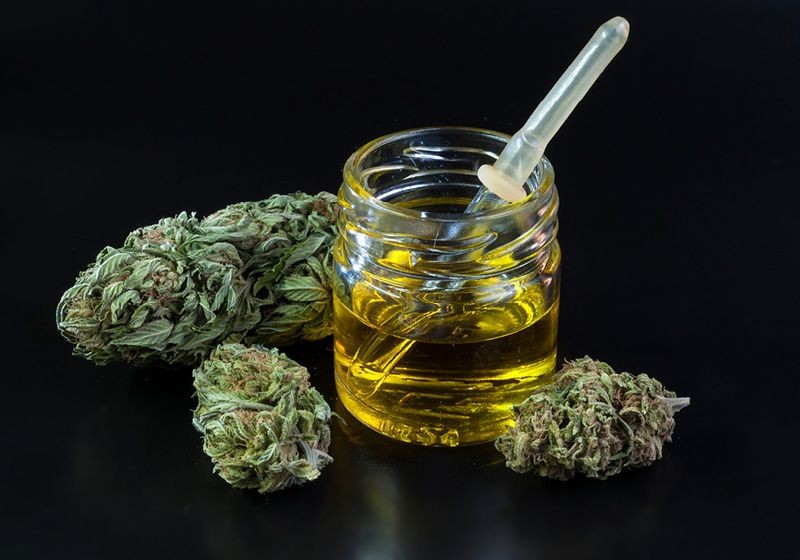
In the fight against ovarian cancer, existing drugs are often limited in effectiveness and can cause significant side effects, underscoring the need for new options. Researchers are exploring alternative drugs, including herbal-based strategies. A research group from Khon Kaen University studied the cannabis plant, which has long been used to help relieve side effects of cancer treatments. They focused on the individual and combined effects of two cannabis compounds on human ovarian cancer cell lines: cannabidiol (CBD), the non-psychoactive component, and delta-9-tetrahydrocannabinol (THC), the psychoactive ingredient responsible for cannabis’s high. In a recent study published in Frontiers in Pharmacology, the same research group demonstrated that a combination of CBD and THC successfully killed a large proportion of ovarian cancer cells while sparing healthy cells in vitro. Their findings lay a foundation for alternative treatments.
In This Article:
CBD and THC at a 1:1 ratio show synergistic anti-cancer effects in vitro
The researchers first assessed two ovarian cancer cell lines: one that is sensitive to platinum-derived drugs and another that is resistant. Platinum drugs are often used as initial ovarian cancer treatments. They treated these groups and healthy cells with different doses of CBD, THC, and ratios of CBD:THC. Of these treatments, the CBD:THC combination at a 1:1 ratio had a synergistic effect, producing the best results: it led to fewer and smaller cancer cell colonies, induced cell death, and decreased the cells’ ability to migrate. The researchers also noted that the treatment exhibited selective toxicity toward cancer cells, leaving healthy cells unharmed.
Mechanisms revealed: CBD and THC dampen cancer signaling and restore tumor-suppressor activity
To understand the mechanisms behind these anti-cancer effects, the researchers examined key cell signaling pathways. In ovarian cancer cells, the PI3K/AKT/mTOR signaling pathway is often hyperactivated, regulated by phosphorylation, and contributes to tumor development. When the CBD:THC combination was tested on ovarian cancer cell lines, they observed reduced phosphorylation of proteins within the PI3K/AKT/mTOR pathway. They also detected an increase, or restoration, of a tumor-suppressor protein, which may further contribute to the dampened signaling activity.
A cautious, promising outlook for CBD and THC in ovarian cancer
“Although our study is still preliminary, it lays an important foundation for future research into the potential applications of CBD and THC in ovarian cancer treatment,” said study coauthor Siyao Tong in a press release. Their findings lay a foundation for future research.