


Britain vows to end animal testing as organ chips AI and 3D tissues promise a pain-free research future


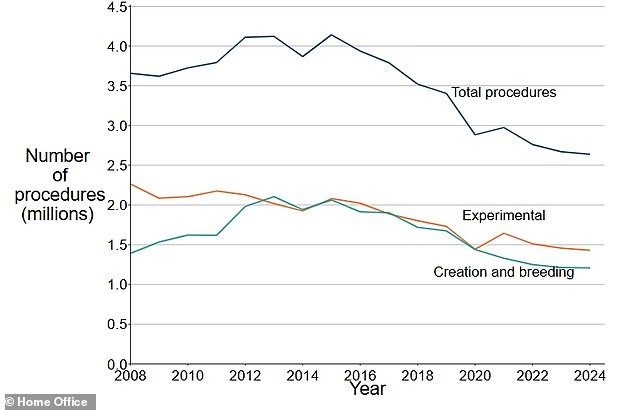
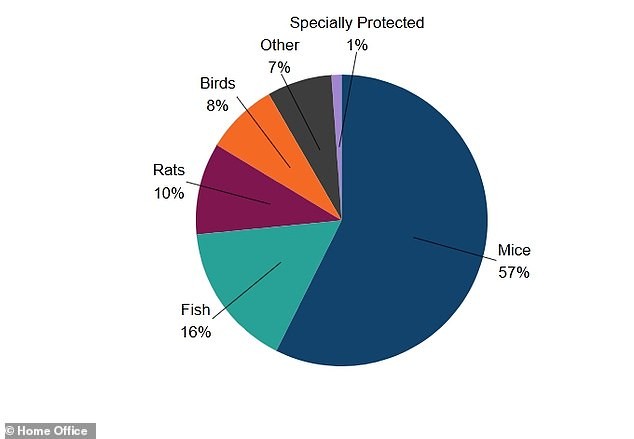
Science ministers have today laid out their ambitious plans to eliminate the use of animals in research, marking a significant step away from the 'suffering' of millions of creatures in the UK. Animal testing has been practiced in the UK for centuries with rats, birds, fish and mice used to assess the safety of chemicals, medicines and cosmetic products. The latest figures show 2.64 million tests on animals were carried out last year, which included the creation and breeding of genetically altered species. Now, for the first time, the government has announced futuristic technologies such as organ–on–a–chip systems, AI and 3D–printed tissues will soon replace the 'outdated' practice. They said animal testing should only ever be a 'last resort', with 'every effort' made to ensure that validated alternatives are used. The move has been hailed by campaigners, who called it a 'significant step forward' in ending the use of animals in science. "Nobody in our country of animal lovers wants to see suffering and our plan will support work to end animal testing wherever possible and roll out alternatives as soon as it is safe and effective to do so," Science Minister Lord Vallance said. "This is a roadmap which will ensure government, businesses and animal welfare groups can work together to find alternatives to animal testing faster and more effectively." Animal testing has been practiced in the UK for centuries, with 2.64 million tests carried out last year (file image). The total number of procedures has dropped in the last decade, but activists have continued to call for more government action. Mice, fish, rats and birds were the most common animals used in experiments last year, data reveals. Experimental procedures on animals can range from looking at behaviour and taking blood samples to carrying out surgery or creating 'models' of arthritis, liver disease or depression. "There's no doubt that animals can experience pain and distress as a result of being used in experiments," the RSPCA has previously said. "Although many procedures may be mild, large numbers of animals undergo procedures in the moderate category and some animals suffer severely." The UK government's latest data, published last month, revealed that 1.43 million animals were involved in scientific experiments in 2024, a decrease of 3 per cent from 2023. Of all experiments, 31 per cent were considered by researchers to have caused moderate or severe pain and suffering to the animals involved, including long–term disease and even death from the likes of cancer or Parkinson's disease. While mice and rats were the most frequently used animals in scientific procedures, the likes of fish, birds, dogs, monkeys, rabbits, guinea pigs, cats and horses were also used in experiments. Do you think animal testing should be banned? Half of the research was curiosity–driven, attempting to shed light on biological processes, while a quarter was research that attempted to develop treatments or cure for diseases. Other tests were carried out for higher education, species preservation and protection of the environment. Instances of 'non–compliance' – when animal welfare is breached – in recent years include boxes of 112 live rats being moved in error to a compactor where they were crushed, four dogs being given a substance that was not authorised for testing, a primate dying after becoming trapped behind a device in their enclosure, and 1,300 fish dying after a chlorine tablet was added to their tank in error. Of all procedures carried out last year, some 31 per cent were deemed to have caused moderate or severe pain to the animals involved. The plan will enable teams to 'pivot' to methods like organ–on–a–chip devices – tiny systems that mimic how human organs work using real human cells. This will allow researchers to test how drugs affect people without using animals. Five teams across the UK will focus on human models of the liver, brain, cancer and blood vessels. A greater use of artificial intelligence will allow scientists to analyse huge amounts of information about molecules to predict whether new medicines will be safe and work well on humans. Meanwhile, 3D–printed tissues could create realistic human tissue samples, from skin to liver, for testing. This will provide lifelike environments for studying human biology and checking if substances are toxic. By the end of 2026 the plan aims to end regulatory testing on animals to assess whether new treatments cause skin and eye irritation or skin sensitisation. By 2027 researchers are expected to end tests of the strength of botox on mice and to use only DNA–based lab methods for adventitious agent testing of human medicines – the process for detecting viruses or bacteria that might accidentally contaminate medicines. And by 2030 it will also reduce pharmacokinetic studies – which track how a drug moves through the body over time – on dogs and non–human primates. Recent polls have shown that 77 per cent of UK adults agree that the government should commit to phasing out the use of animals in scientific research.
In This Article:
UK animal testing today: millions of procedures, diverse species and pain
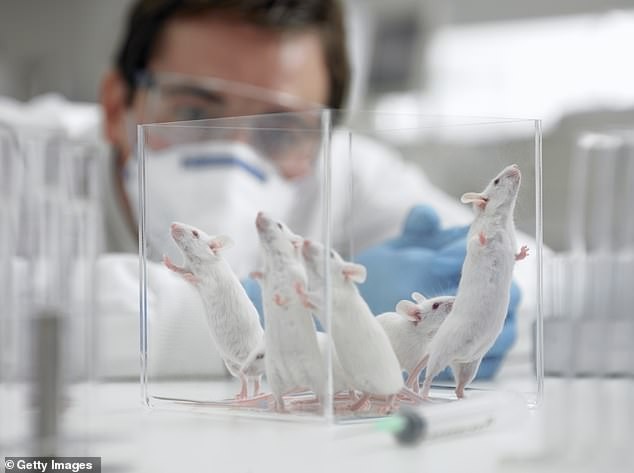
Animal testing has been practiced in the UK for centuries, with 2.64 million tests carried out last year (file image). The total number of procedures has dropped in the last decade, but activists have continued to call for more government action. Mice, fish, rats and birds were the most common animals used in experiments last year, data reveals. Experimental procedures on animals can range from looking at behaviour and taking blood samples to carrying out surgery or creating 'models' of arthritis, liver disease or depression. "There’s no doubt that animals can experience pain and distress as a result of being used in experiments," the RSPCA has previously said. "Although many procedures may be mild, large numbers of animals undergo procedures in the moderate category and some animals suffer severely." The UK government's latest data, published last month, revealed that 1.43 million animals were involved in scientific experiments in 2024, a decrease of 3 per cent from 2023. Of all experiments, 31 per cent were considered by researchers to have caused moderate or severe pain and suffering to the animals involved, including long–term disease and even death from the likes of cancer or Parkinson's disease. While mice and rats were the most frequently used animals in scientific procedures, the likes of fish, birds, dogs, monkeys, rabbits, guinea pigs, cats and horses were also used in experiments. Do you think animal testing should be banned? Half of the research was curiosity–driven, attempting to shed light on biological processes, while a quarter was research that attempted to develop treatments or cure for diseases. Other tests were carried out for higher education, species preservation and protection of the environment. Instances of 'non–compliance' – when animal welfare is breached – in recent years include boxes of 112 live rats being moved in error to a compactor where they were crushed, four dogs being given a substance that was not authorised for testing, a primate dying after becoming trapped behind a device in their enclosure, and 1,300 fish dying after a chlorine tablet was added to their tank in error. Of all procedures carried out last year, some 31 per cent were deemed to have caused moderate or severe pain to the animals involved.
A bold roadmap powered by organ-on-chip technology AI and 3D tissues
The plan will enable teams to 'pivot' to methods like organ–on–a–chip devices – tiny systems that mimic how human organs work using real human cells. This will allow researchers to test how drugs affect people without using animals. Five teams across the UK will focus on human models of the liver, brain, cancer and blood vessels. A greater use of artificial intelligence will allow scientists to analyse huge amounts of information about molecules to predict whether new medicines will be safe and work well on humans. Meanwhile, 3D–printed tissues could create realistic human tissue samples, from skin to liver, for testing. This will provide lifelike environments for studying human biology and checking if substances are toxic. By the end of 2026 the plan aims to end regulatory testing on animals to assess whether new treatments cause skin and eye irritation or skin sensitisation. By 2027 researchers are expected to end tests of the strength of botox on mice and to use only DNA–based lab methods for adventitious agent testing of human medicines – the process for detecting viruses or bacteria that might accidentally contaminate medicines. And by 2030 it will also reduce pharmacokinetic studies – which track how a drug moves through the body over time – on dogs and non–human primates.
Public opinion and official reactions to the plan
Recent polls have shown that 77 per cent of UK adults agree that the government should commit to phasing out the use of animals in scientific research. "This strategy marks a significant step forward in ending the use of animals in science," Barney Reed, senior science and policy manager for the RSPCA's Animals in Science department. "These are exciting times for innovation in the life sciences, with opportunities for UK scientists to exploit new approaches that don't cause harm to animals." Commenting on the announcement Animal Welfare Minister Baroness Hayman said: "It is tremendous news for people like me, who care passionately about animal welfare, that we are now able to move towards a future where animal testing is only ever a last resort." Meanwhile Home Office Minister Lord Hanson added: "We will continue to make evert effort to ensure that animals are never used in scientific research where validated alternatives exist and will continue with strong regulation."
Non-compliance and enforcement reminders
Instances of 'non–compliance' – when animal welfare is breached – in recent years include boxes of 112 live rats being moved in error to a compactor where they were crushed, four dogs being given a substance that was not authorised for testing, a primate dying after becoming trapped behind a device in their enclosure, and 1,300 fish dying after a chlorine tablet was added to their tank in error.
Understanding the severity categories for animal experiments
Scientific experiments done on live animals are classified by their severity. There are five categories which each experiment fits in to. Sub-threshold When a procedure did not actually cause suffering above the threshold of regulation, i.e. was less than the level of pain, suffering, distress or lasting harm that is caused by inserting a hypodermic needle according to good veterinary practice. Non-recovery When the entire procedure was carried out under general anaesthesia without recovery. The animal never woke up after going under the influence of the anaesthetic and died. Mild Any pain or suffering experienced by an animal that was, at worst, only slight or transitory and minor so that the animal returns to its normal state within a short period of time. Moderate The procedure caused a significant and easily detectable disturbance to an animal's normal state, but this was not life threatening. Most surgical procedures carried out under general anaesthesia and with good post-operative analgesia (i.e. pain relief) would be classed as moderate. Severe The procedure caused a major departure from the animal's usual state of health and wellbeing. This would usually include long-term disease processes where assistance with normal activities such as feeding and drinking were required, or where significant deficits in behaviours/activities persist. It includes animals found dead unless an informed decision can be made that the animal did not suffer severely prior to death.