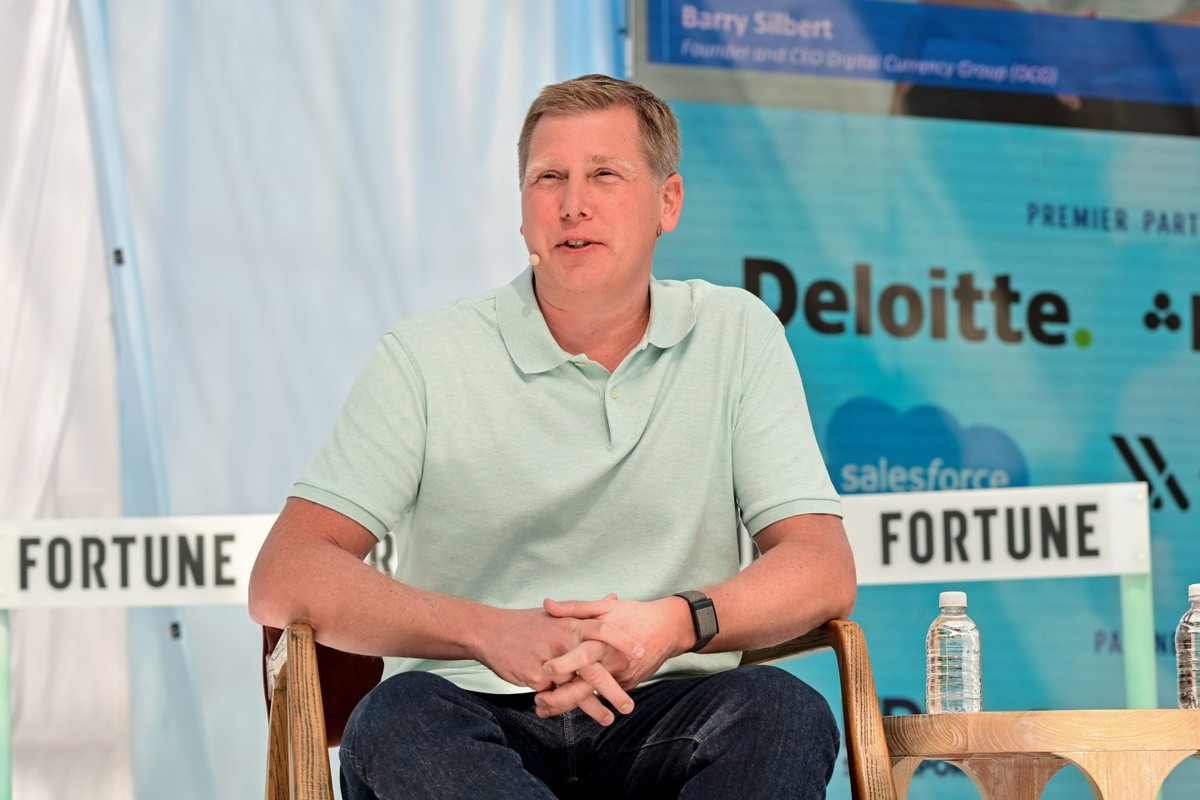


Bitcoin Was Just the Beginning What Comes Next Barry Silbert’s Next Bet


Barry Silbert is back—and this time not only talking about money, but about the future. Most people hear the name Barry Silbert when something goes wrong. When the crypto market crashes. When the media seeks someone to blame. When the numbers are red and trust disappears. But to understand what he is really saying today, you must go back to the story much earlier—to a time when Bitcoin was a joke, not a system. In 2011, Silbert wasn't a 'crypto tycoon'. He was a former investment banker, tired of Wall Street, in search of something meaningful. He randomly comes across Bitcoin—a text, a podcast, a conversation. Instead of dismissing it, as most did, he reads everything that exists for six months. And makes a decision that will later change his life: if he doesn't try now, he'll regret it for life. He buys Bitcoin for seven to eight dollars. He watches it rise to thirty. Then it falls to five. Euphoria, then doubt. But instead of exiting, he does something that few did then—he starts building infrastructure. Not tokens. Not speculation. But tools that allow others to enter. Thus Grayscale is born—Bitcoin packaged in a way that institutions can buy it. Later DCG becomes the umbrella under which Genesis, Foundry, CoinDesk, dozens of startups grow. Silbert becomes the 'gate' through which traditional capital enters crypto. And then comes 2022.
From Grayscale to Bittensor: The New Frontier of Decentralized Intelligence
In 2022, the market bursts. First Luna. Then Three Arrows Capital—the largest borrower in the system, about which no one knew how exposed it really was. Genesis, as a central player, takes a hit. DCG must choose: to step aside or to come in with its own balance sheet to stabilize the system. They come in. They save what can be saved. And while the dust has not yet settled—FTX happens. At that moment, Silbert says, liquidity does not disappear—trust disappears. Bank panics. Everyone withdraws their funds. Genesis goes into bankruptcy. The Internet explodes with accusations, lies, theories. There are threats. Death threats. And parallel to all of this—his daughter is undergoing chemotherapy. Here the story stops being about money. While the company is under legal and media attack, he is in the hospital. While people on the Internet kill his character, he tries to stay calm in front of his child. And here, he says, the perspective changes forever. He understands what risk really means. And what the future really means. Today, his daughter is cancer-free. The company has survived. And instead of retreating, Silbert again looks forward. But not to the 'next token'. He talks about something deeper: decentralized intelligence. His new obsession is Bittensor—a network that does not see AI as the product of a few corporations, but as a global competition of ideas, models, data, and intelligence. Anyone can contribute. Anyone can be rewarded. Not because there is permission, but because the network values your contribution. Just as the Internet was a 'web of information', Bittensor is a 'web of intelligence'. And most importantly: this is not a VC-funded project with closed contracts. There are no favored players. Similar to Bitcoin in 2012—everyone inside is there because they believe and build. Silbert says he does not know exactly what will come out of this. And that is what excites him. No one could predict Uber in 1995. No one could predict YouTube. But he knew the Internet would change everything. He sees the same here. Not as an investment. But as a new layer of the world. And perhaps that is why his words today weigh more than any 'influencer'. Not because he was always right—but because he survived everything that could go wrong. And yet remained where few have the courage to be: at the very beginning.