

Americans ditch cheese after learning Pfizer's ingredient is now found in 90 percent of dairy products


Many Americans were surprised to learn that roughly 90 percent of cheese contains a lab-made enzyme developed by Pfizer — and it does not have to be labeled. The ingredient, known as fermentation-produced chymosin (FPC), is a genetically engineered version of rennet, an enzyme used to coagulate milk during cheesemaking. While FPC has been used for decades, a viral social media post this week brought renewed attention to its origins, sparking widespread backlash and calls for greater transparency. Cheesed off: Many Americans have been left stunned after finding out about a lab-made enzyme from Pfizer. On X, one panicked user asked: 'How is this allowed?' Others vowed to stop buying American-made cheese, with a second saying: '[A] boycott is the only way.' Another user shared: 'Unfortunately, I won't be buying American cheese anymore without reading the labels very carefully.'

In This Article:
What is FPC and how it changed cheesemaking
FPC was developed in 1990, when Pfizer scientists engineered a microorganism to produce chymosin, the key enzyme found in calf rennet. The innovation revolutionized cheesemaking by making the process cheaper, faster, and more consistent. The U.S. Food and Drug Administration (FDA) approved FPC as 'Generally Recognized as Safe' (GRAS), a regulatory designation that allows substances to enter the food supply without full pre-market approval. Used in most U.S. cheeses: The ingredient, known as fermentation-produced chymosin (FPC), is a genetically engineered version of rennet. The FDA's decision relied in part on a 90-day rat feeding study. In 1996, Pfizer sold its cheesemaking division to the Danish bioscience company Chr Hansen, which continues to manufacture and supply the enzyme to major U.S. dairy producers. Chr Hansen has emphasized that FPC is more predictable, efficient, and scalable than traditional rennet, helping it become the dominant enzyme in global cheese production. Jacob Vishof Paulsen, the company's EVP of EMEA & North America, previously described newer versions of the enzyme as a 'game changer,' noting they allow cheesemakers to extract up to one percent more yield from the same amount of milk, a significant gain in an industry with tight margins. Despite these efficiencies, consumer advocates have argued that the lack of transparent labeling is the real issue. Daily Mail has contacted Chr Hansen for comment.
Labeling, GMOs and the hidden cost of a widely used enzyme
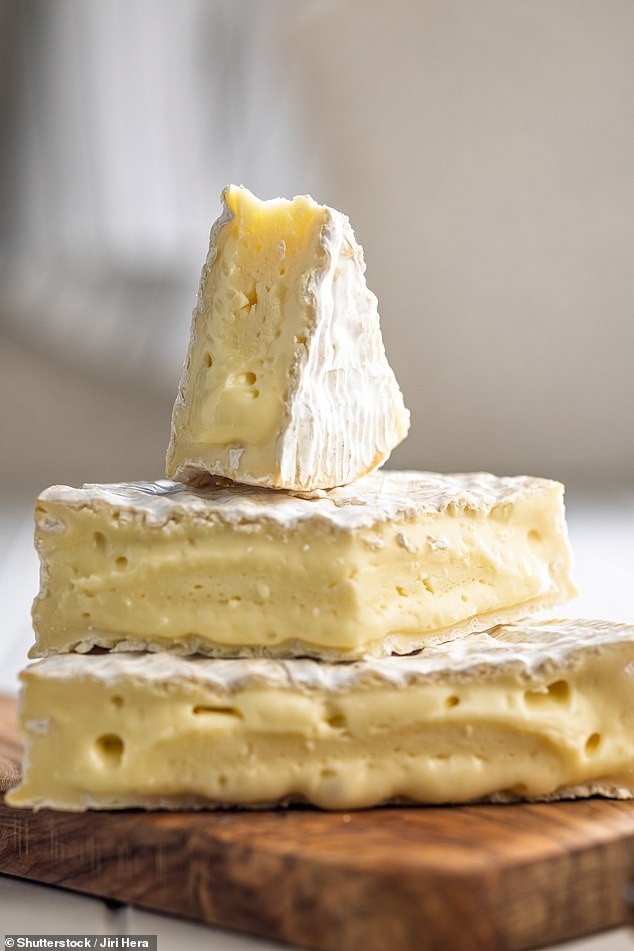
Backlash: As the news went viral, many vowed to boycott American cheese. According to the American Cheese Society and cheesemaking culture companies, roughly 90 per cent of North American cheese is made with FPC rennet. 'But ingredient labels do not distinguish between this type of microbial rennet and the original non-GMO type,' the American Cheese Society stated. 'And the fact that use of FPC-type microbial rennet is not labeled a GMO leaves those who oppose GMOs in the dark when it comes to choosing cheese.' However, ingredient labels do not distinguish between genetically engineered rennet and non-GMO alternatives. Some companies list 'non-animal rennet' on the packaging, which means it contains FPC. Scientists and regulators counter that genetically engineered food enzymes like FPC pose no greater risk than conventional foods. Organizations such as the World Health Organization and the European Food Safety Authority have long supported the safety of properly tested GMO products. Alternatives: Many social media users said they'd be sticking with European cheeses, like Camembert. Some cheeses do not require rennet at all, including cottage cheese, cream cheese, paneer, and certain types of mozzarella, which are made using acid or alternative coagulants. USDA-certified organic cheese also prohibits the use of fermentation-produced chymosin, making it an option for consumers seeking to avoid the enzyme. While the FDA continues to stand by its GRAS determination, the uproar highlights a broader debate over food regulation. Under U.S. law, GRAS substances do not require FDA approval or notification before marketing. Former FDA Deputy Commissioner for Foods Michael Taylor acknowledged flaws in the system in 2014, stating: 'We simply do not have the information to vouch for the safety of many of these chemicals.' Cheesemakers can use several different forms of rennet, but for hundreds of years, animal-based rennet was the standard. This traditional rennet is extracted from the fourth stomach lining of an unweaned calf, where the enzyme naturally helps young animals digest milk. The extracted rennet is not pure chymosin, as it typically contains a mixture of chymosin, pepsin and other proteins. Since rennet can be obtained only once from a single calf, supply is limited, and production costs are high. As demand for cheese surged in the late 20th century, the industry increasingly viewed animal rennet as inefficient and unsustainable. And FPC offered a solution with scientists isolating the gene responsible for chymosin production and inserting it into a microorganism such as bacteria, yeast or mold. The organism is then grown in large fermentation tanks, producing chymosin in bulk. After fermentation, the enzyme is filtered and purified, resulting in chymosin that is chemically identical to the enzyme found in calves, without the need for animal slaughter.
What consumers can do and what the future holds for cheese labeling
Even as the science is clear on many points, the debate over safety and labeling continues to roil the dairy industry. The uproar underscores how food regulation shapes everyday choices, from what ends up on a sandwich to what ends up in the grocery cart. As the conversation evolves, consumers are left weighing tradition against innovation, transparency against convenience, and animal welfare against efficiency.