

AfD's New Youth Wing Sparks Massive Giessen Protests as Police Fire Pepper Spray


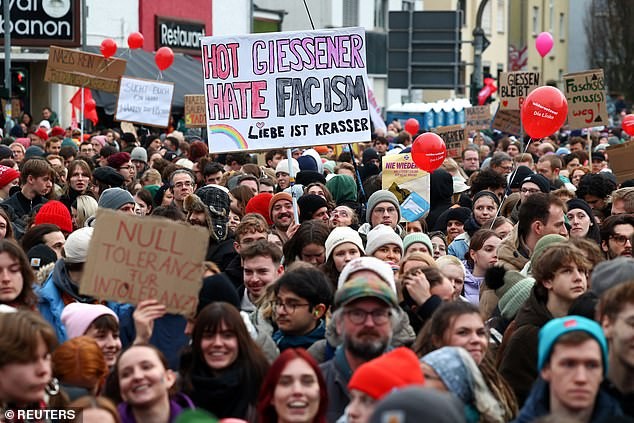
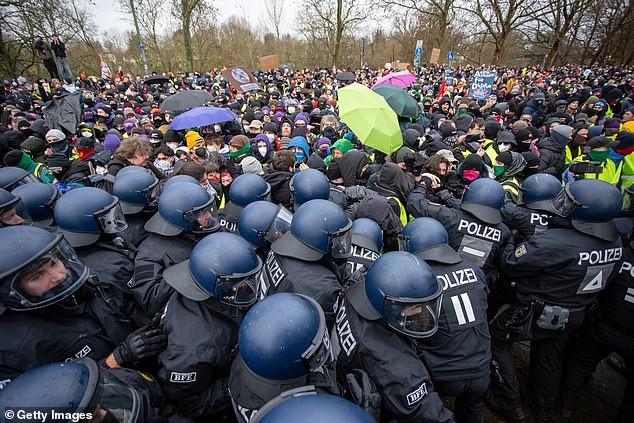
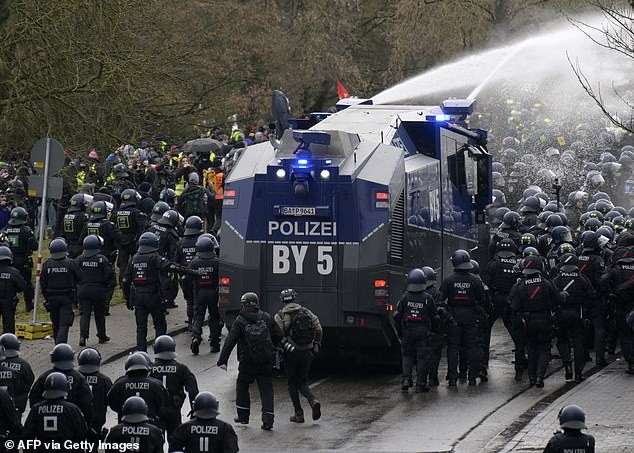
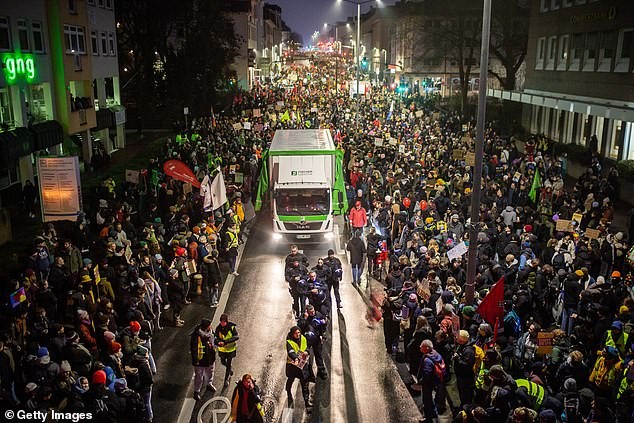
Germany's hard-right AfD party launched its new youth organisation on Saturday as thousands of furious protesters descended on the western city of Giessen, where the group held its founding convention. The meeting began more than two hours late after activists blocked or attempted to block roads into the city, delaying the arrival of many delegates. Dramatic images show protesters clashing with police, who were forced to use pepper spray after stones were thrown at officers in one location, authorities said. Police also deployed water cannons to clear a blockade of about 2,000 protesters who ignored calls to disperse. They used them again on Saturday afternoon as a group attempted to break through barriers around the city's convention centre. Up to 5,000 officers were deployed, police said. They estimated more than 25,000 demonstrators had gathered, noting that much of the protest remained peaceful. Ten officers were reported slightly injured. AfD leaders condemned the demonstrations as the convention finally opened. 'What is being done out there - dear left-wingers, dear extremists, you need to look at yourselves - is something that is deeply undemocratic,' party co-leader Alice Weidel said.
In This Article:
Delays, clashes and the police response in Giessen
The meeting began more than two hours late after activists blocked or attempted to block roads into the city, delaying the arrival of many delegates. Dramatic images show protesters clashing with police, who were forced to use pepper spray after stones were thrown at officers in one location, authorities said. Police also deployed water cannons to clear a blockade of about 2,000 protesters who ignored calls to disperse. They used them again on Saturday afternoon as a group attempted to break through barriers around the city's convention centre. Up to 5,000 officers were deployed, police said. They estimated more than 25,000 demonstrators had gathered, noting that much of the protest remained peaceful. Ten officers were reported slightly injured. AfD leaders condemned the demonstrations as the convention finally opened. 'What is being done out there - dear left-wingers, dear extremists, you need to look at yourselves - is something that is deeply undemocratic,' party co-leader Alice Weidel said. She added that one AfD lawmaker had been attacked. Police confirmed a lawmaker was injured near Giessen but gave no details.
Generation Germany replaces the Young Alternative and tighter oversight planned
The new youth organisation, named Generation Germany, replaces the Young Alternative - a largely autonomous group with loose ties to the party - which was formally dissolved in March after AfD cut ties with it. The party says it wants much tighter oversight of the new body, which will be open to all AfD members under 36. Its statute was approved on Saturday. AfD finished second in Germany's national election in February with more than 20 per cent of the vote and is now the largest opposition party. Mainstream parties refuse to work with it, but the AfD has continued to rise in opinion polls as Chancellor Friedrich Merz's coalition struggles to win public confidence. Germany's domestic intelligence agency had previously designated the Young Alternative a proven right-wing extremist group. It later applied the same label to AfD itself, though that classification was suspended after a legal challenge. A Cologne court ruling last year found that the Young Alternative promoted preserving an 'ethnically defined German people' and excluding the 'ethnically foreign', and pointed to agitation against migrants and ties to extremist movements such as the Identitarian Movement. A higher court ended the appeal process in June after the Young Alternative was dissolved.
Leadership, extremism labels and the path ahead for AfD’s youth movement
Jean-Pascal Hohm (pictured), a 28-year-old state lawmaker from Brandenburg, was elected unopposed as Generation Germany's leader. He told delegates he had been the 'proud chairman' of the Young Alternative in his state. Hohm is classified as a right-wing extremist by Brandenburg's domestic intelligence office - a designation he rejects as politically motivated. Kevin Dorow, a delegate from northern Germany, said he had also been active in his local Young Alternative branch. 'The new formation means above all continuing what the Young Alternative started - being a training ground, attracting young people … and bringing them into politics for the good of the party,' he said. He insisted he had not seen any 'drift in a radical direction' in the group. AfD, which portrays itself as an anti-establishment force amid widespread distrust of politicians, first entered the national parliament in 2017 after the mass arrival of migrants in the mid-2010s. Curbing migration remains its signature issue, but it has capitalised on public frustration over other topics as well - reflected in the confident tone of its leaders on Saturday. Five of Germany's 16 states hold regional elections next year, including two in the former communist east, where AfD is strongest. 'We will get the majority of mandates; we will provide our first governor,' Weidel said.