


A Collective Warning From Tech Leaders Why 2026 Will Change Everything


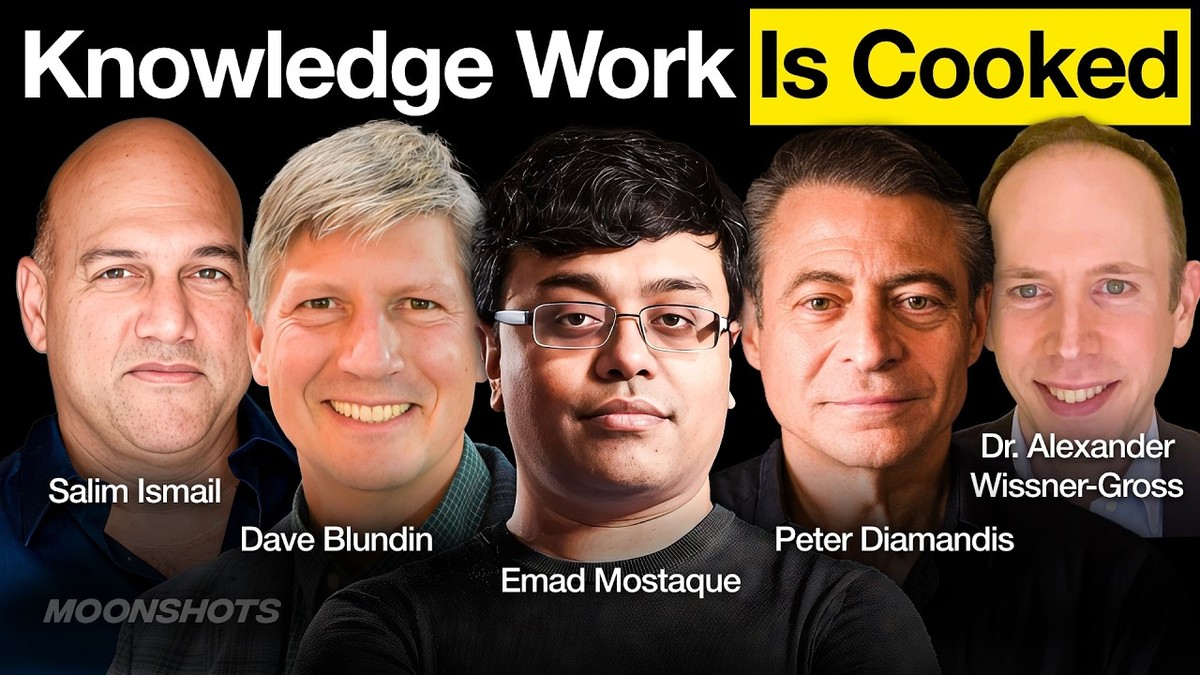
The conversation begins casually, almost lightly, with a relaxed end-of-year tone. But very quickly it becomes clear that this is not a discussion meant to entertain. It is unsettling—not because it predicts disaster, but because it speaks about inevitability. According to Peter Diamandis and the group of technologists and investors gathered in this discussion, 2026 is the year when the future stops being theoretical. Until now, they argue, it was still possible to ignore what was coming, to postpone adaptation, to rationalize change as something distant. From that point onward, that option disappears. What unites all the speakers is a shared conviction that artificial intelligence is accelerating not linearly, but exponentially. This is no longer about better tools or productivity hacks. It is about a fundamental shift in how value is created. Intellectual work—long considered the safest category of human labor—is now being automated at scale. One of the most striking claims in the discussion is that by 2026, AI systems will be capable of performing over 90% of today’s economic and cognitive tasks. Not partially. Not as assistants. But as complete, end-to-end processes. This does not mean humans vanish. But it does mean that jobs as we currently understand them will disappear. Within this context, the speakers argue that the very idea of digital transformation is obsolete. For years, companies have tried to modernize by automating old processes and layering software on top of legacy systems. AI does not work that way. It does not want patches. It demands a complete redesign from the ground up. In 2026, the organizations that succeed will not be the ones that optimize existing workflows, but those that rebuild themselves as AI-native entities. These new structures will operate with a fraction of the workforce, not because people are unnecessary, but because humans will no longer be the bottleneck. One of the most unsettling predictions concerns digital colleagues. By 2026, during a Zoom call, a chat conversation, or a business meeting, it may no longer be obvious whether the person speaking is human or AI. Not because deception is the goal, but because distinguishing the two will no longer matter. These systems will speak fluently. They will respond appropriately. They will make decisions. They will display personality. In many organizations, there may not even be a requirement to disclose whether an entity is human or artificial. At the same time, AI is moving into domains where humanity has traditionally anchored its sense of superiority: mathematics, science, and discovery. The discussion raises the real possibility that by 2026, one of the most significant unsolved problems in mathematics could be resolved—not by a human breakthrough, but by machine reasoning operating at a scale no individual mind can match. This will not only change what we know, but how we define intelligence itself. From this explosion of capability will emerge another phenomenon: new billionaires created at unprecedented speed. Not through traditional industries, but through technologies and acronyms that most people today have never heard of. Entire fortunes will be built almost overnight by those positioned at the right intersection of automation, data, and timing. Yet the conversation is not blindly optimistic. The speakers openly acknowledge that such rapid transformation will destabilize existing social structures. Concepts like work, income, purpose, and contribution will be challenged. Democratic systems may struggle to adapt. This is why the discussion turns toward ideas like universal basic services—access to food, housing, energy, healthcare, and connectivity—as a possible foundation for a new social contract. The underlying message is consistent throughout: history shows that technology does not destroy humanity, but forces it to redefine itself. The question is not whether this transformation will occur, but whether society will be prepared for it. 2026, in this view, is not a distant milestone on the horizon. It is a process that has already begun. And the greatest mistake we can make is pretending that we still have the luxury of ignoring it.
In This Article:
- Exponential AI Is Reshaping Value Creation
- Digital Transformation Is Obsolete; AI Demands Ground-Up Redesign
- The Emergence of Digital Colleagues
- Machine Reasoning and the Redefinition of Intelligence
- New Billionaires, Built Overnight at the Right Intersection
- A Social Contract for a Hyper-Automated Era
- History Says Technology Redefines Humanity
Exponential AI Is Reshaping Value Creation
What unites all the speakers is a shared conviction that artificial intelligence is accelerating not linearly, but exponentially. This is no longer about better tools or productivity hacks. It is about a fundamental shift in how value is created. Intellectual work—long considered the safest category of human labor—is now being automated at scale. One of the most striking claims in the discussion is that by 2026, AI systems will be capable of performing over 90% of today’s economic and cognitive tasks. Not partially. Not as assistants. But as complete, end-to-end processes. This does not mean humans vanish. But it does mean that jobs as we currently understand them will disappear. In 2026, the organizations that succeed will rebuild themselves as AI-native entities and operate with a fraction of the workforce.

Digital Transformation Is Obsolete; AI Demands Ground-Up Redesign
In 2026, the organizations that succeed will not be the ones that optimize existing workflows, but those that rebuild themselves as AI-native entities. These new structures will operate with a fraction of the workforce, not because people are unnecessary, but because humans will no longer be the bottleneck. Within this context, the speakers argue that the very idea of “digital transformation” is obsolete. For years, companies have tried to modernize by automating old processes and layering software on top of legacy systems. AI does not work that way. It does not want patches. It demands a complete redesign from the ground up.
The Emergence of Digital Colleagues
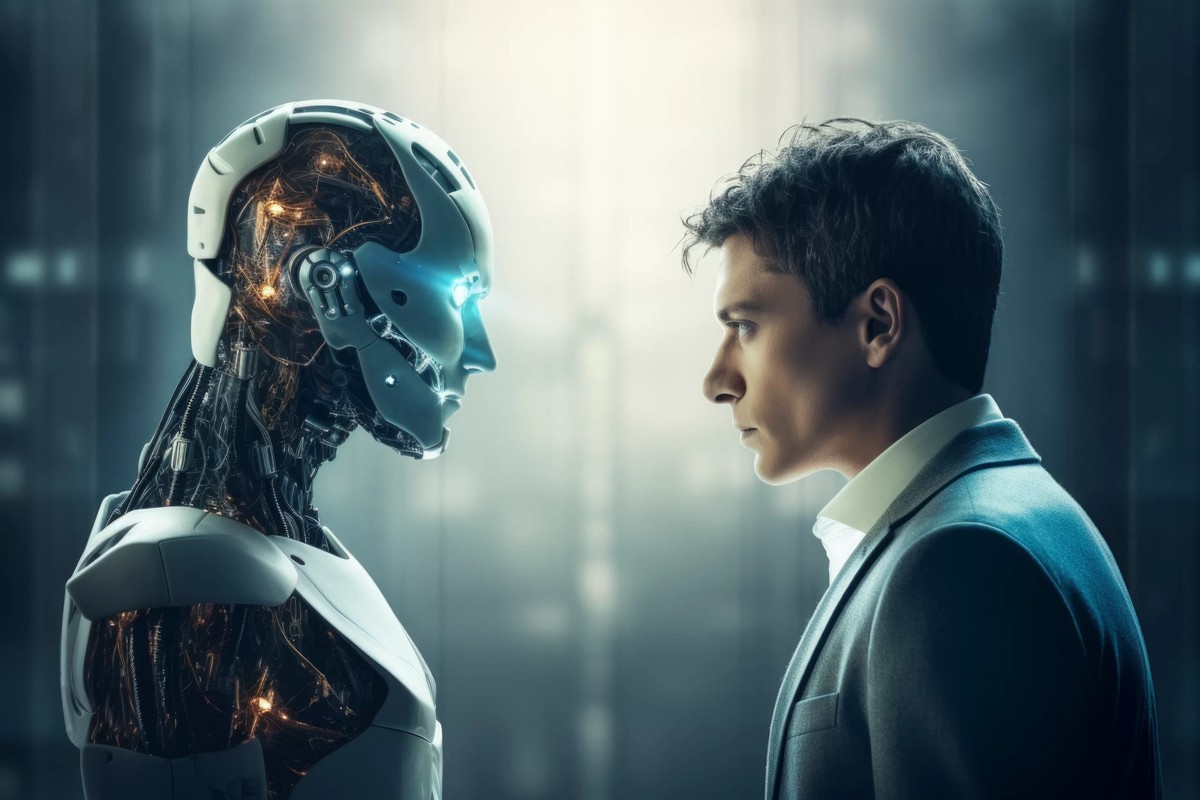
One of the most unsettling predictions concerns digital colleagues. By 2026, during a Zoom call, a chat conversation, or a business meeting, it may no longer be obvious whether the person speaking is human or AI. Not because deception is the goal, but because distinguishing the two will no longer matter. These systems will speak fluently. They will respond appropriately. They will make decisions. They will display personality. In many organizations, there may not even be a requirement to disclose whether an entity is human or artificial.
Machine Reasoning and the Redefinition of Intelligence
At the same time, AI is moving into domains where humanity has traditionally anchored its sense of superiority: mathematics, science, and discovery. The discussion raises the real possibility that by 2026, one of the most significant unsolved problems in mathematics could be resolved—not by a human breakthrough, but by machine reasoning operating at a scale no individual mind can match. This will not only change what we know, but how we define intelligence itself.
New Billionaires, Built Overnight at the Right Intersection
From this explosion of capability will emerge another phenomenon: new billionaires created at unprecedented speed. Not through traditional industries, but through technologies and acronyms that most people today have never heard of. Entire fortunes will be built almost overnight by those positioned at the right intersection of automation, data, and timing.
A Social Contract for a Hyper-Automated Era
Yet the conversation is not blindly optimistic. The speakers openly acknowledge that such rapid transformation will destabilize existing social structures. Concepts like work, income, purpose, and contribution will be challenged. Democratic systems may struggle to adapt. This is why the discussion turns toward ideas like universal basic services—access to food, housing, energy, healthcare, and connectivity—as a possible foundation for a new social contract.
History Says Technology Redefines Humanity
The underlying message is consistent throughout: history shows that technology does not destroy humanity, but forces it to redefine itself. The question is not whether this transformation will occur, but whether society will be prepared for it. 2026, in this view, is not a distant milestone on the horizon. It is a process that has already begun. And the greatest mistake we can make is pretending that we still have the luxury of ignoring it.